By Nitin Kanish · 21 October 2026
This has been a dry year for Udaipur's famous lakes. According to a Dainik Bhaskar report from 30 September 2026, the district's monsoon rainfall was about 27% below normal. Lake Pichola stood at about 7.11 feet against a capacity of 11 feet, and Fateh Sagar held about 7 feet of its 13. If you were hoping to see the city's lakes brimming this autumn, they may look a little thin.
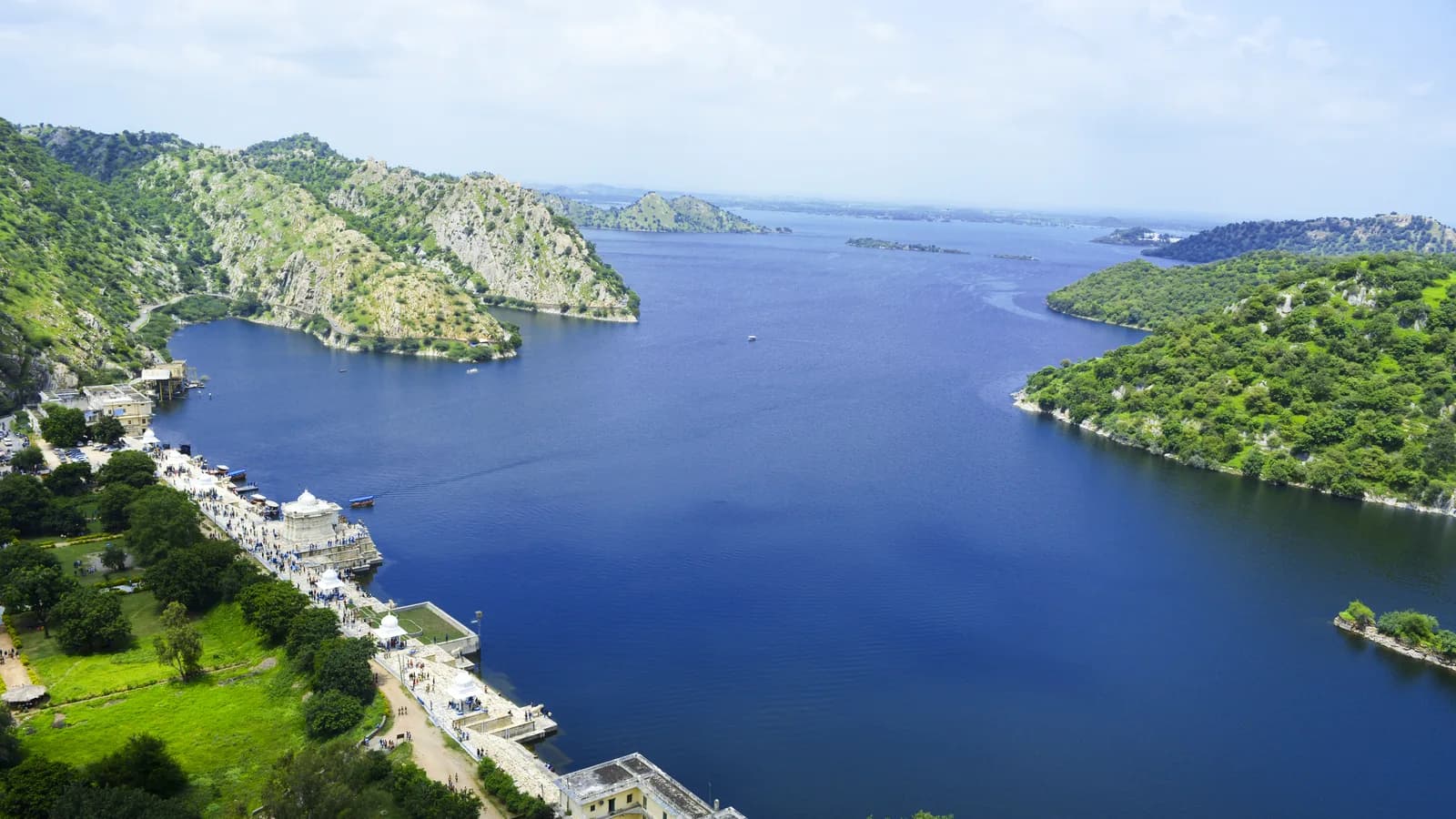
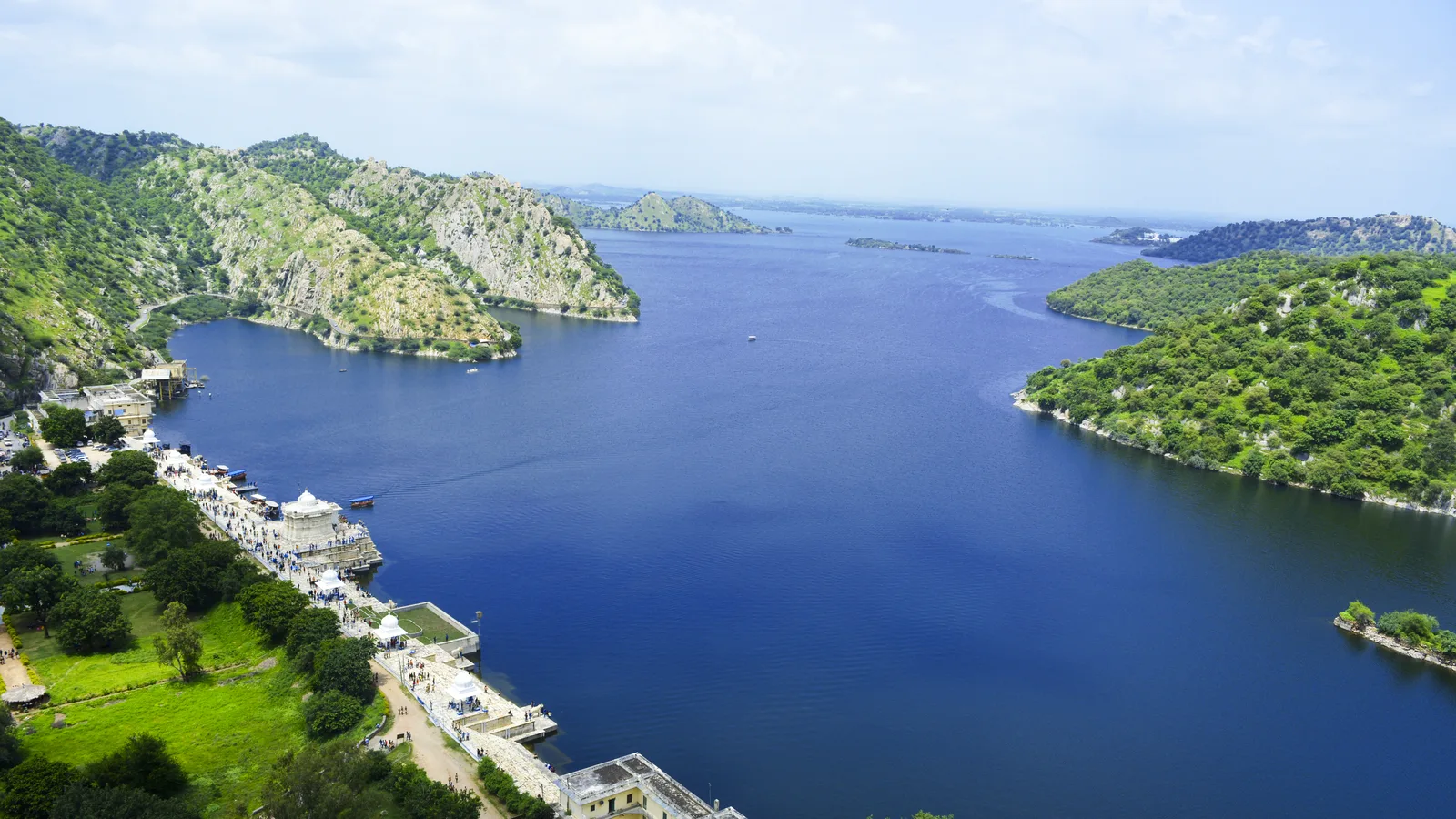
There is a simple answer, about an hour's drive south-east of the city. Jaisamand Lake, also called Dhebar Lake, is a 17th-century reservoir on a scale the city lakes can't match. The same report put it at about 64.5% full, holding roughly 268 million cubic metres of water. That is more than ten times the full capacity of Pichola and Fateh Sagar put together. And from 1 October, the forest department has restarted jeep safaris in the wildlife sanctuary around it. This guide covers the drive from Udaipur, the marble dam, the queens' palaces, the safari, and a detour to one of Mewar's finest old temples.
Key Takeaways
- Distance: map routing puts the Jaisamand dam about 54 km from the City Palace area, around 50 minutes without stops. Most of it is on State Highway 32. Plan on an hour and a quarter.
- Why now: Udaipur's city lakes are low after a weak 2026 monsoon, but Jaisamand is still a huge sheet of water. Jeep safaris in Jaisamand Wildlife Sanctuary restarted on 1 October.
- Safari: morning slot 6 to 9 am, afternoon slot 4 to 7 pm, tickets at the Chanda ji ka Guda checkpost, according to Udaipur Times.
- Don't miss: the marble dam with its chhatris, Shiva temple and stone elephants, and Hawa Mahal on the hill above.
- Worth the detour: the 10th-century Ambika Mata temple at Jagat, about 25 km from the dam by road.
- Car: on 21 October 2026, the Hire N Ride Udaipur page listed a self-drive Maruti Suzuki Brezza at ₹3,173 for one day, with 270 km included.
Why Jaisamand makes sense this October
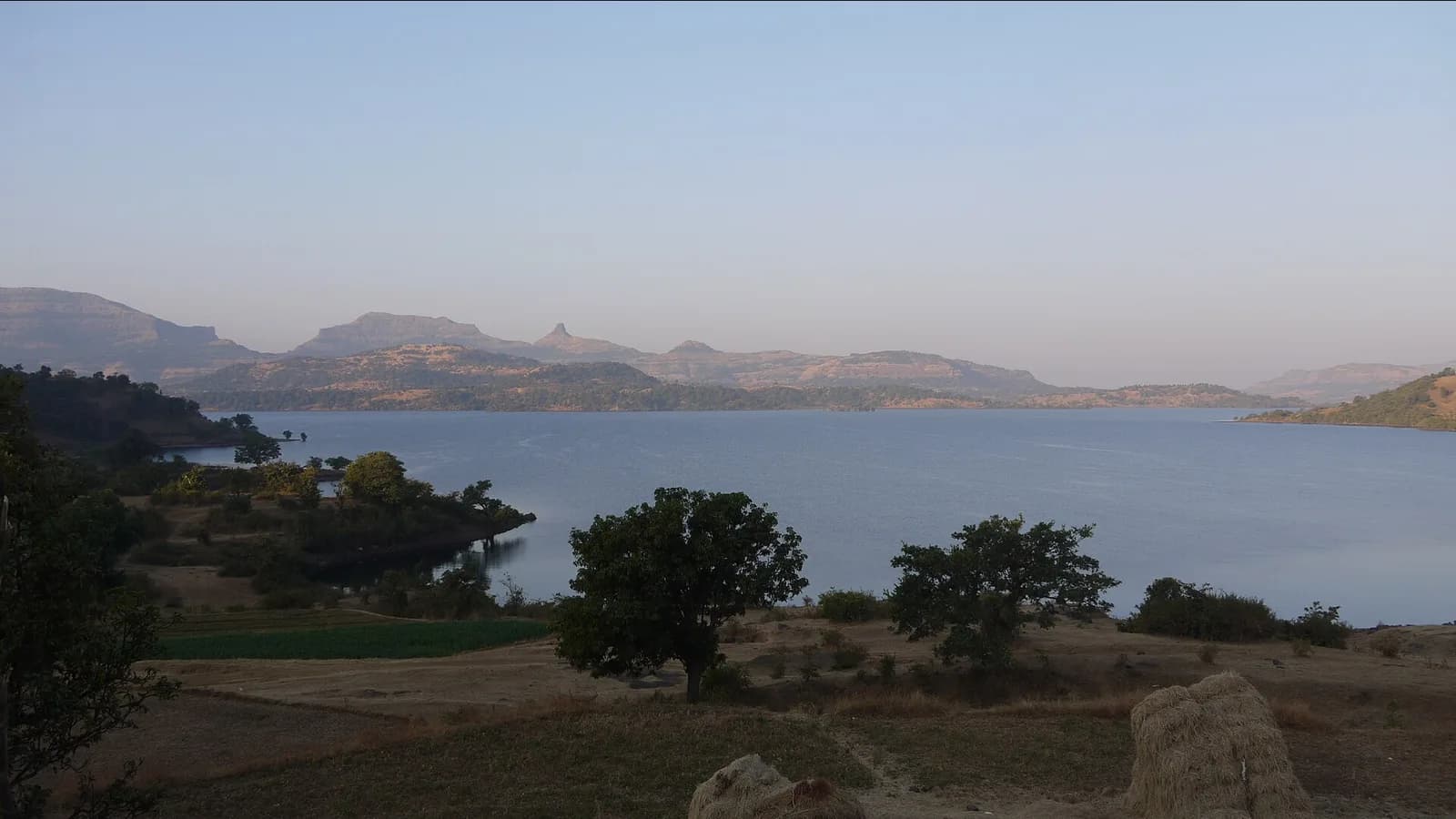
Jaisamand was built for exactly the kind of year Udaipur is having now. Maharana Jai Singh of Mewar dammed the Gomati river in the late 17th century to store water for the dry south-eastern corner of his kingdom. According to Incredible India, the lake is about 14 km long and 9 km wide, up to 102 feet deep, and roughly 48 km around its shore. When it was built, it was the largest artificial lake in the world. It is still described as the second-largest artificial lake in Asia.
Because it is so large, Jaisamand fills slowly and empties slowly. Its catchment is fed by many small rivers and streams, and the lake only overflows after an unusually good monsoon. In September 2022, the Hindi daily Dainik Jagran reported that it had overflowed for only the tenth time since 1947. This year it will not overflow. But at around two-thirds full, it still stretches to the horizon from the dam, and its islands, forested hills and old palaces look much as they always have.
October is also when the weather turns. Incredible India's climate table gives Jaisamand an October range of about 13 to 36°C, falling to about 9 to 33°C in November. Mornings are pleasant, and the midday sun is still strong, so plan to be outdoors early and late.
The drive from Udaipur
The road to Jaisamand is one of the easier day drives from the city. These are map-routing distances, so add time for traffic and stops:
- City Palace area to the dam: about 54 km, around 50 minutes in empty traffic.
- The road: after leaving the city, about 46 km of the route is on State Highway 32, the road towards Salumbar and Banswara.
- From Maharana Pratap Airport at Dabok: about 67 km to the dam, if you are picking up the car straight after a flight.
- From the dam to the safari checkpost at Chanda ji ka Guda: about 10 km.
- From the dam to Jagat: about 25 km, and then about 50 km back to central Udaipur.
The highway is a two-lane road through farmland, villages and low Aravalli hills. Expect tractors, buses and cattle, especially around the villages, and slow down where the road narrows. The highway passes through Jaisamand village, right beside the dam. If you plan to drive on to Jagat, check your route on a map before you leave the lake, because the smaller roads in this area are not always well signposted.
At the dam: marble steps, chhatris and stone elephants
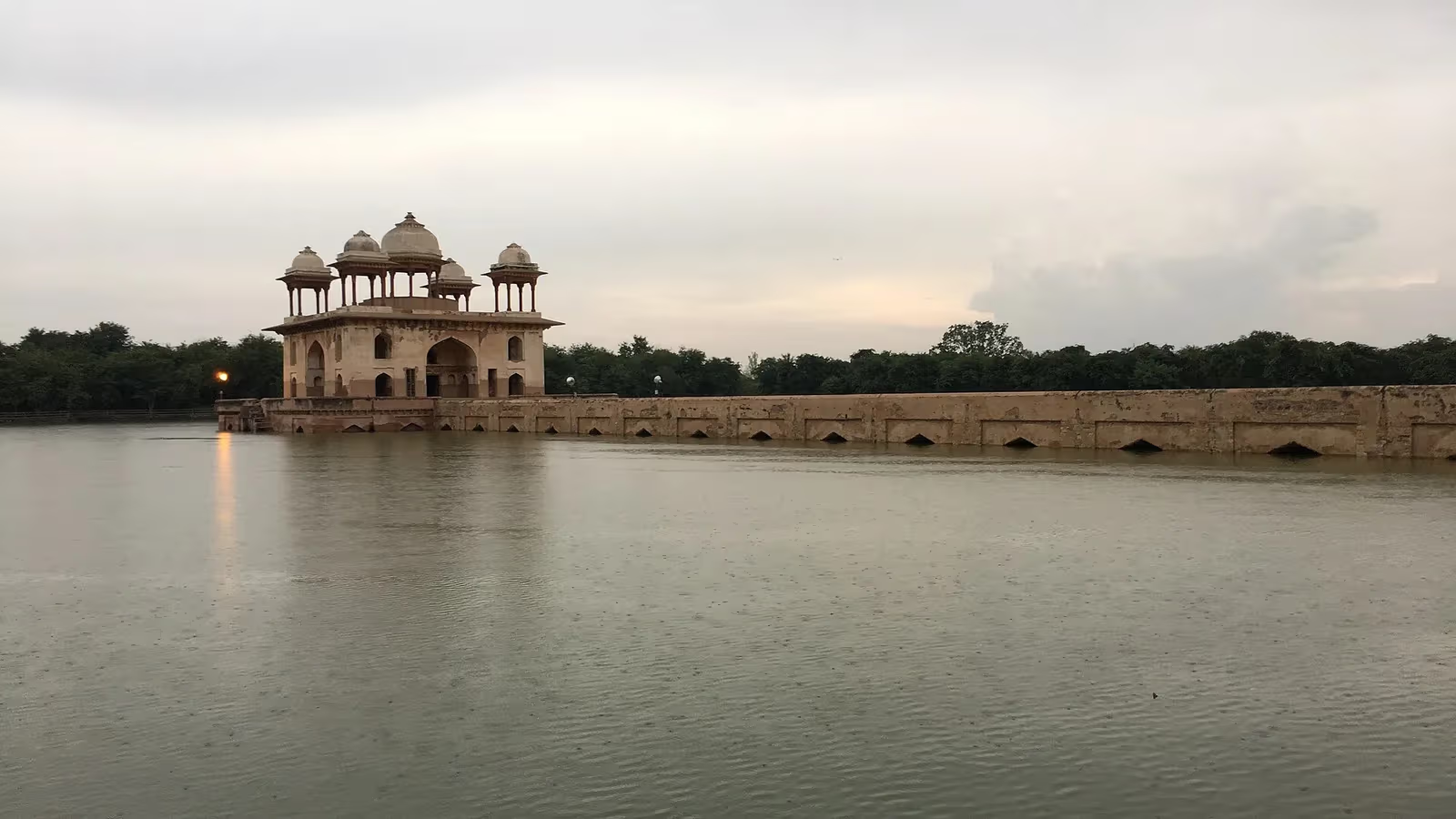
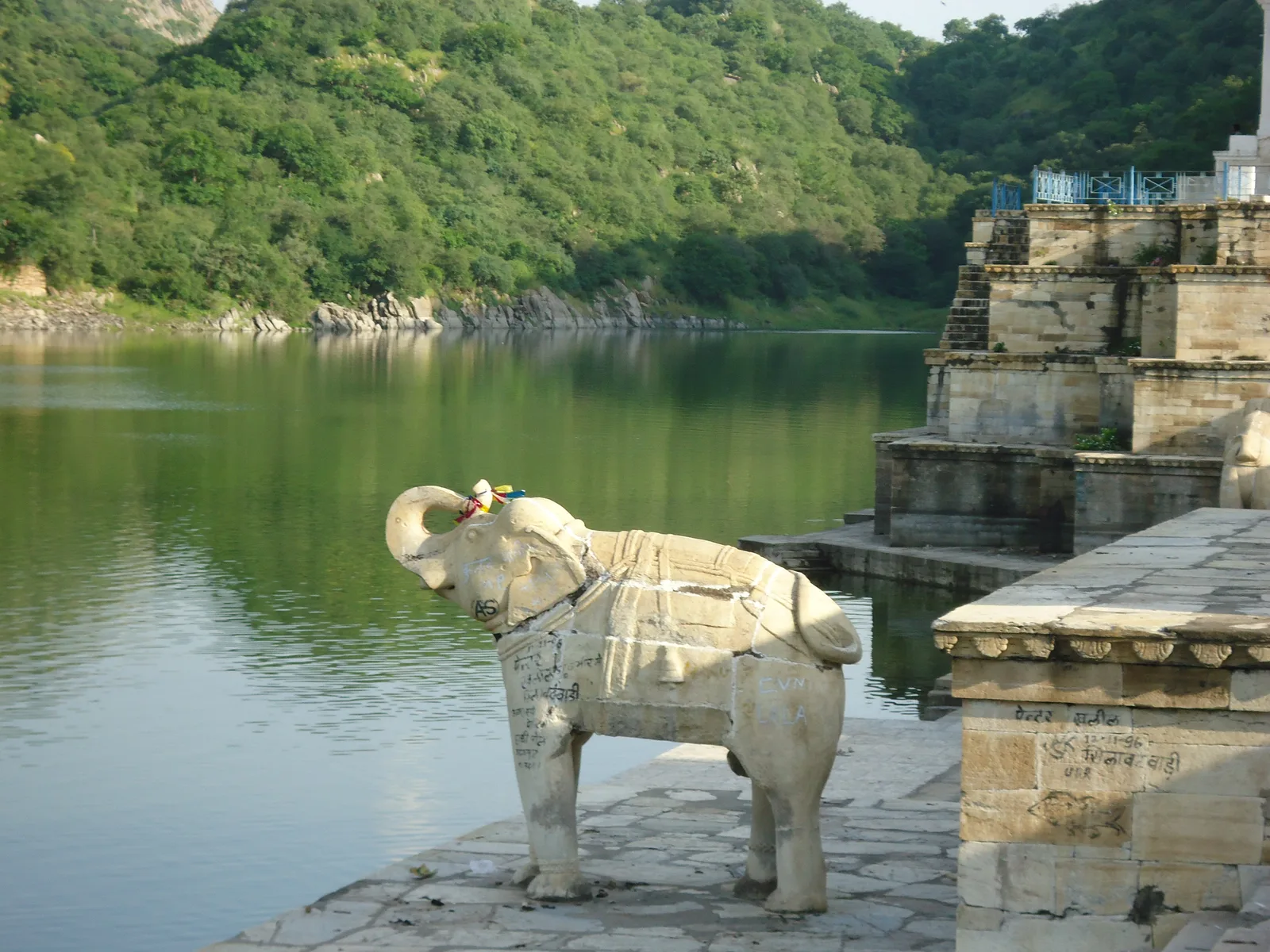
The dam is the main sight, and you can walk along it. Wikipedia gives its length as about 366 metres and its height as about 35 metres. Marble steps lead down to the water, and six carved chhatris, or cenotaph pavilions, stand along the top. In the middle is a small temple to Shiva, which Incredible India names as the Narmadeshwar temple.
The most photographed features are the marble elephants. According to Incredible India, the lake was inaugurated with a grand ceremony, at which Maharana Jai Singh gave away gold equal to his own weight. Wikipedia dates the inauguration to 2 June 1691. The elephants have a practical role too. Dainik Jagran explained in 2022 that local people judge how full the lake is by how high the water has climbed up the statues. When it reaches their feet, the lake is close to full. After floods in the 1970s submerged several villages, the overflow level was lowered by about seven feet. So the old saying about water reaching the elephants' trunks no longer applies.
This year, expect to see more of the steps than usual. That makes the dam a good place to understand how the lake works. Stand on the embankment and look east, and you will see the water stretching into the distance between the hills, broken by the larger islands. Incredible India says one of the islands is still home to members of the Bhil Mina community. Another is the site of a hotel resort.
Boats run from near the dam. Timings and fares change with the season and the water level, so check them locally when you arrive rather than relying on an old listing.
Hawa Mahal and Ruthi Rani ka Mahal
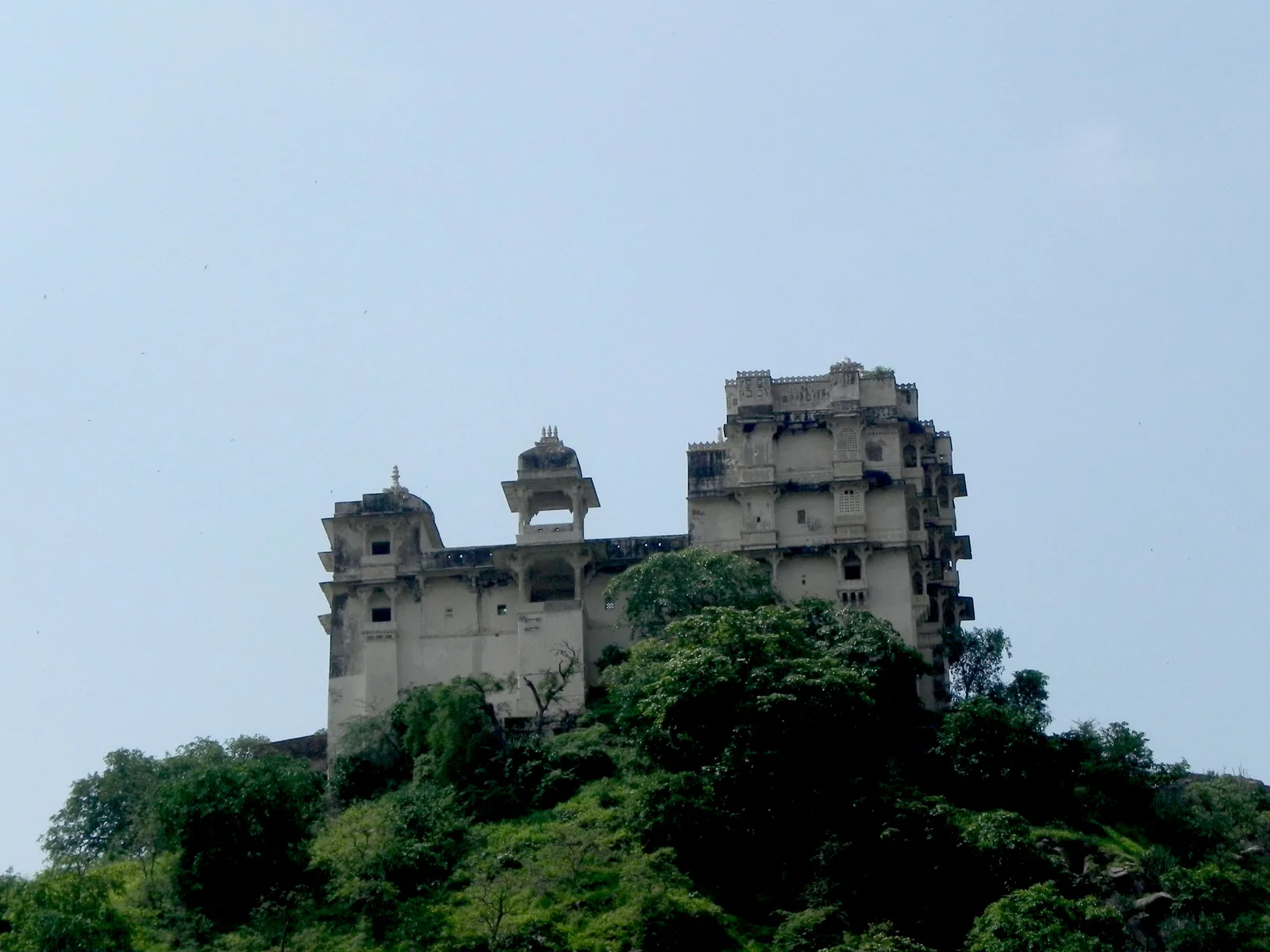
On the hills above the dam are two palaces that Maharana Jai Singh built for the queens of Mewar. Incredible India names them as Hawa Mahal, the "palace of winds", and Ruthi Rani ka Mahal, the palace of the "sulking queen". They were summer retreats, placed high enough to catch the breeze off the water.
Hawa Mahal is a protected monument. It appears on the Archaeological Survey of India's list of monuments of national importance in Rajasthan. It is not to be confused with the much more famous Hawa Mahal in Jaipur. Its main draw is the view: from the hill you can see the whole length of the dam below you, the lake curving away, and on a clear morning the hills on the far shore.
The paths up to the palaces are steep in places and exposed to the sun. Go in the morning or the late afternoon, wear proper shoes, and carry water.
The jeep safari, back from 1 October
The forest around the lake is protected as Jaisamand Wildlife Sanctuary. Wikipedia describes it as about 162 square kilometres, mostly teak forest. Incredible India lists panthers, deer, wild boar and crocodiles among its animals, and the lake also draws water birds.
The sanctuary is closed to visitors for the monsoon from July to September. On 1 October 2026, Udaipur Times reported that jeep safaris had restarted in three sanctuaries in the Udaipur forest range: Jaisamand, Kumbhalgarh and Bassi. For Jaisamand, the report gave these details:
- Slots: 6 am to 9 am, and 4 pm to 7 pm.
- Tickets: from the Chanda ji ka Guda checkpost.
- Fees per person: ₹670 for Indian visitors, ₹575 for students and ₹1,095 for foreign visitors.
- Group size: up to six people per vehicle.
- What you might see: leopards, wild boar, peafowl and langurs, among others.
Wildlife sightings are never guaranteed, and a leopard in teak forest is hard to spot. Treat the safari as a chance to see the forest at its best light, and anything more as a bonus. The morning slot means leaving Udaipur at about 5 am, so many people choose the afternoon slot, after a morning at the dam and the palaces.
A detour to Jagat and the Ambika Mata temple
If you have time on the way back, the village of Jagat has one of the oldest and most richly carved temples in Mewar. The Ambika Mata temple is dedicated to Ambika, a form of the goddess Durga. According to Wikipedia, it dates to the 10th century. Its earliest inscription, dated 961 CE, records a repair, so the temple itself is older still. It is looked after by Rajasthan's State Department of Archaeology and Museums.
The temple is sometimes called the "Khajuraho of Mewar" because of its sculpture. The outer walls are covered in carved figures: forms of Durga, Lakshmi and other goddesses, and musicians and dancers of the heavenly court. Art historians describe it as an early example of the Maru-Gurjara style that later produced the great Jain temples of western India.
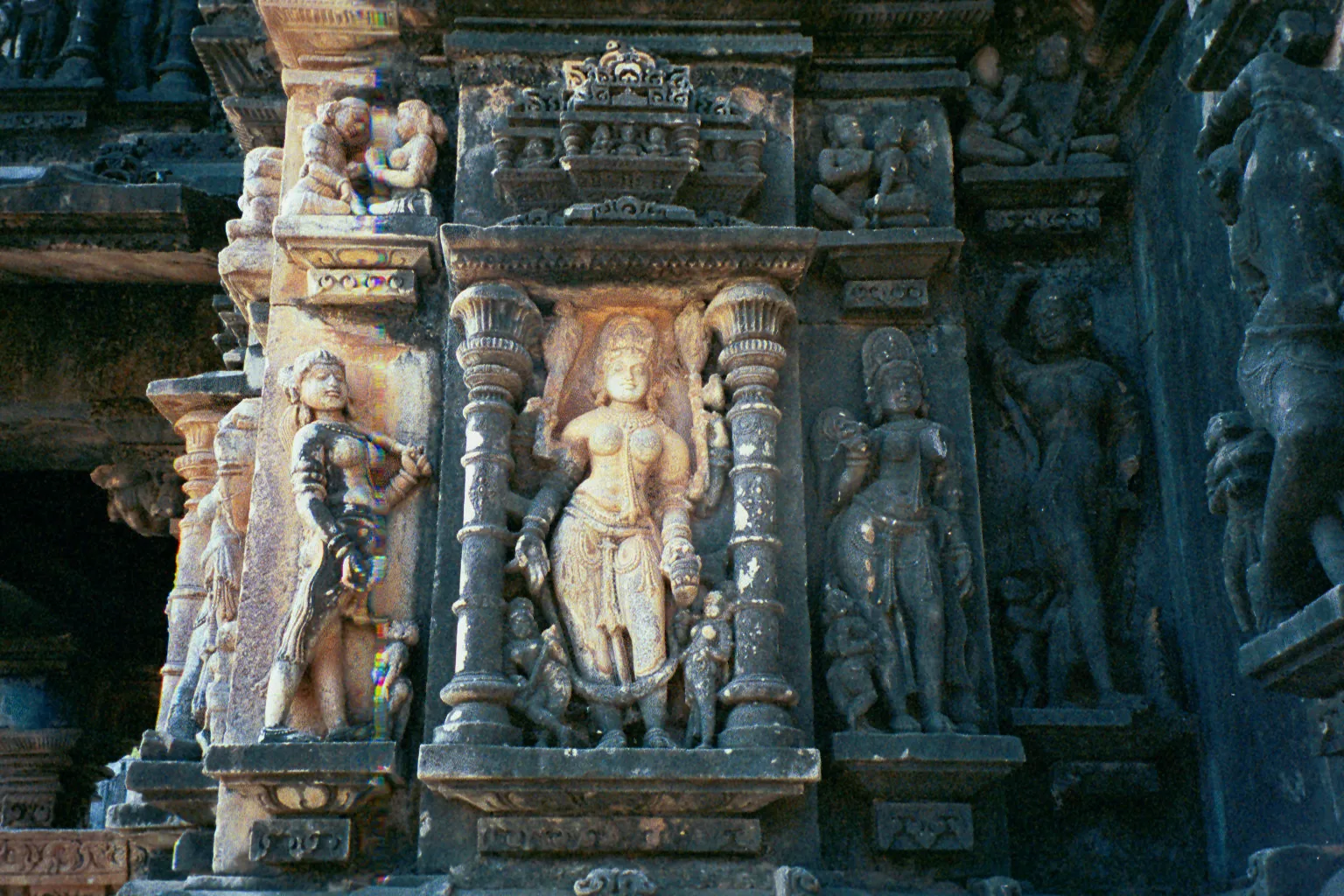
Jagat is about 25 km from the Jaisamand dam by map routing, and about 50 km from central Udaipur, so it fits neatly into the drive home. It is an active temple, so dress modestly, take off your shoes where asked, and ask before you photograph anyone inside.
A suggested day plan
With the afternoon safari:
- 7:30 am: pick up the car in Udaipur, fill the tank and leave the city on the road to Salumbar.
- 8:45 am: arrive at the dam. Walk the embankment while the light is soft and the crowds are thin.
- 10 am: walk up to Hawa Mahal for the view over the lake.
- 12 noon: lunch near the lake, then rest in the shade during the hottest hours.
- 3:30 pm: drive about 10 km to the Chanda ji ka Guda checkpost for the 4 pm safari.
- 7 pm: the safari ends, after sunset, which is about 6 pm in late October. Drive back carefully in the dark and expect to reach Udaipur at around 8:15 pm.
With Jagat instead of the safari: do the dam and Hawa Mahal in the morning, then leave the lake after lunch and drive to Jagat for the temple in the afternoon light. You will be back in Udaipur before dark. This version suits families and anyone who prefers not to drive at night.
Tips for the day
- Fuel and kilometres: the full loop from Udaipur to the dam, then Jagat, then back to the city is about 130 km by map routing. That is well within the car's 270 km daily allowance. Fill up in Udaipur before you leave.
- Cash: carry some cash for safari tickets, parking, boats and food. Small stalls and village shops may not take cards.
- Daylight: on 21 October the sun sets at Jaisamand at about 6:02 pm, and by 31 October at about 5:55 pm. If you are not doing the safari, try to be on the main road home by then.
- Sun: October afternoons can still reach the mid-30s. Take hats, sunscreen and more water than you think you need, especially for the climb to the palaces.
- Documents: carry your original driving licence and ID, which you will need to share when you book.
- Respect the forest: keep to the roads in the sanctuary area, don't feed animals, and take your rubbish back with you.
Choosing your car
This is mostly a highway drive, with some narrower village roads if you add Jagat, so any car you are comfortable in will do. On 21 October 2026, the Hire N Ride Udaipur page listed one self-drive car: a 2026 Maruti Suzuki Brezza LXi (petrol and CNG, manual) at ₹3,173 for one day, after a 10% discount, with 270 km included and a ₹5,000 security deposit. The page says the owner confirms a pickup point in the city, often near Fateh Sagar or the railway station. Prices and availability change, so check the live page before you book.
Planning more drives from the city? Our guide to the seven gates of Chittorgarh from Udaipur heads east to Mewar's old capital, and our Kumbhalgarh fort route climbs north into the Aravallis. If your trip also takes in Jaipur, our Chand Baori and Abhaneri drive is another good stepwell-and-temple day.
Conclusion: the lake that was built for dry years
When Udaipur's own lakes are low, the city's oldest answer to dry years is still there, an hour down the road. Jaisamand gives you a 17th-century marble dam you can walk along, palaces on the hill above, a forest that has just reopened for safaris and, if you have time, a thousand-year-old temple at Jagat. With a self-drive car rental in Udaipur, you can set your own pace: early on the dam, a long lunch by the water, and the drive home in the evening light.
Ready to go? Book a self-drive car in Udaipur, leave the city by 7:30 am, and be walking on the dam before nine.
About the author: Nitin Kanish writes road-trip and self-drive guides for Hire N Ride. He checks distances, official timings and the latest local news, so renters know what to expect before they set off.