By Nitin Kanish · 18 October 2026
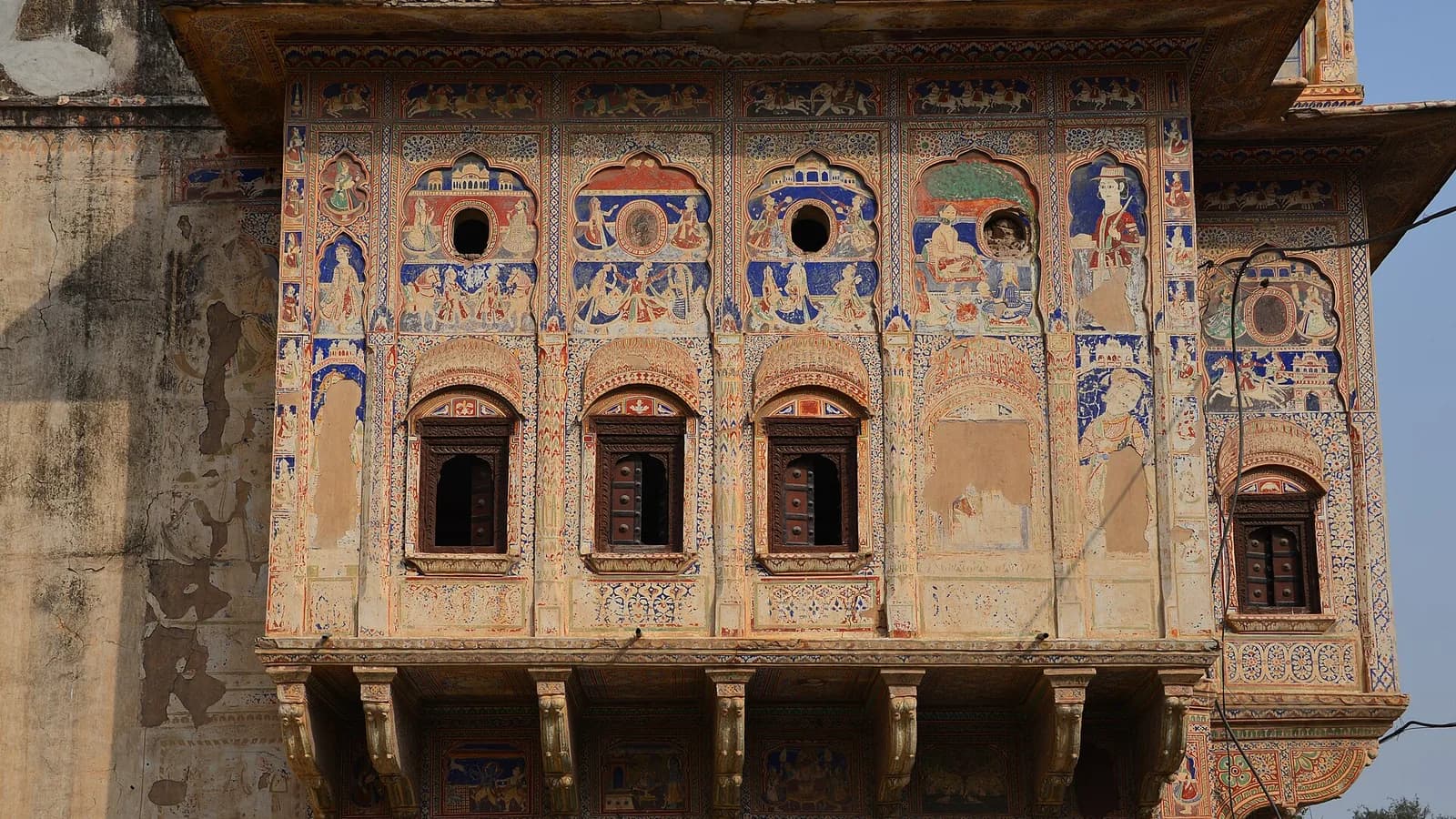
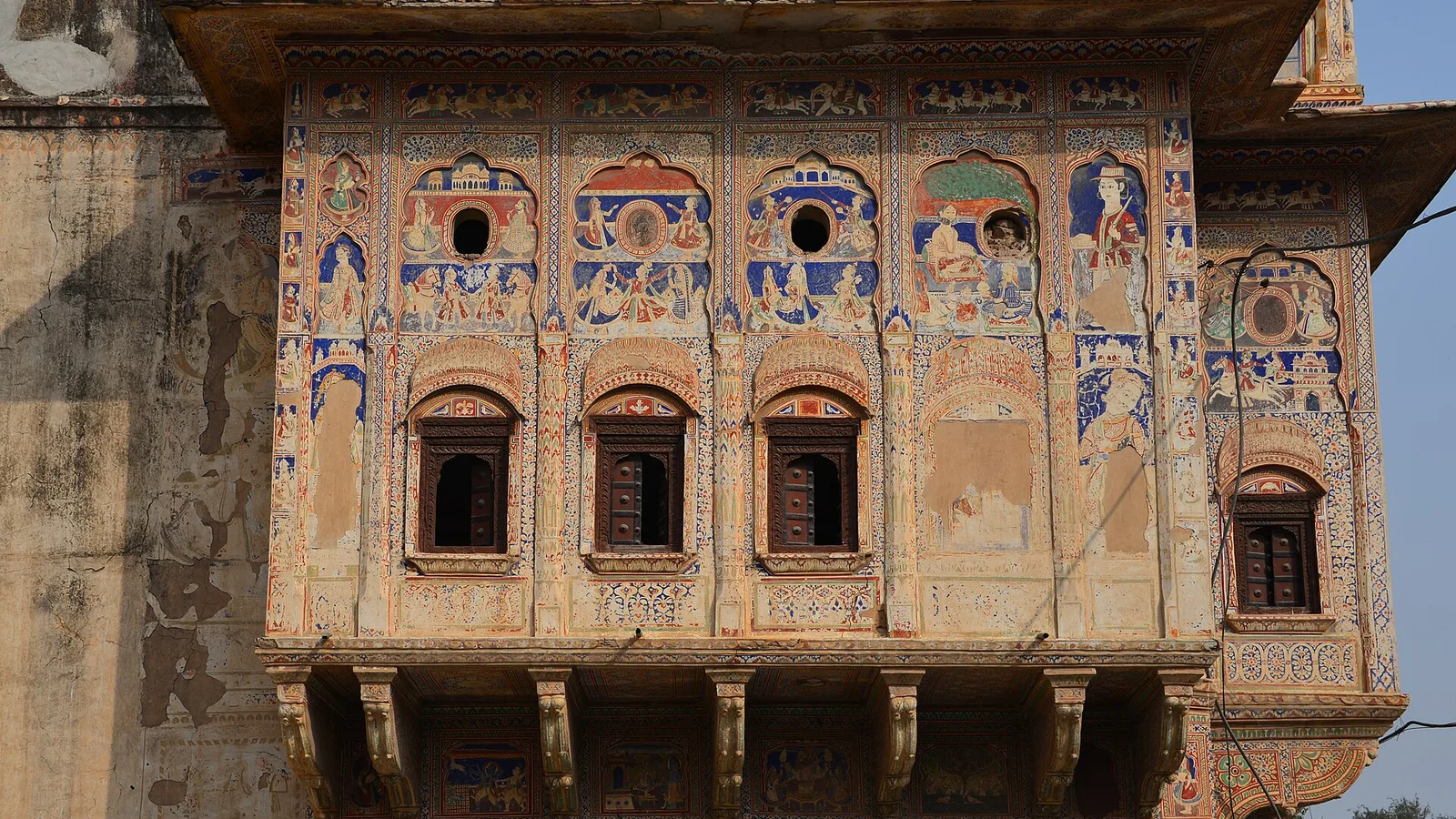
For a long time, the painted towns of Shekhawati were Rajasthan's best-kept open secret: whole streets of merchant mansions covered, inside and out, in murals of gods, kings, horses, trains and gardens. This year they got a new kind of attention. In 2026, India placed "The Painted Haveli Towns of Shekhawati" on UNESCO's Tentative List of World Heritage Sites, a serial entry covering historic ensembles in 14 towns, including Nawalgarh, Dundlod and Mandawa. And on 16 October, the Times of India reported that the state government will host a Shekhawati Heritage meet on 8 December, with 612 structures in the region identified for restoration and a heritage circuit linking Sikar and Jhunjhunu.
The good news for anyone in Jaipur is that the three towns that make the easiest introduction are a single, long day's drive away. With a self-drive car rental in Jaipur, you can be at the first haveli museum by mid-morning, walk two more painted towns in the afternoon and be back on the highway at sunset. Book a self-drive car in Jaipur for your date, then use the plan below.
Key Takeaways
- Why now: the Painted Haveli Towns of Shekhawati were submitted to UNESCO's Tentative List on 1 June 2026. This is a first step towards a nomination, not World Heritage status itself.
- Route: Jaipur to Nawalgarh on the Sikar road (NH52), then Dundlod and Mandawa, and back to Jaipur. OSRM routing puts the full loop at about 370 km.
- Kilometres: Jaipur car listings checked on 18 October 2026 included 399 km per day, which covers the loop if you skip big detours.
- Time: leave Jaipur by 6:30 am. Sunset in Mandawa this week is just before 6 pm.
- Best stops: the Podar Haveli Museum and Morarka Haveli in Nawalgarh, Dundlod's fort and Goenka chhatri, and the painted lanes around Castle Mandawa.
- Cars: the lowest rate on the Jaipur page on 18 October 2026 was ₹2,117 for one day, for a 2024 Wagon R.
Why Shekhawati, and why this autumn
Shekhawati is a semi-desert region in north-eastern Rajasthan, made up of the Sikar, Jhunjhunu and Churu districts. It takes its name from Rao Shekha, a Kachhwaha Rajput chief of the 15th century. In the 18th and 19th centuries, Marwari trading families here grew rich on long-distance trade, and later from business in cities such as Calcutta and Bombay. They spent that wealth at home, on havelis with carved doors, courtyards, jharokhas and walls covered in frescoes.
The UNESCO Tentative List entry describes 14 of the region's 38 similar towns as a culturally coherent group, shaped by shared ecology, patronage and mercantile traditions between the 18th and 20th centuries. India has proposed it under three cultural criteria. Being on the tentative list does not make Shekhawati a World Heritage Site. It means India considers it worth nominating. Experts quoted in the press expect the full process to take several years.
That process is also a reminder of how fragile these buildings are. In February 2026, the Rajasthan government set aside ₹200 crore for conserving around 600 havelis in the region. But, as The Indian Express reported in March, many are still private homes with absent owners, and a 2024 INTACH survey found that six of 60 documented havelis in Nawalgarh had already been destroyed. Not every painted wall you can see today is guaranteed to survive. That is a good reason to go now, and to visit gently.
There is also a simple practical reason. Shekhawati summers are extreme, and walking its lanes in the heat is hard work. October brings milder days, which makes this a good time to start exploring on foot.
The route at a glance
- Jaipur to Nawalgarh: about 144 km by OSRM routing, mostly on the Sikar road (NH52), then a short stretch on state highway into Nawalgarh. The routing estimate is about two hours, but allow closer to three with traffic leaving the city and a tea stop.
- Nawalgarh to Dundlod: about 10 km, 15 minutes.
- Dundlod to Mandawa: about 30 km, 40 minutes.
- Mandawa back to Jaipur: about 187 km by OSRM routing, a little over two hours on paper, three or more in practice.
The whole loop is about 370 km. That fits inside the 399 km per day included on the Jaipur listings we checked, but there is not much room to spare. If you want to add Fatehpur or Ramgarh, plan to stay a night rather than squeeze them in. Rajasthan Tourism's Shekhawati page lists more towns and sights if you are planning a longer trip.
First stop: Nawalgarh
Nawalgarh was founded in 1737 by Thakur Nawal Singh, and many well-known Marwari business families trace their roots to the town. Rajasthan Tourism recommends it to art lovers for some of the best frescoes in the region, and lists Bhagaton ki Haveli, the Morarka Haveli and Aath Haveli among its famous buildings.
The Podar Haveli Museum
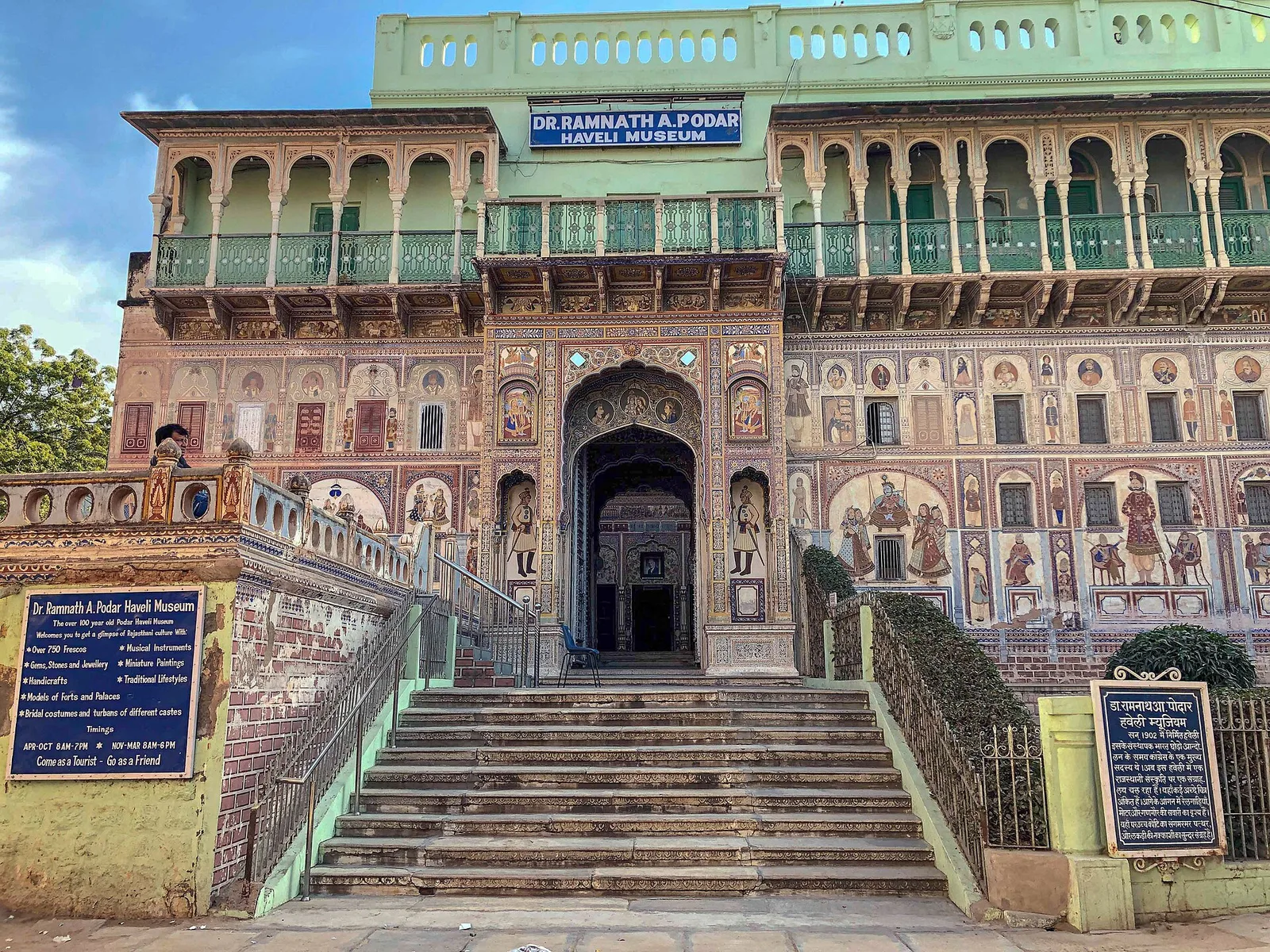
Start at the Dr. Ramnath A. Podar Haveli Museum on the eastern side of town. It is one of the best-kept havelis in Shekhawati, and as a museum it is the easiest place to see how one of these houses worked: the ornate entrance, the outer courtyard where visitors were received, and the private inner rooms. Look closely at the painted panels. One museum guide told The Indian Express that the owner sent painters to Bombay to see trains so they could paint them on the haveli, which is why railway scenes sit alongside gods and court scenes. The museum's own website lists opening hours of 8 am to 8 pm every day, but some visitor listings give shorter hours, so check before you go. Tickets are sold at the entrance.
The Morarka Haveli and the old lanes
From the museum, it is worth parking once and walking. The Morarka Haveli has beautifully kept panels, many of them high up under the eaves, so bring patience and look up. Other havelis are still family homes. Some have caretakers who will show you the courtyard, and some are locked. If a door is closed, enjoy the facade from the street.
A short hop to Dundlod
Dundlod is a small village about 10 km from Nawalgarh, known for its fort and havelis. According to Rajasthan Tourism, the fort was built in 1750 by Keshari Singh, son of the Rajput ruler Sardul Singh, and blends Rajput and Mughal styles. Near the fort, the cenotaph of Ram Dutt Goenka, built in 1888, has a dome painted with floral designs. Twenty to thirty minutes is enough here, and the village is a quieter contrast to the busier lanes of Nawalgarh and Mandawa. Park on the outskirts if the lanes look narrow.
Lunch and an afternoon in Mandawa
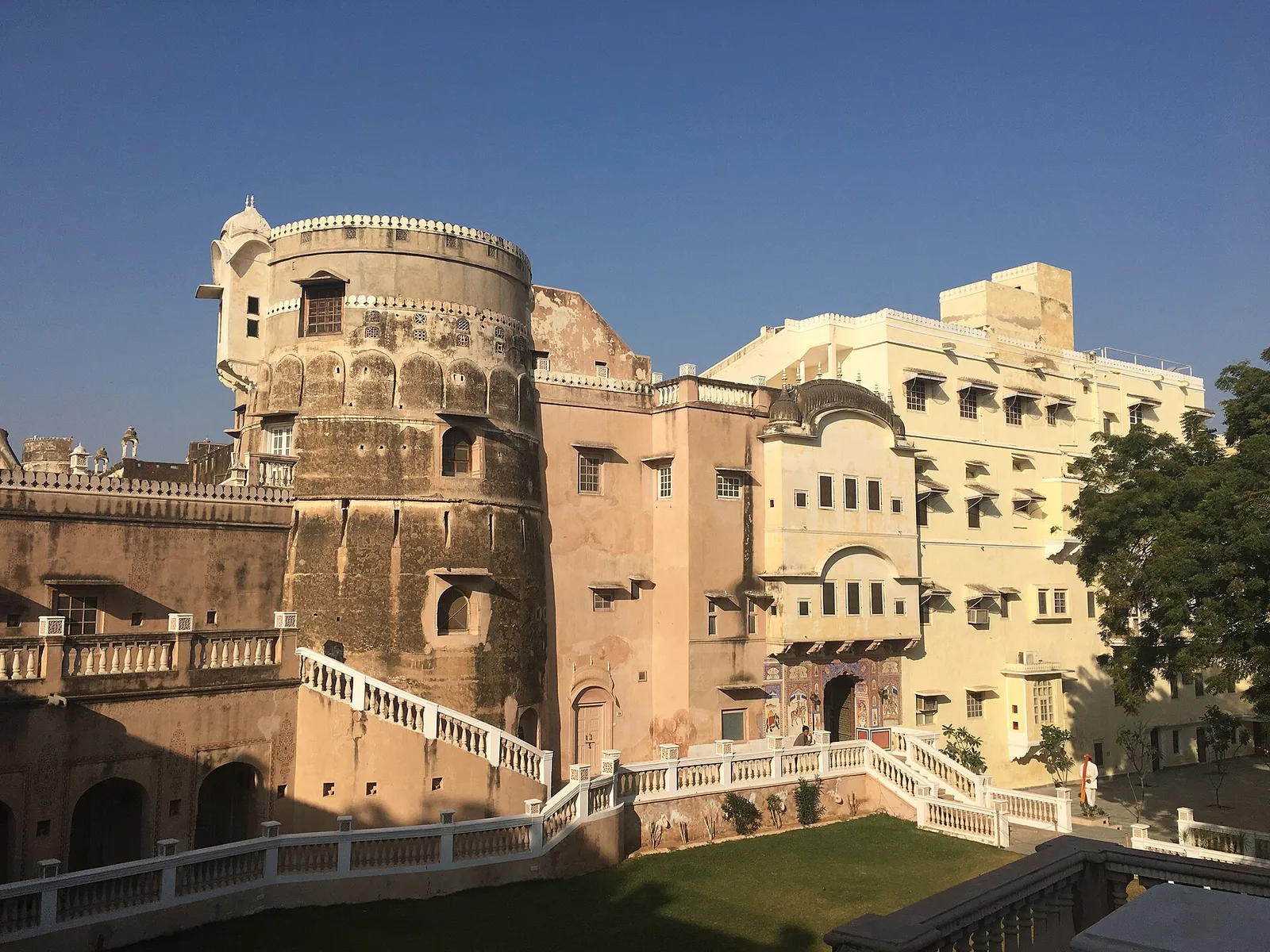
Mandawa grew up around a fort. Rajasthan Tourism describes the town as an old centre on a trade route between the Middle East and China, where Thakur Nawal Singh, who ruled Nawalgarh and Mandawa, built a fort and a town around it. Traders settled there and built the havelis that now give the town its fame. Nearly every wall has paintings, and the town has become a popular place for film shoots.
Mandawa is also the model the state is using for its conservation plans, because so many of its havelis have been turned into hotels. That makes it the easiest town in the area for a sit-down lunch. After lunch, walk the lanes around Castle Mandawa, the fort at the centre of town, and pick out the different subjects on the walls: Radha and Krishna, maharajas and maharanis, gardens and town scenes, and the "modern" wonders the merchants saw on their travels, such as trains.
How to look at a Shekhawati fresco
The murals were painted in indigo, red, ochre, green and white, and they tell stories. Most havelis have a central religious theme, often Vishnu and his avatars, but painters also recorded what their patrons saw in big cities and in colonial India: railways, town life and scenes from the freedom movement. A few tips help:
- Start at the entrance. The gateway and outer walls were made to impress visitors, so they often have the boldest work.
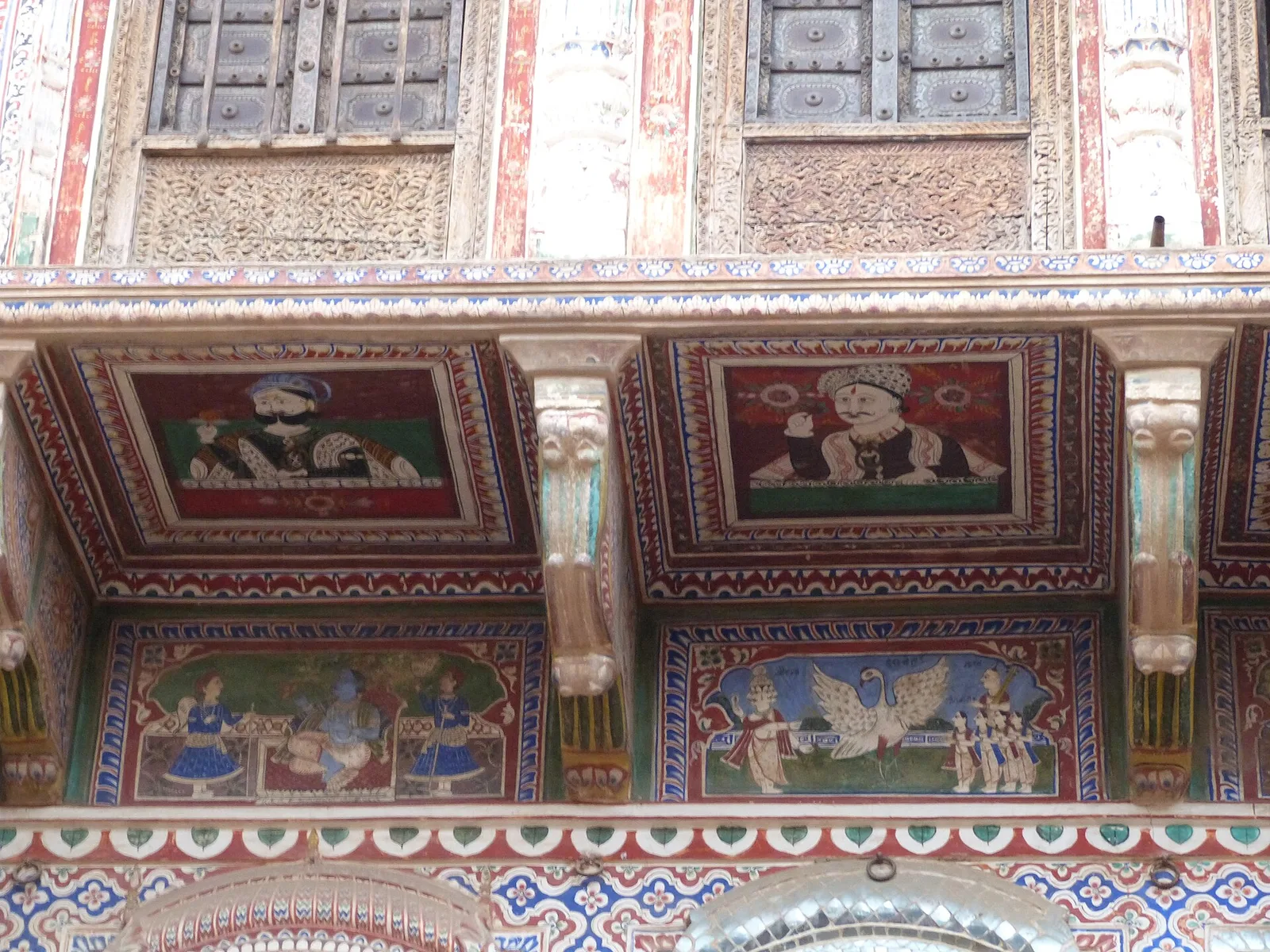
- Look up. Brackets, eaves and ceilings hold some of the finest and best-preserved panels.
- Look for the odd one out. A steam train painted among the gods is part of the fun.
- Count the courtyards. In Shekhawati, the more chowks a house had, the wealthier its family.
Being a good visitor
- Most havelis are private property. Enter only where you are invited or where a museum or caretaker is clearly receiving visitors.
- Do not touch the painted walls. The pigment is fragile, and oil from hands damages it.
- Ask before you photograph people inside homes. If a caretaker shows you around, it is polite to offer a tip.
- Do not use a flash on painted surfaces.
- Park at the edge of the old lanes and walk. They were not built for cars.
Driving tips for the day
- Leave early. Sunrise in Jaipur is around 6:27 am this week. Leaving by 6:30 am keeps you ahead of the city traffic on the Sikar road.
- Watch the highway. NH52 carries heavy trucks. Keep a safe distance and overtake only when you can see well ahead.
- Fuel up in Jaipur. There are pumps along the highway and in the towns, but it is easier to start full.
- Plan the return in daylight. Sunset in Mandawa is about 5:58 pm on 18 October and 5:51 pm on 25 October. Leave Mandawa by about 4 pm so most of the smaller roads are behind you before dark, and watch for cattle and unlit vehicles after sunset.
- Carry cash. Small havelis and tea stalls may not take cards.
A sample day plan
- 6:30 am: pick up your car in Jaipur. Check the tyres, lights and fuel, and note any marks at handover.
- 8:00 am: breakfast stop on the Sikar road.
- 9:30 am: arrive in Nawalgarh. Visit the Podar Haveli Museum.
- 11:00 am: walk to the Morarka Haveli and the nearby lanes.
- 12:30 pm: drive to Dundlod for the fort and the Goenka chhatri.
- 1:30 pm: lunch in Mandawa.
- 2:30 pm: walk the painted lanes around Castle Mandawa.
- 4:00 pm: start back to Jaipur.
- 7:00 to 7:30 pm: back in Jaipur.
If you want to stay a night
This is a full day, and a night in Mandawa or Nawalgarh makes it much more relaxed. It also lets you see two more towns the next morning. Rajasthan Tourism calls Fatehpur the culture capital of Shekhawati and singles out the Nadine Le Prince Haveli, the Singhania Haveli and the Dwarkadheesh temple. Ramgarh, founded in 1791 by the Poddar family, was once one of the richest towns in the region and has painted cenotaphs and havelis. Check your rental's kilometre allowance before you add these stops.
Choosing your car
On 18 October 2026, the Hire N Ride Jaipur page showed cars from ₹2,117 for one day, for a 2024 Suzuki Wagon R (listed at a discount from ₹2,352). Other listings included the Maruti Suzuki Swift and Baleno, the Hyundai Creta, the Mahindra Thar and the Mahindra Scorpio. The listings showed 399 km per day included and a deposit from ₹5,000. Rates and availability change, so check the live page before you book.
For two people, a small hatchback is easy to park at the edge of the old towns. For a family or a group, a larger car or SUV is more comfortable on the four-hour return. Whatever you choose, a compact car with light steering makes slow driving near narrow lanes less tiring.
More drives from Jaipur
If you enjoy this kind of day, there is more to explore from Jaipur by car. Head east for Chand Baori at Abhaneri, one of India's most striking stepwells, drive south for a safari at Ranthambore, or leave before dawn for the migratory birds at Keoladeo.
Conclusion: see the walls while they are still there
Shekhawati's painted towns are finally getting the attention they deserve, from UNESCO's Tentative List to the state's restoration plans. You do not need to wait for any of that to finish. Leave Jaipur early, spend the morning in Nawalgarh's haveli museum and lanes, stop at Dundlod's fort, walk Mandawa in the afternoon light and be on the highway home by four. A self-drive car rental in Jaipur gives you the freedom to stop wherever a painted wall catches your eye.
Ready for the open-air gallery? Book a self-drive car in Jaipur, check today's rates and kilometre limits, and pick your day.
About the author: Nitin Kanish writes road-trip guides for Hire N Ride. He likes drives that lead to places with a story, and he focuses on the details that make a day out work: realistic timings, daylight and what to check before you go.