By Nitin Kanish · 18 October 2026
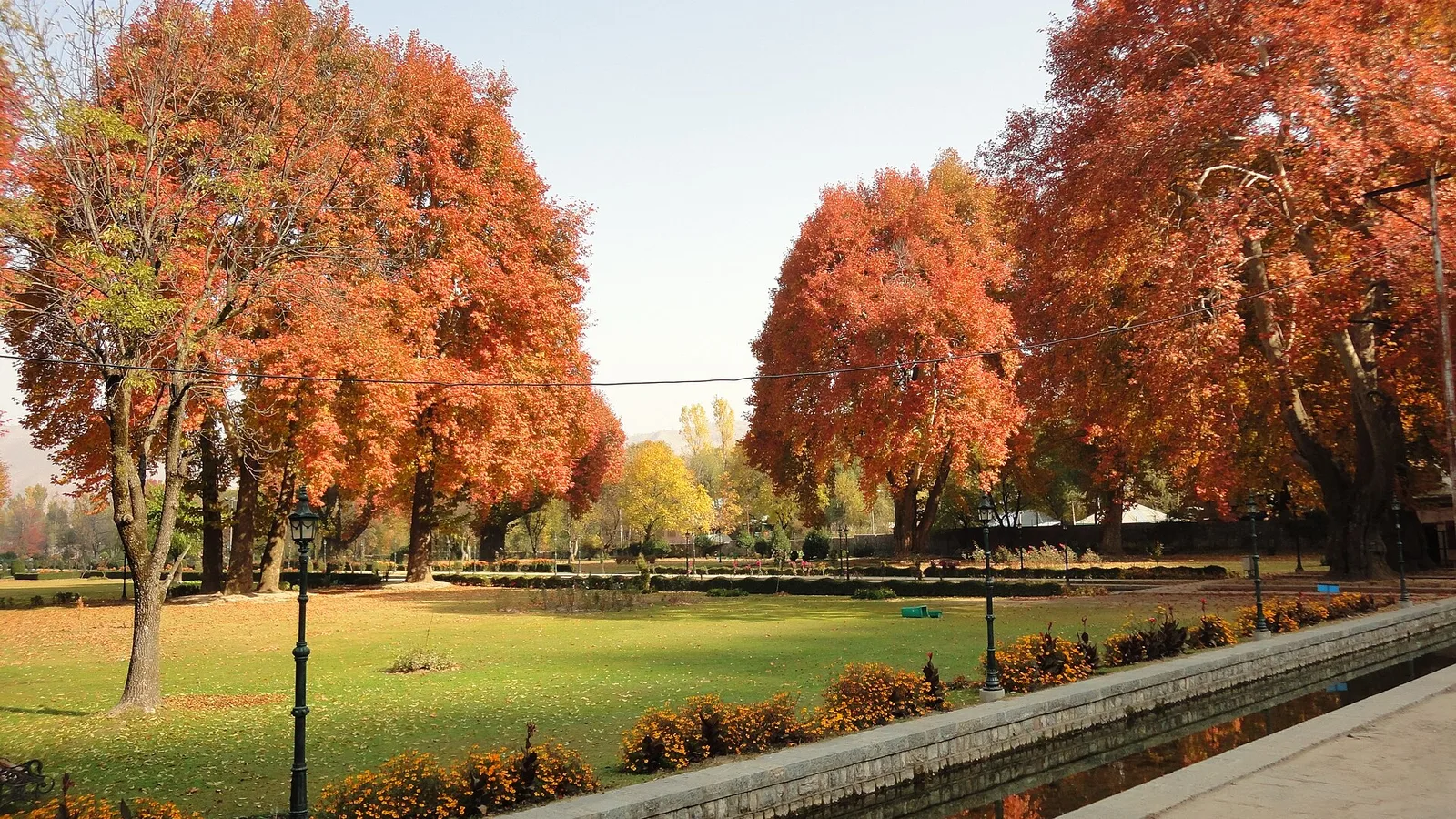
Kashmir's autumn has started. On 7 October 2026, a news-agency photo from Srinagar showed a boatman rowing under chinar leaves on the Chunti Khul, with the caption saying the season was just beginning. Over the next few weeks the great plane trees will turn from green to amber and then to deep red. That is also when Nishat, Shalimar and Naseem Bagh get their biggest crowds.
There is a quieter way to see the same colours. South-east of Srinagar, beyond Anantnag, three Mughal gardens are built around natural springs: Achabal, Kokernag and Verinag. Old chinars line their water channels, and you can see all three in a single day. This guide shows how a car rental in Srinagar turns them into one easy loop. Book a ride in Srinagar for the day you want, then use the plan below.
Key Takeaways
- The loop: Lal Chowk to Achabal, Kokernag and Verinag and back is about 186 km by OSRM map routing. Allow a full day.
- Distances: about 65 km from Lal Chowk to Achabal, 16 km from Achabal to Kokernag, 22 km from Kokernag to Verinag, and 83 km from Verinag back to Srinagar.
- Chinar timing: colour usually builds through October and peaks around late October to early November. Wind and rain can bring the leaves down early.
- Daylight: calculated sunset at Verinag is 5:51 pm on 18 October, 5:43 pm on 25 October and 5:37 pm on 31 October.
- Car: on 18 October 2026, the Hire N Ride Srinagar page listed self-drive cars from ₹3,199 for one day, with unlimited kilometres.
- Start early: leave Srinagar by 7:30 am. That way you reach the gardens in soft morning light and drive back mostly before dark.
Why the springs are worth the drive in autumn
The Mughals came to Kashmir for its water. Wherever a strong spring rose from a hillside, they built a terraced garden around it, with a pool at the top, channels running down through the lawns, and chinars planted along the water. Srinagar's lakeside gardens are the famous examples. The springs of Anantnag district are older, wilder and much less visited.
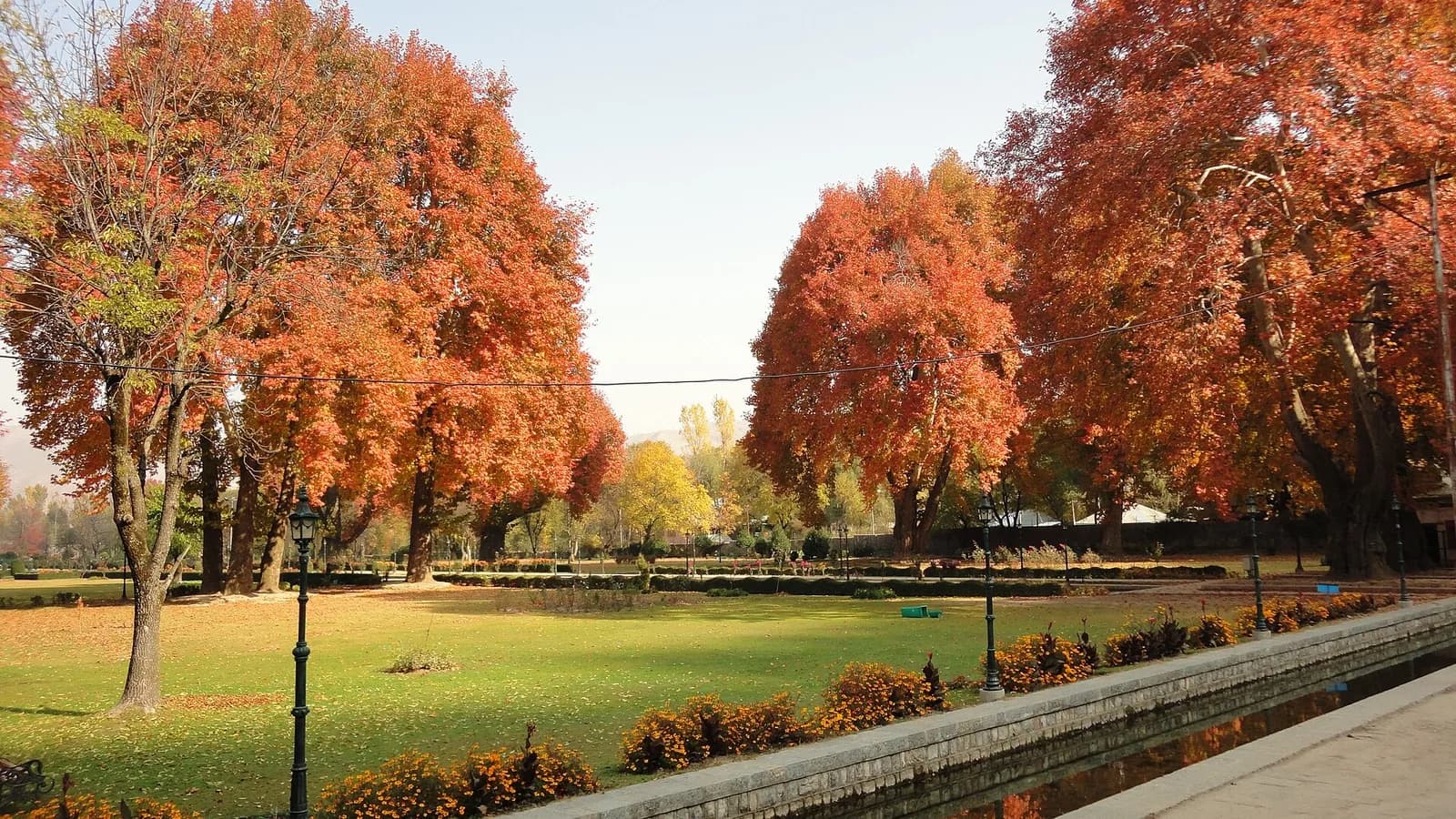
In autumn, the setting does a lot of the work. Spring water stays clear and cold, the chinars above it turn copper and red, and fallen leaves drift down the stone channels. Because each garden is built around a single spring, they are also small enough to see properly in an hour. You can visit three in a day without rushing.
A self-drive car suits this trip well. The three gardens are spread across the south-east corner of the valley, about 15 to 25 km apart by road, so you need your own wheels to link them up. You also get to choose your hours. You can be at the first garden soon after it opens, stop for chai wherever you like, and leave the last one when the light starts to fade.
The loop at a glance
Map routing (OSRM) gives these road distances. Its time estimates assume open roads, so add time for traffic in Pampore, Awantipora and Anantnag, and for any checkpoints.
- Lal Chowk to Achabal: about 65 km, south along the national highway towards Anantnag, then east to Achabal.
- Achabal to Kokernag: about 16 km on district roads through villages and orchards.
- Kokernag to Verinag: about 22 km, heading south-west towards the foot of the Banihal range.
- Verinag back to Lal Chowk: about 83 km, rejoining the highway for the run north.
That adds up to roughly 186 km and about four to five hours at the wheel in real traffic. It is a long but relaxed day, with three garden stops and a lunch break. If you prefer a shorter day, do Achabal and Kokernag only and come back from there. That saves around 40 km.
Stop 1: Achabal, the garden that comes out of a hill
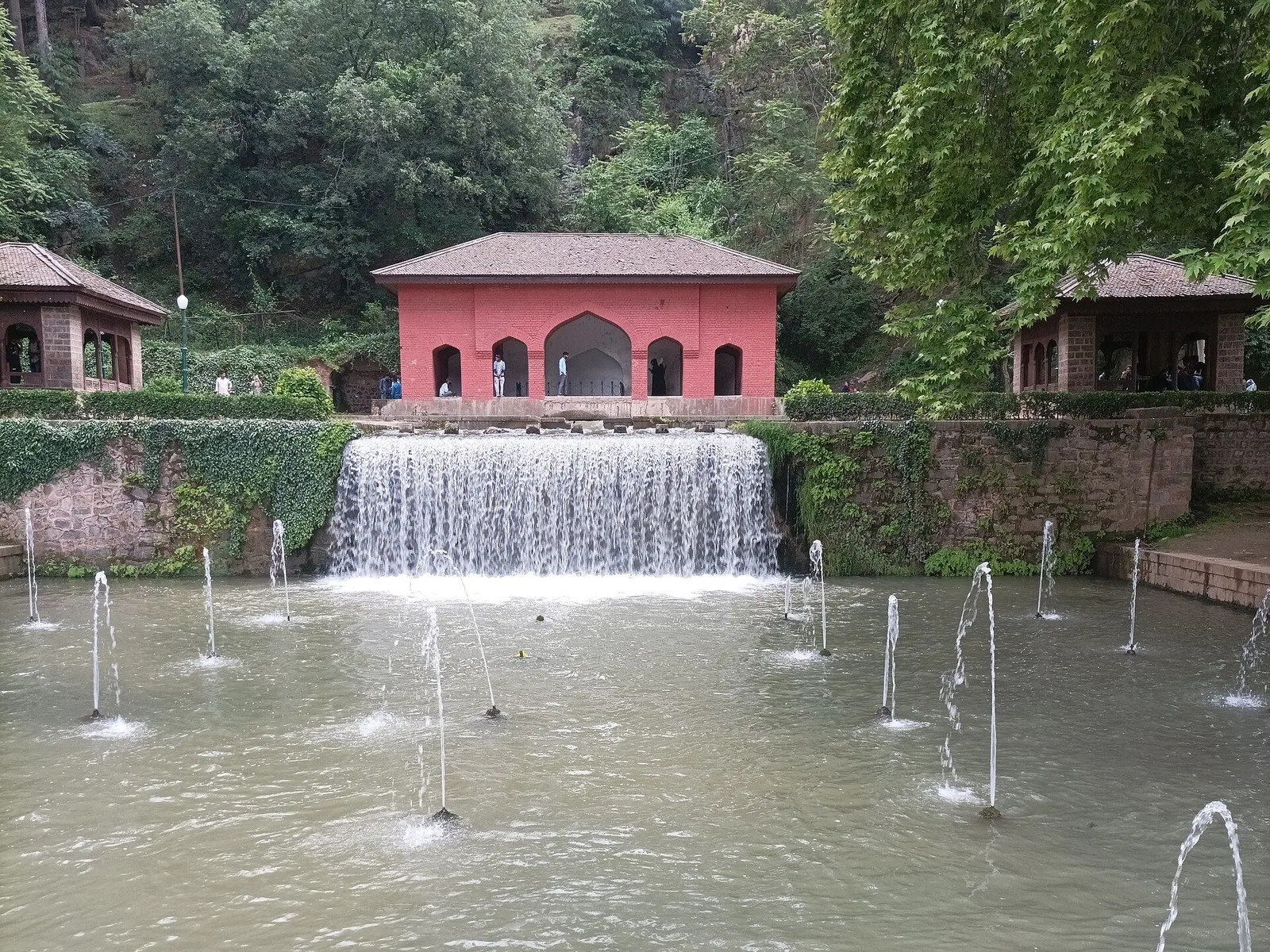
Achabal lies about 10 km from Anantnag town, and the Anantnag district administration calls it perhaps the most beautiful of all the springs. The water gushes out of the Sonsanwar hill at the top of the garden. The district says a stream called the Brengi Nallah, which disappears into the limestone at Dewalgam, is believed to be the real source of the spring.
Jahangir took up the site, and the garden is commonly credited to Empress Nur Jahan, around 1620. The water flows through the terraces in three channels, with fountains along the way, and drops over a cascade below the main pavilion. This is the garden in the photo above.
Go first thing. Achabal is the closest of the three to Srinagar, and in the early morning the pools are still and the chinars around the edges catch the low sun. Walk to the top terrace to see the spring itself, then follow the water down. Most people spend about an hour here.
Stop 2: Kokernag, a botanical garden and a trout farm
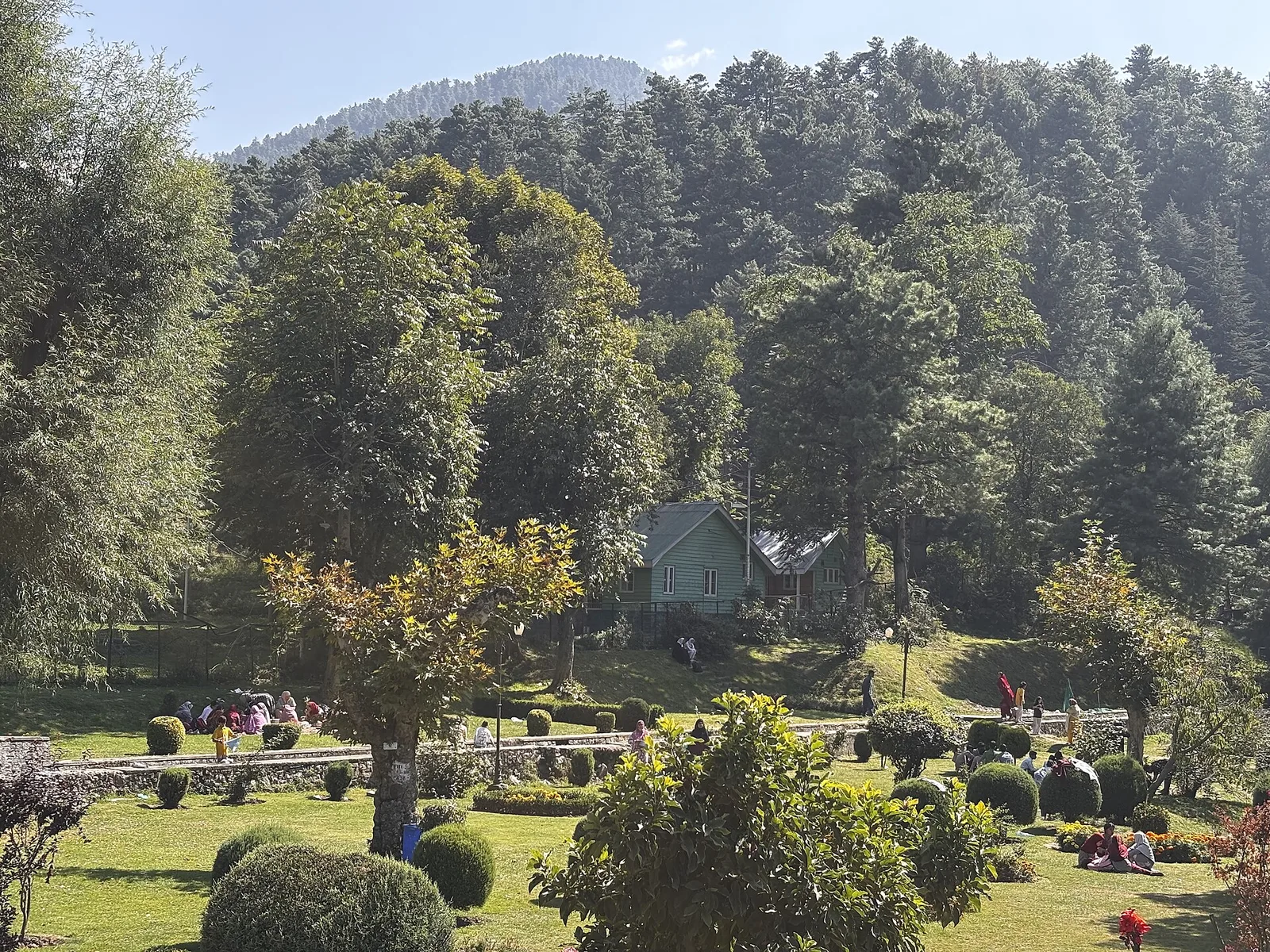
From Achabal it is a short drive to Kokernag. Here, says the district's Kokernag page, a famous spring rises at the foot of a hill covered with evergreen pine. Below it are a terraced garden and a botanical garden with well-kept flower beds, pruned shrubs and tall chinars. The district notes that the garden was developed during the time of Bakhshi Ghulam Mohammad, so it is much newer than the Mughal gardens.
Kokernag is also known for fish. On the western side of the garden is a trout-rearing farm, which the district describes as Asia's biggest. It is worth a look before or after the garden, especially with children.
Because Kokernag is the middle stop, it makes a natural place for a lunch break. Spend some time by the stream. In autumn, the mix of dark pines and turning chinars around the water is the reason to come.
Stop 3: Verinag, where the Jhelum is said to begin
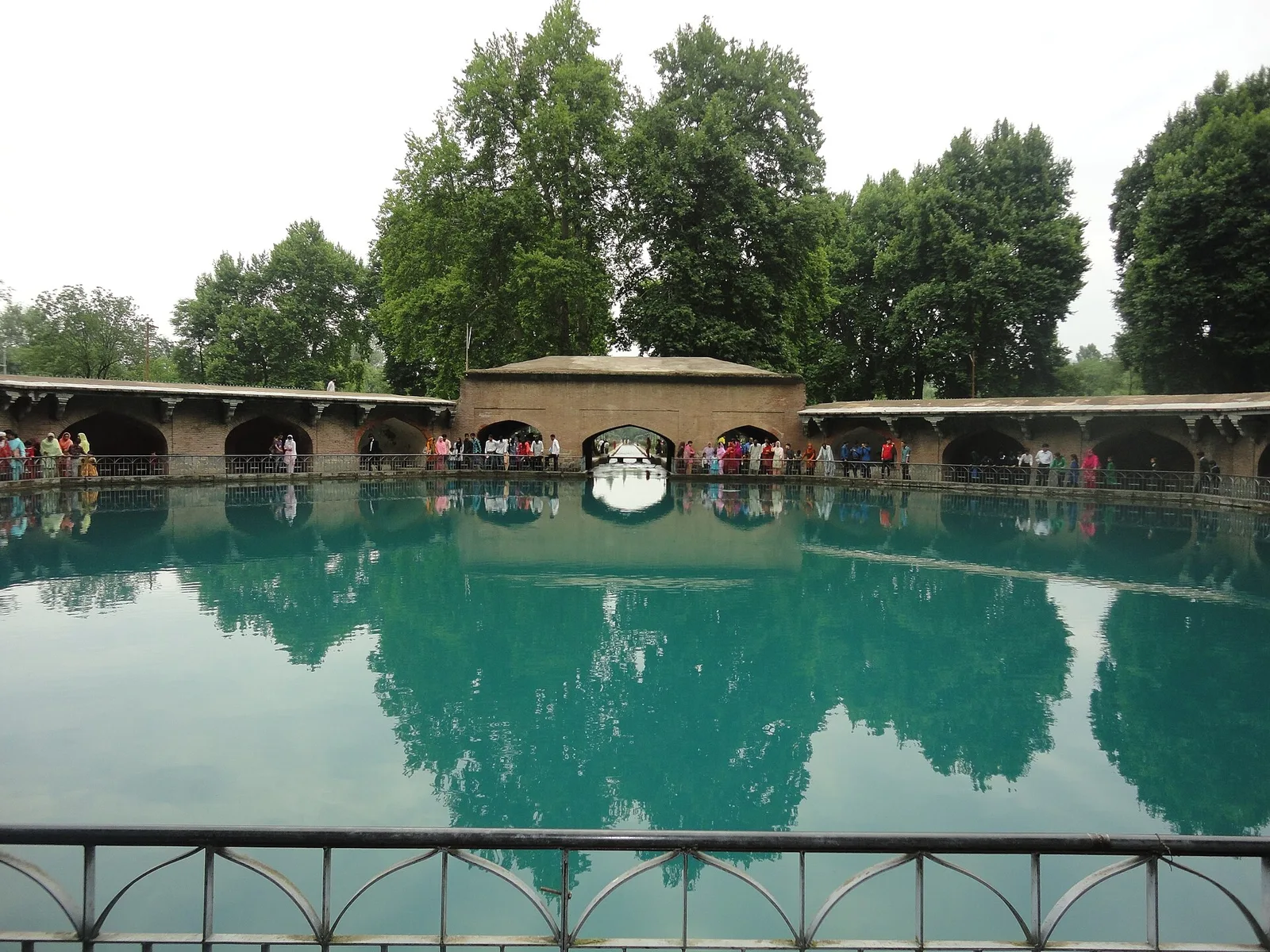
Save the best for last. Verinag sits at the foot of a forested spur of the Banihal range, and its spring is traditionally regarded as the source of the Jhelum. According to J&K Tourism Development Corporation, Emperor Jahangir had an octagonal tank of carved stone built around the spring, with an arcade of arched recesses around it. The date, 1029 Hijri or 1620 AD, is inscribed on a stone slab in the southern wall. The water fills the deep blue pool, then flows out along a long straight canal through the garden. JKTDC adds that Shah Jahan later laid out the garden next to the spring.
Verinag also has a link to the chinars you came to see. The Aga Khan Trust's Archnet record of the garden notes that in 1620 Jahangir ordered plane trees, or chinars, to be planted along the central canal. He loved the place so much that he wished to be buried here. According to the district administration, he died in 1627 at Chengas, near Rajouri, but he was buried at Shahdara in Lahore instead.
Walk all the way around the octagon first and look down into the pool, where you will usually see fish. Then walk down the canal to look back at the arcade framed by trees. In late afternoon, the hill behind the spring puts much of the garden in shade, so arrive by about 2 pm if you want light on the water.
Timing the chinar colour
No one can promise the exact week of peak colour. It changes with each year's weather. Still, the general pattern is consistent:
- Early to mid-October: the first amber and gold at the leaf edges, with plenty of green left.
- Mid to late October: amber and copper take over, and the first deep reds appear.
- Late October to early November: peak crimson in many years, followed by leaf fall, which speeds up after windy or wet days.
- Mid-November onwards: mostly bare branches and leaf-covered paths, with clear, cold days.
The best approach is to watch recent photos from Srinagar in the days before you travel and keep your plans flexible by a day or two. A rental car makes that easy, because you can simply move your drive to the clearest day.
Pack for the cold too. Srinagar's long-term October averages, based on India Meteorological Department normals, are around 21°C by day and close to 6°C at night. The springs sit higher and in the shade of hills, so the mornings feel colder there.
A sample day
- 7:30 am: leave Lal Chowk and head south on the highway past Pampore and Awantipora.
- Around 9:00 am: arrive at Achabal. Walk the terraces for about an hour.
- Around 10:30 am: drive on to Kokernag. Visit the garden and trout farm, then have lunch.
- Around 1:30 pm: drive to Verinag. Spend an hour at the spring and canal.
- By 3:30 pm: start back to Srinagar so most of the return is in daylight. Sunset in Srinagar is about 5:53 pm on 18 October and 5:38 pm on 31 October.
On a weekend, add time for traffic on the highway near Srinagar. On a weekday, the roads between the springs are usually calm.
Choosing your car
All three gardens are on paved roads, so you do not need an SUV. A comfortable hatchback is enough for two people. If you are travelling with family or extra luggage, or simply want more room, a larger SUV makes the long highway stretch easier.
On 18 October 2026, the Hire N Ride Srinagar page listed a Maruti Suzuki Baleno (petrol, manual) from ₹3,199 for one day, a Renault Duster diesel from ₹3,699, and a Tata Hexa diesel from ₹5,499. The page also showed a deposit from ₹5,000 and unlimited kilometres, with doorstep delivery up to 5 km on the listings. The listings show roadside assistance up to 40 km, and Verinag is about 84 km from Lal Chowk, so check the assistance terms when you book. Rates and availability change, so check the live page before you book.
Driving tips for South Kashmir in autumn
- Carry your documents. Keep your original driving licence and a photo ID with you, and be ready to show them at checkpoints.
- Fill up in town. Fill the tank in Srinagar or Anantnag rather than counting on finding fuel near the springs.
- Download maps. If your phone uses a prepaid plan from outside Jammu and Kashmir, check before you travel whether it will work there, and download offline maps of the route.
- Watch for heavy vehicles. The highway carries trucks and buses, so overtake only where you can see well ahead.
- Drive gently in villages. Roads between the springs pass through villages, orchards and school zones. Expect people, livestock and slow tractors.
- Check the car at pickup. Look at the tyres, brakes, lights and wipers, and photograph the car's condition before you leave.
- Respect the gardens. These are historic sites. Do not climb on the stonework, and take any litter back with you.
More drives from Srinagar this autumn
If you have more days in the valley, the same car opens up other autumn trips. Our drive south to the saffron fields and Avantipora follows part of today's route and works well in late October, when the crocus bloom is usually under way. For mountain views, read our guide to driving to Gulmarg for the gondola on a clear autumn day. And for a quieter day in the other direction, see the drive to Srinagar's northern lakes.
Conclusion: follow the water south
When the chinars turn, every visitor to Srinagar heads for the same lakeside gardens. A short drive south takes you to three gardens with the same Mughal history, clearer water and far more space: Achabal's cascades, Kokernag's pines and trout farm, and the blue octagon at Verinag where the Jhelum is said to begin. A car rental in Srinagar lets you link all three in one unhurried day and be back in the city by dusk.
Ready to go? Book a ride in Srinagar, check today's rates and deposit, and pick the clearest day of the week for the drive.
About the author: Nitin Kanish writes road-trip and self-drive guides for Hire N Ride. He likes trips where the timing makes or breaks the day, and he focuses on the practical details that make a rental work, such as distances, opening hours and daylight.