By Manjot Kaur · 15 October 2026
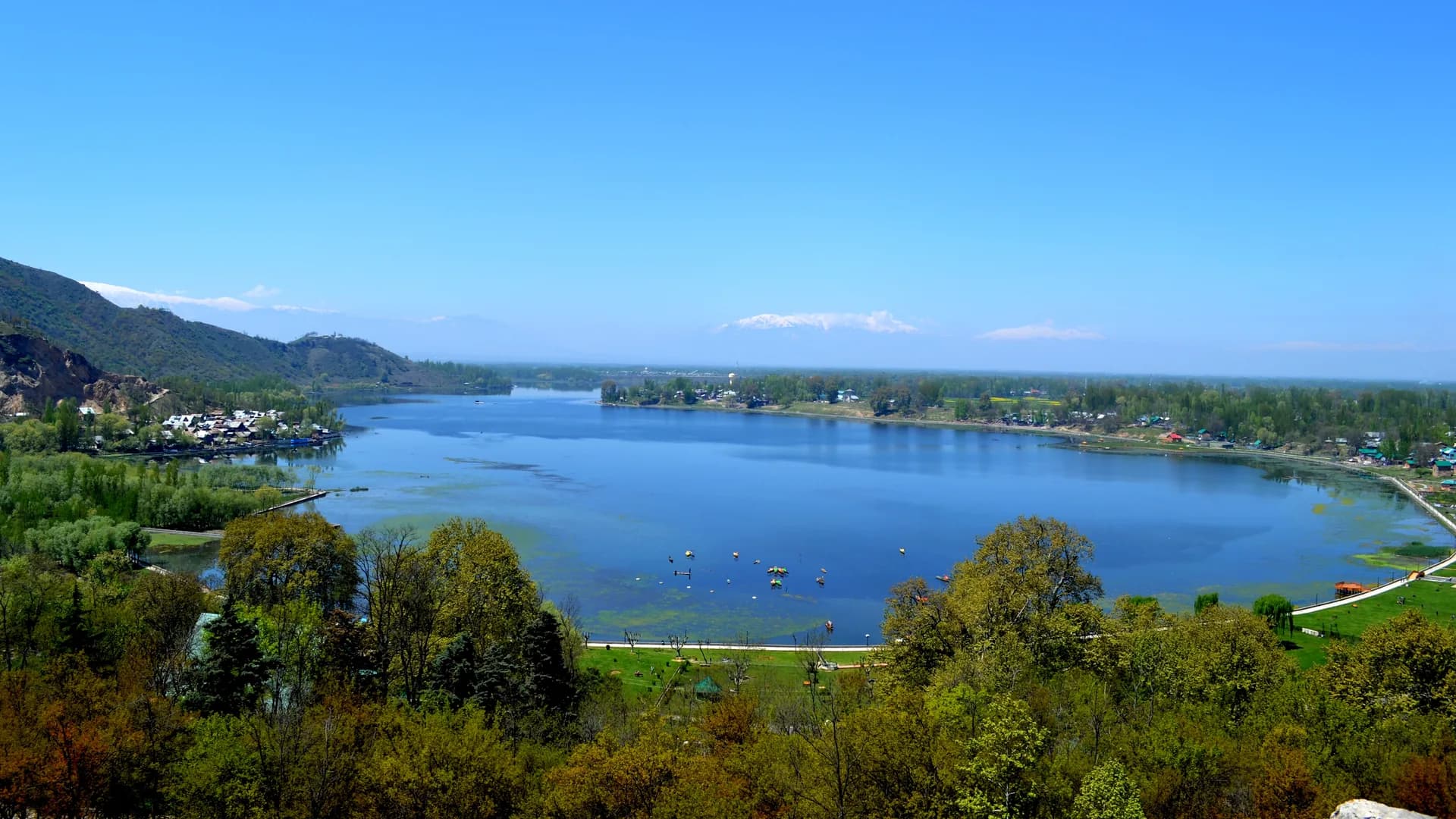
In October, most visitors to Srinagar stay close to Dal Lake. The Boulevard fills with traffic, the shikara stands are busy and the Mughal gardens are full by mid-morning. Yet less than an hour's drive north there are lakes most visitors never see. Manasbal is clear and spring-fed. Wular is so wide that on a hazy day you can't see the far shore. On the way you pass Kheer Bhawani, a temple built over a sacred spring under old chinar trees. With a car rental in Srinagar, you can join all three in one unhurried autumn day and still be back in the city before dark.
This guide covers the route, realistic timings for mid to late October, what you can actually see at each stop, and the small things that make the day go smoothly. You don't need a tour, just a car, a full tank and an early start. Book a self-drive car in Srinagar and pick your day.
Key Takeaways
- The loop: Srinagar to Kheer Bhawani (Tulmulla) is about 25 km. Manasbal is roughly 8 to 9 km further. From Manasbal to Sopore is about 35 km, and Watlab, on Wular's shore, is about 8 km beyond Sopore. The drive back from Sopore to Srinagar is about 50 km. Plan for around 140 km in total.
- Kilometres: the Srinagar page on Hire N Ride currently lists unlimited km, so the distance won't add charges. Fuel isn't included.
- Price check: on 15 October 2026, the lowest listed Srinagar rate was ₹3,199 for one day (a 2018 Maruti Baleno). Deposits start from ₹5,000. Rates change, so check the page when you book.
- Best order: Kheer Bhawani first, then Manasbal while the morning light is soft, then Wular in the early afternoon. Head home from Sopore by about 3:30 pm.
- Daylight: sunset in Srinagar is around 5:57 pm on 15 October and about 5:40 pm by the end of the month, so the autumn days are short.
- Birds: the first winter ducks are arriving on Kashmir's wetlands. Watch quietly, and don't post exact locations of large flocks online.
Why go north in autumn
Kashmir's autumn, or harud, runs from about mid-September to the end of November. In that time the chinars change from green to gold and then to a deep rust red before the leaves fall. Local guides usually place the deepest colour in the second half of October and the first days of November. Wind and rain can shift it by a week either way, so if colour is your main reason for going, check recent photos from the valley before you pick a date.
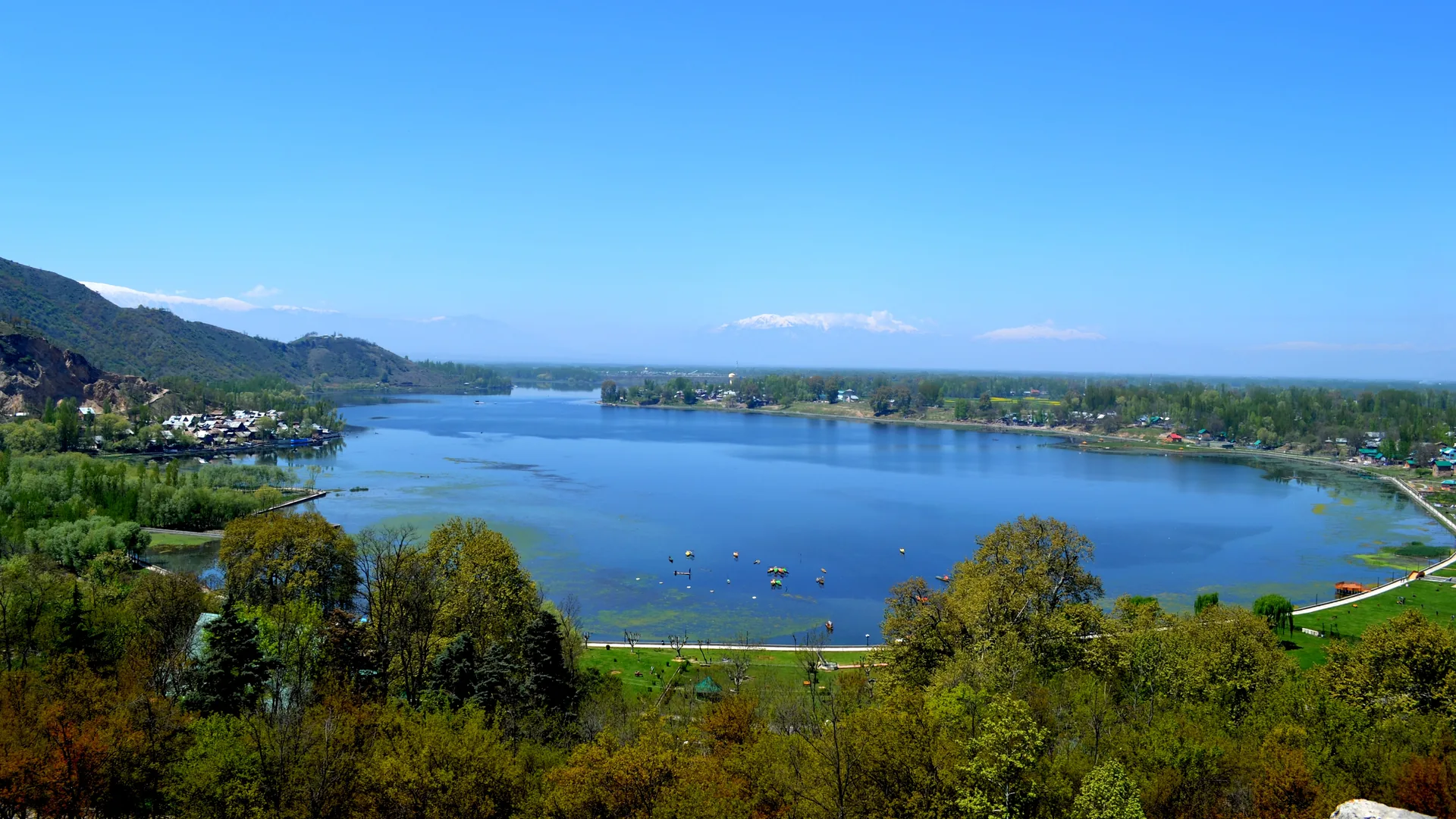
The northern lakes add two things that Dal can't offer in this season: space and birds. The Ganderbal district administration describes Manasbal as one of the largest natural grounds for aquatic birds in Kashmir, and calls it the "supreme gem of all Kashmir lakes". Wular, near Sopore and Bandipora, is one of the largest freshwater lakes in the subcontinent. It has been a Ramsar wetland of international importance since 1990. On a weekday in late October, you may share either lake with a few boatmen, fishing families and the first flocks of the winter.
The route at a glance
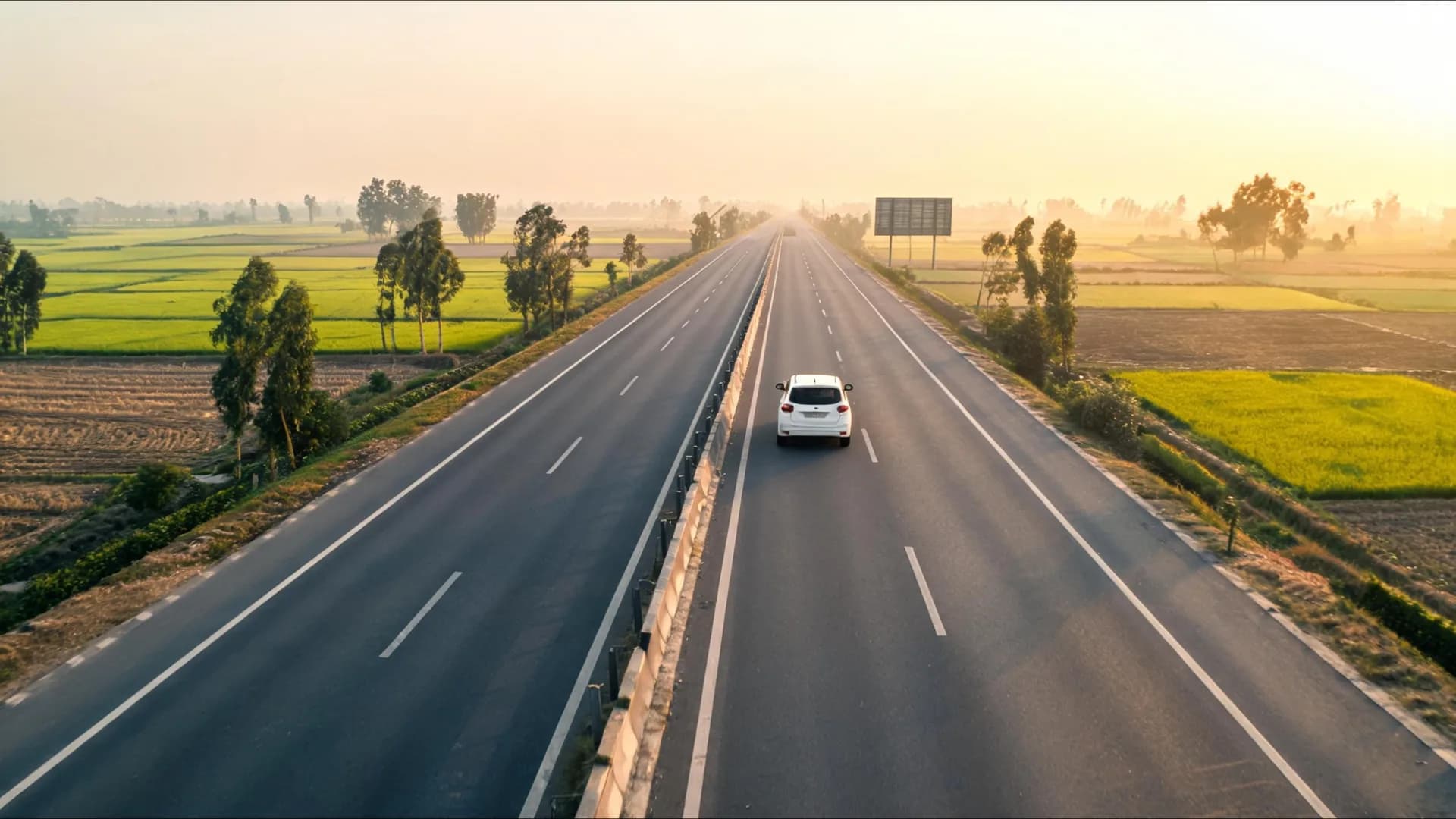
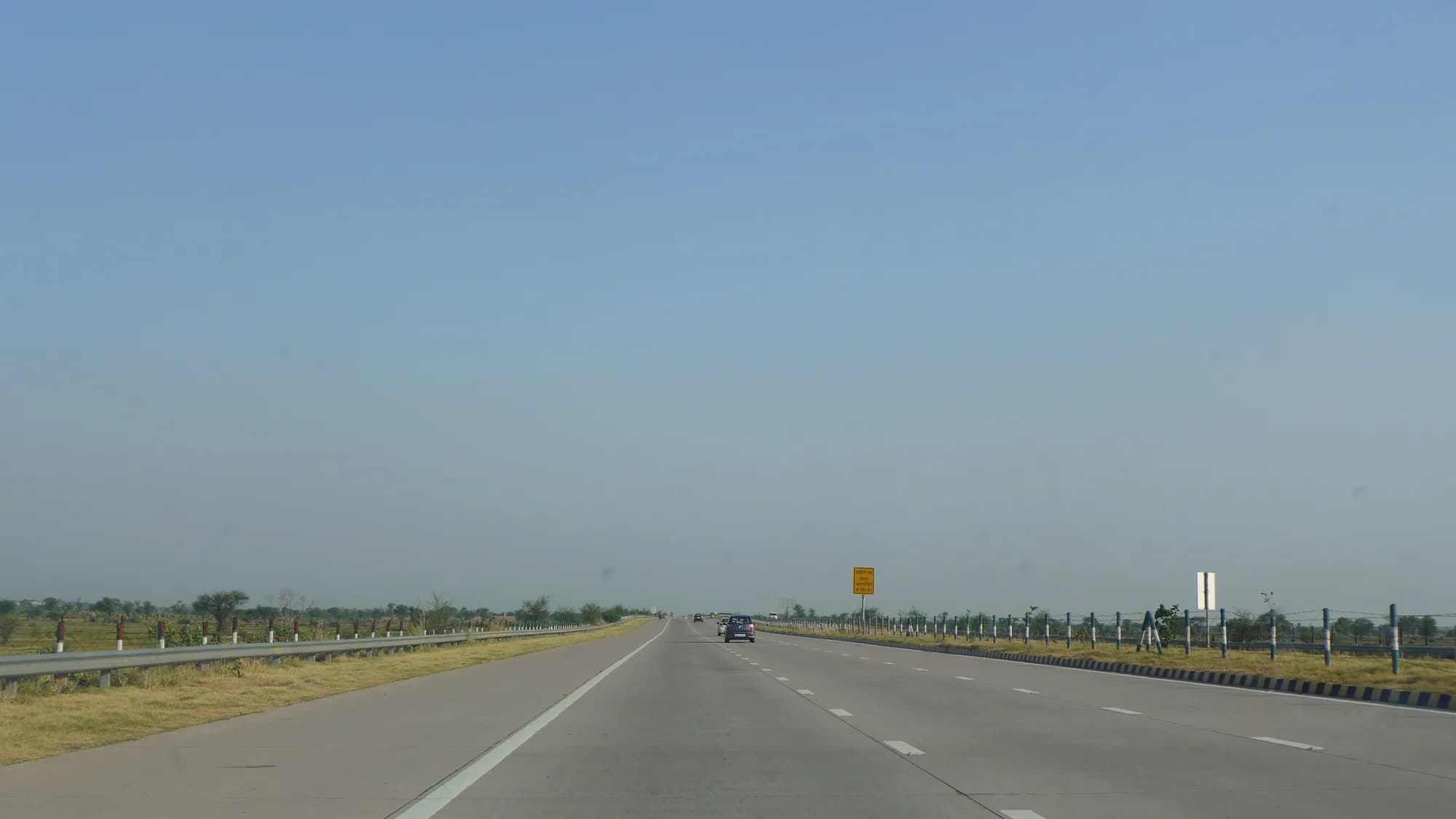
Leave central Srinagar heading north towards Ganderbal. The usual road to Manasbal runs through Shadipora, Nasim and Ganderbal and is about 30 km long. Kheer Bhawani is just off this road at Tulmulla, so it makes a natural first stop. From Manasbal, carry on west through the Safapora area towards Sopore. Watlab sits on the Sopore–Bandipora road above Wular's southern shore. To get back to the city, take the main road from Sopore towards Srinagar, so the day becomes a loop rather than an out-and-back.
In light traffic, the driving adds up to about three to four hours. Village stretches, school hours and roadside markets slow things down, so allow for that rather than trusting the fastest time on your phone. Fill the tank in Srinagar before you set off. Download offline maps for the Ganderbal and Sopore area too, as phone signal can be patchy away from the main towns.
Stop 1: Kheer Bhawani, Tulmulla
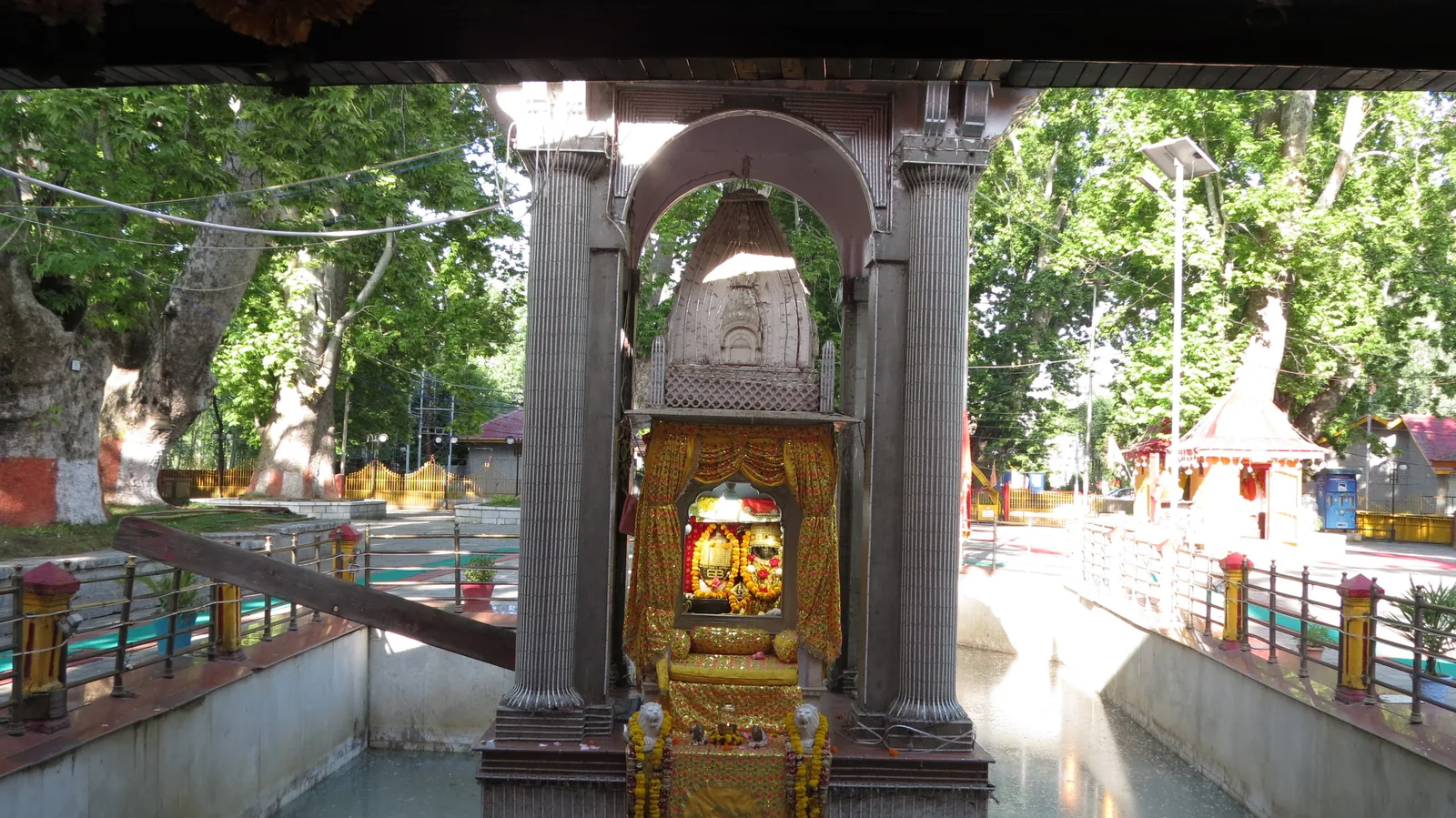
The temple of Kheer Bhawani, also called Ragnya Devi, stands in the village of Tulmulla in Ganderbal district, about 25 km from central Srinagar. It is one of the most important shrines for Kashmiri Hindus. The goddess is offered kheer, the rice-and-milk pudding that gives the temple its name. The small marble shrine stands in a heptagonal spring, and the spring's water is said to change colour over time. The temple, spring and pond took their present form under Maharaja Pratap Singh in the 1910s. Maharaja Hari Singh renovated it later.
The big annual gathering, the Kheer Bhawani mela, takes place in early summer on Jyeshtha Ashtami. So in October you'll find the complex calm. What makes it special in autumn is the grove of old-growth chinars around the courtyard, where pilgrims sit on grass mats. It's often the first place on this route where you'll see the leaves turning.
- Time needed: 30 to 45 minutes.
- Etiquette: dress modestly, remove your shoes where asked, and follow any rules on photography inside the shrine area.
- Security: security personnel are posted at the complex, so carry a government photo ID and expect a routine check at the gate.
- Parking: there's a parking area by the temple road. Leave the car there and walk in.
Stop 2: Manasbal Lake, Safapora
Manasbal is a short drive from Tulmulla, and it feels very different from Dal. It is a compact, spring-fed lake, about 3.5 km long and 1.5 km wide. It sits between the Baladar hills, a raised karewa plateau and the limestone Ahtung hills. At about 13 metres (43 feet), it is often described as the deepest lake in India, and the water is usually very clear. In July and August the edges are covered in lotus. By October, the flowers are gone and lotus roots are harvested from the shallows.
The lake has had a good couple of years. In July 2026, The Hindu reported that the Wullar-Manasbal Development Authority had removed accumulated weed, dredged channels and restarted sanitation work, and that migratory birds had returned in larger numbers in the winter of 2025–26. The authority said official records list more than 46 bird species at the lake. It also held a winter bird-watching festival there. In mid-October you may see the first ducks and grebes on the water, with more arriving in the weeks that follow.
What to do at Manasbal
- Jharokha Bagh: the Mughal garden built by Nur Jahan above the lake. Its name means "bay window", and it gives one of the best views of the water.
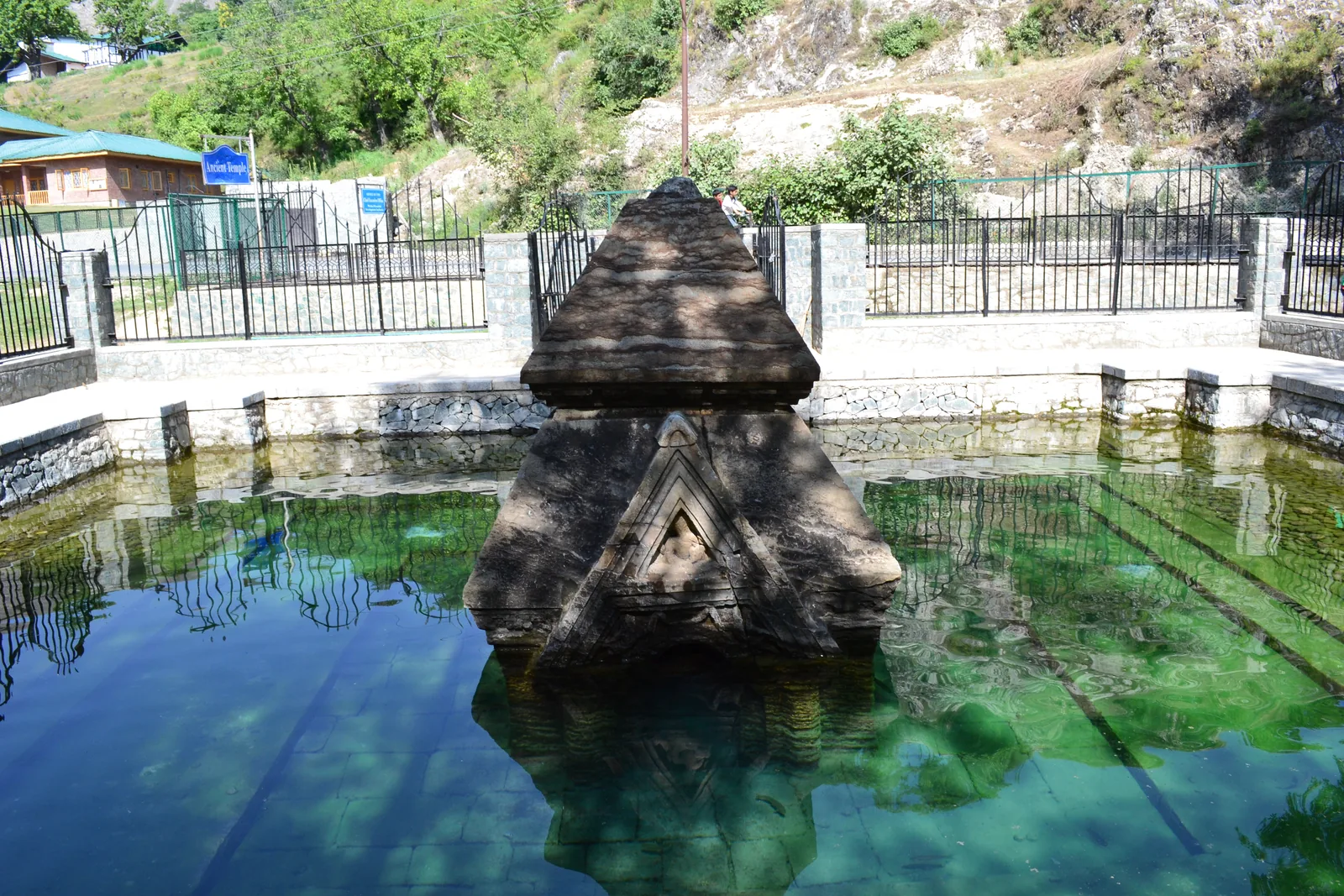
- The old stone temple: a small, pyramid-roofed temple stands in clear spring water near the shore. It's an ASI-listed monument and a quiet corner many visitors miss.
- A boat on the lake: local boatmen take visitors out for short rides. Agree on the fare and duration before you get in.
- Bird-watching: bring binoculars and stay on the shore paths. Early mornings and late afternoons are the calmest.
Plan on about an hour and a half here. If you're travelling with children or older parents, Manasbal alone makes a lovely half-day, and you can skip Wular and drive straight back to Srinagar.
Stop 3: Wular Lake from Watlab
Wular is on a different scale. The Jhelum flows through it, and the lake's area changes greatly with the seasons, from roughly 30 square kilometres at its lowest to almost 189 at its highest. Its old Sanskrit name was Mahapadmasar, and one explanation of the modern name links it to the high waves that can rise on the lake in the afternoon. In the middle of the lake is Zaina Lank, an artificial island built on the orders of Sultan Zain-ul-Abidin in the 15th century.
Watlab, on the Sopore–Bandipora road, is the easiest place to reach the lake by car. It lies about 8 km from Sopore. The hill is linked to the Sufi saint Baba Shukur-ud-Din of the Rishi order, who meditated on Sharikot hill above the village. On a clear autumn afternoon, the view stretches across the water to the mountains on the far side.
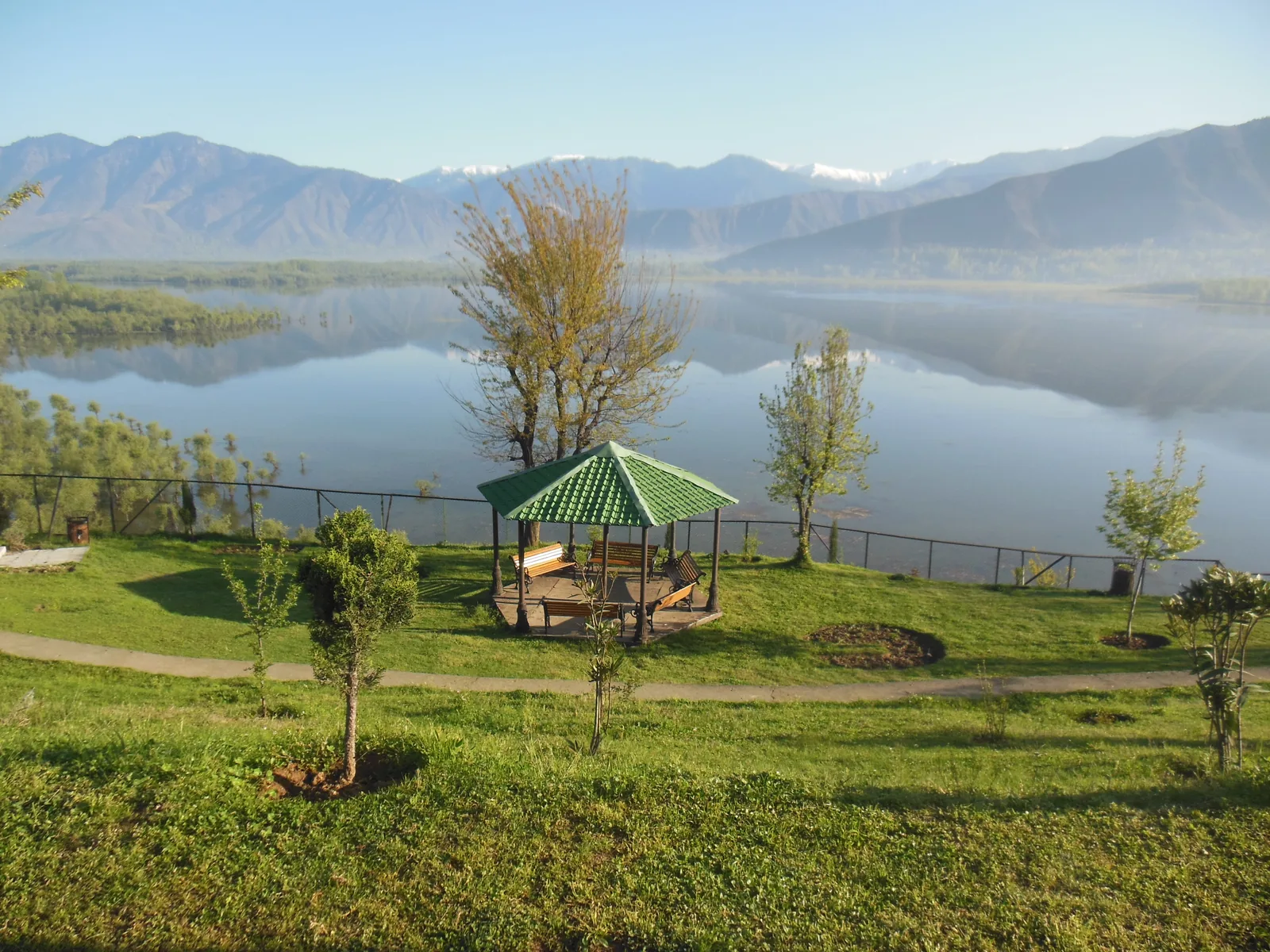
Wular and Watlab were among the tourist spots closed after the April 2025 Pahalgam attack. They reopened in February 2026, along with 13 other tourist spots across Jammu and Kashmir, after a security review. Access rules in Kashmir can still change at short notice, so check the latest local advisories the evening before your trip. The Hire N Ride Srinagar page recommends the same.
- Time needed: about an hour at the Watlab viewpoint, plus a short stop on the lakeshore if you want to watch the fishing boats.
- Afternoon wind: Wular can get choppy later in the day. If you take a boat, go early and only with an operator who has life jackets.
- Food: Sopore is the largest town on the loop, so it's the easiest place to find a late lunch before heading back.
A realistic one-day timetable
- 7:30 am: pick up your car in Srinagar with a full tank.
- 8:15–9:00 am: Kheer Bhawani, Tulmulla.
- 9:15–11:00 am: Manasbal: Jharokha Bagh, the old temple, a short boat ride.
- 11:00 am–12:00 pm: drive via Safapora towards Sopore.
- 12:15–1:30 pm: Watlab viewpoint and the Wular shore.
- 1:45–2:45 pm: late lunch in Sopore.
- 3:30 pm: start back to Srinagar and arrive around 5 pm, before sunset.
If you'd rather keep it short, do Kheer Bhawani and Manasbal in the morning and be back in Srinagar for lunch. For a different autumn day, our drive south to the Pampore saffron fields and Avantipora times well with the saffron bloom later this month.
What to book: car rental in Srinagar for this trip
- Car type: the roads on this loop are mostly paved and fairly flat, with narrow village stretches. A hatchback is fine for two people. A diesel SUV gives more room and ground clearance for four. The Srinagar listings currently include a Maruti Baleno, a Renault Duster and a Tata Hexa.
- Unlimited km: the Srinagar page currently lists unlimited km, which suits a 140 km loop. Confirm it on your booking.
- Fuel: the car comes with limited fuel. Refuel as you go and return it at the agreed level.
- Documents: you need a valid driving licence for the vehicle class and one government photo ID. The minimum age is 21. Digital KYC is done in the app or on the website before pickup. Keep your ID in the car throughout the trip.
- Delivery and assistance: the current Srinagar listings show doorstep delivery up to 5 km and roadside assistance up to 40 km. Watlab is beyond that radius, so drive carefully, check the tyres and spare before you leave, and save the 24/7 chat support details.
- Reviews: Hire N Ride works like an Airbnb for vehicles. Each car has a profile with reviews, so read them for notes on cleanliness and on-time handovers.
Driving tips for late October in the valley
- Mornings are cold and the low ground near the lakes can be misty. Use dipped headlights and drive slowly until the sun clears the hills.
- Expect shepherds moving flocks, tractors and slow trucks on village roads. Give them room and don't push past on blind bends.
- Carry a warm layer even if it's sunny at noon. Temperatures fall quickly after 4 pm.
- Park only in proper spots near the temple, gardens and viewpoints. Don't block village lanes or field gates.
- Keep your licence, ID and rental papers in the car. Checks on the main roads are routine.
Respect the birds and the lakes
In early October, the Jammu and Kashmir Wildlife Protection Department asked birdwatchers and visitors not to share exact locations, GPS coordinates or other details of large bird gatherings on social media, because that can help poachers. Take your photos, but leave the location vague. Keep your distance from resting flocks, don't throw food or litter into the water, and take your waste back to Srinagar. Both lakes have needed years of cleanup work, and every visitor can help keep them that way.
More autumn drives from Srinagar
If you have more days in the valley, save a clear one for our Gulmarg Gondola day from Srinagar. For a wider list of short trips, see our October day trip guide for Srinagar.
Conclusion: the lakes Srinagar keeps to itself
Dal Lake will always be the postcard. But on a clear autumn day, the drive north shows a quieter side of Kashmir: the chinars of Tulmulla, the deep, clear water of Manasbal and the wide open spaces of Wular, all within a day's loop. Start early, keep to daylight, check the advisories the night before, and you'll have one of the calmest days of your trip.
Plan your lakes day now: book a car rental in Srinagar, check the listing details, and head north early.
About the author: Manjot Kaur writes self-drive route guides for Hire N Ride travellers. She focuses on seasonal timing and the practical details, such as distances, daylight, documents and local etiquette, that help a rental day run smoothly.