
By Manjot Kaur · 15 October 2026
South of Patna the Ganga plain runs flat for most of an hour, past Bakhtiyarpur and the brick kilns, before the low ridges of Rajgir appear. In between lie the ruins of Nalanda, a monastery and university that taught for about eight hundred years. Further on is Rajgir, an old capital set among five hills, and a short way off the main road is Pawapuri, where a marble temple stands in a lotus tank. With a self-drive car rental in Patna, you can see all three in one long day and be home before late evening.
This guide gives you a realistic order, verified opening hours and ticket prices, and the small things that decide whether the day feels calm or rushed. These include Monday closures, ropeway queues, parking and the early October dusk. Book a self-drive car in Patna when your dates are fixed, then use the plan below.
Key Takeaways
- The loop: Patna to Nalanda is about 90 km by road via Bakhtiyarpur and Bihar Sharif. Rajgir is about 14 km beyond Nalanda. Pawapuri lies about 13 km from Bihar Sharif, so it fits on the way back.
- Order: Nalanda first (it opens at 9 am), Rajgir around midday, and Pawapuri in the late-afternoon light.
- Season: Bihar Tourism and the ASI both name October onwards as the best time for these sites. Days are drier after the monsoon and much cooler than summer.
- Price check: on 15 October 2026, the lowest self-drive car rate on the Hire N Ride Patna page was ₹2,352 per day, for a Hyundai Venue. Deposits start from ₹1,000. Rates change, so confirm when you book.
- Avoid Mondays if you want the Rajgir Zoo Safari or Nature Safari. Both are also shut on 20 October 2026 for Vijayadashami.
- Dusk comes early: in mid-October the sun sets around 5:20 pm in Patna. Plan the highway leg back with that in mind.
Why this is a car day, not a bus day
The three stops sit on different roads. Nalanda's ruins are a short drive off the Bihar Sharif–Rajgir road. Rajgir's sights are spread around the town and the hills: the ropeway base, the hot springs at Brahmakund, Venu Van and the Nature Safari. Pawapuri sits at the end of a short branch road. Buses and shared autos link the towns, but each change costs time, and the Rajgir sights alone are too far apart to walk comfortably.
A car also helps with the things families care about: water and snacks in the boot, a place to leave bags and shoes, air-conditioning at midday, and rest for older travellers between sites. Bihar's heritage sites involve a lot of walking on brick, stone and marble, so a car parked near each entrance takes some strain off the day.
Before you set off: the rental and the road
On 15 October 2026, the Hire N Ride Patna page listed self-drive cars from ₹2,352 per day for a Hyundai Venue, with a Toyota Innova Crysta also listed for larger groups. Deposits start from ₹1,000. The page header mentions unlimited km, but the page also advises checking the kilometre and outstation rules on your listing before you head out of the city. Do that before you leave for Nalanda. The deposit and fuel policy are shown on the listing before you pay.
Bring a valid four-wheeler driving licence and a government photo ID, and complete the upload at booking so pickup is quick. Fill up in Patna. Carry some cash too: village tea stalls, parking lots and some smaller stops still prefer it, and mobile signal can drop on stretches between towns.
Leave Patna early. A 6:30 am start avoids city traffic and the morning truck movement around Bakhtiyarpur. On most days that puts you near Nalanda by about 9 am, with time for breakfast on the way. Allow roughly two to two and a half hours for the 90 km, depending on traffic and stops.
Stop 1: Nalanda Mahavihara, 9 am to 11:30 am
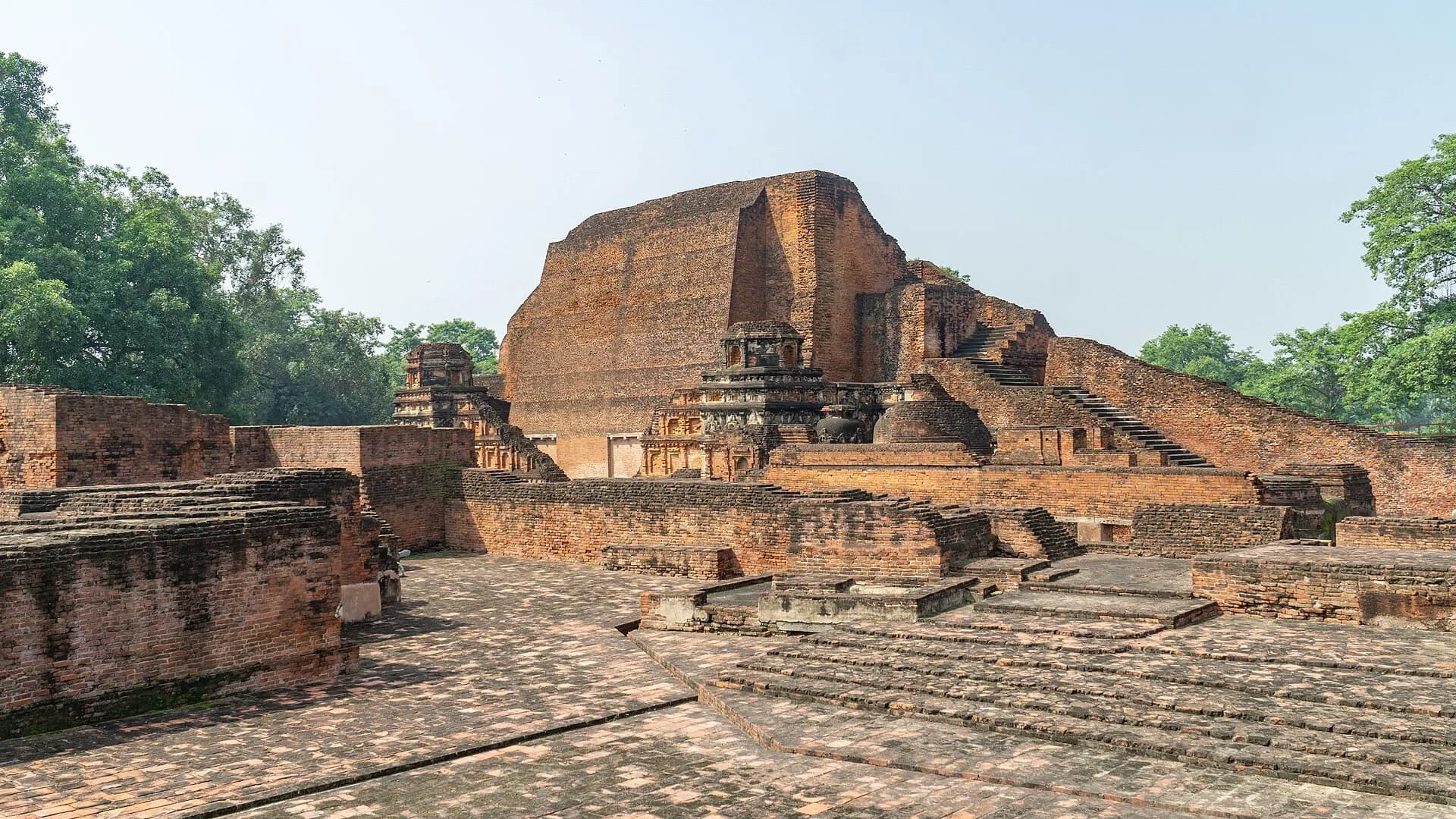
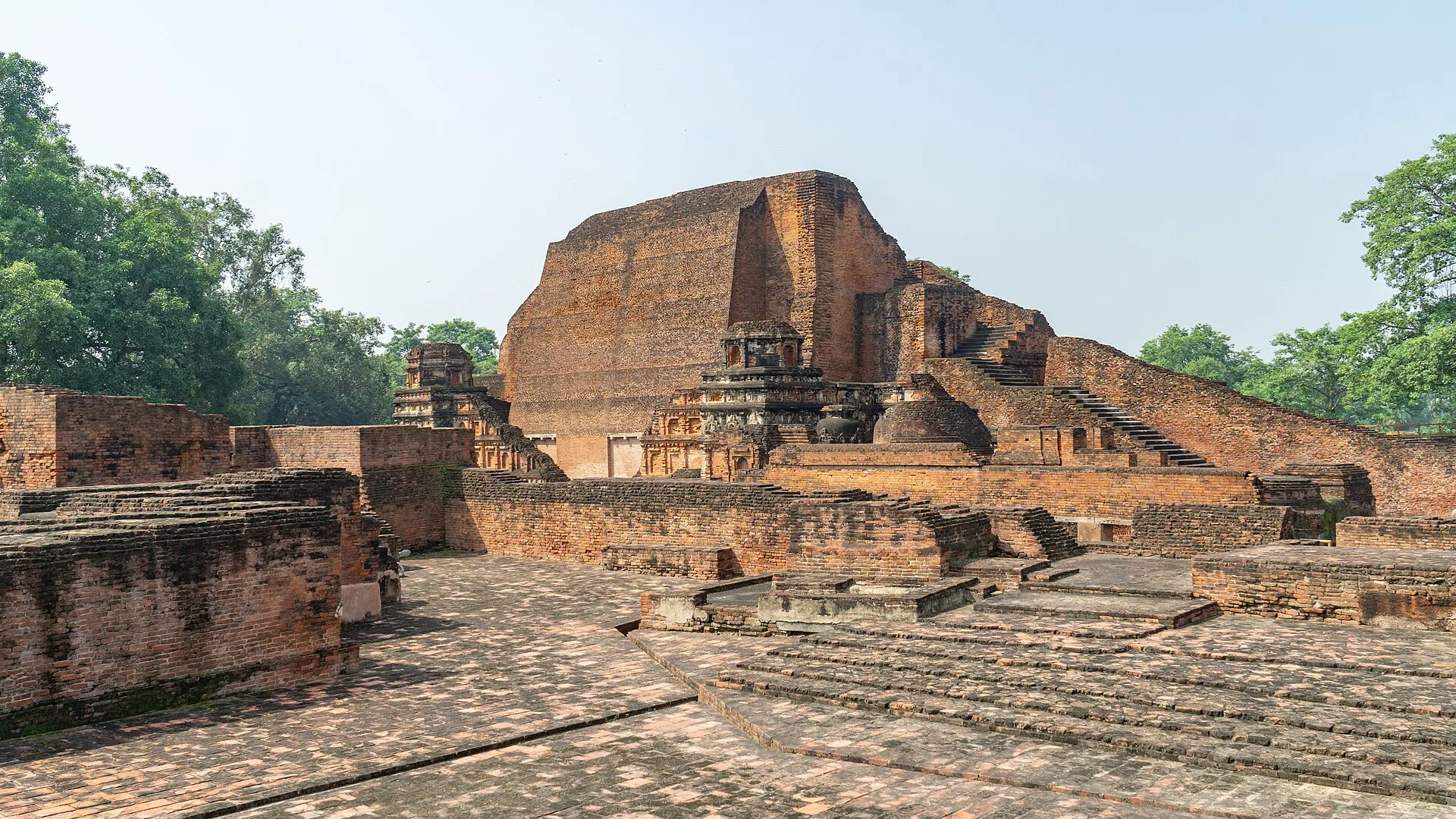
The UNESCO World Heritage listing for Nalanda Mahavihara, inscribed in 2016, describes the remains of a monastic and scholastic institution dating from the 3rd century BCE to the 13th century CE. UNESCO calls it the most ancient university of the Indian subcontinent, one that passed on knowledge without a break for about 800 years. The protected area covers 23 hectares, with 11 viharas (monasteries) and 14 temples, besides many smaller shrines and votive stupas.
What you see today is a long, orderly grid of red brick. Monasteries line one side of a north–south axis and temples the other. The best-known structure is Temple 3, the Sariputta Stupa, a tall stepped brick mass with stairs up its face and small votive stupas around its base. Walk the monastery cells too: the doorways, niches, courtyards and drains make the scale of daily monastic life easier to picture than any number.
- Hours: the ASI lists 9 am to 5 pm.
- Tickets: ₹25 in cash or ₹20 online for Indian, SAARC and BIMSTEC visitors; ₹300 in cash or ₹250 online for other foreign visitors (ASI).
- Time needed: about two hours for the ruins at an unhurried pace. Add 30 to 45 minutes for the ASI site museum across the road.
- Etiquette: Bihar Tourism asks visitors to keep quiet and not climb on the ruins. Tripods and drones may need ASI permission.
- Shade: there is little cover inside. Carry water, a cap and sunscreen, because October noons on the plain are still warm.
If you have spare time, the Xuanzang (Hiuen Tsang) Memorial Hall nearby honours the Chinese pilgrim-scholar who studied at Nalanda in the 7th century. Bihar Tourism lists it as open 9 am to 5 pm.
Stop 2: Rajgir, midday to mid-afternoon
From Nalanda, Rajgir is about 14 km and roughly half an hour by road. The town was the first capital of the Magadha kingdom and is linked with both the Buddha and Mahavira. Today it is a busy pilgrim and holiday town ringed by five hills, so expect more traffic than at Nalanda. Park at an official lot near each site and walk the last stretch.
The Vishwa Shanti Stupa and the ropeway
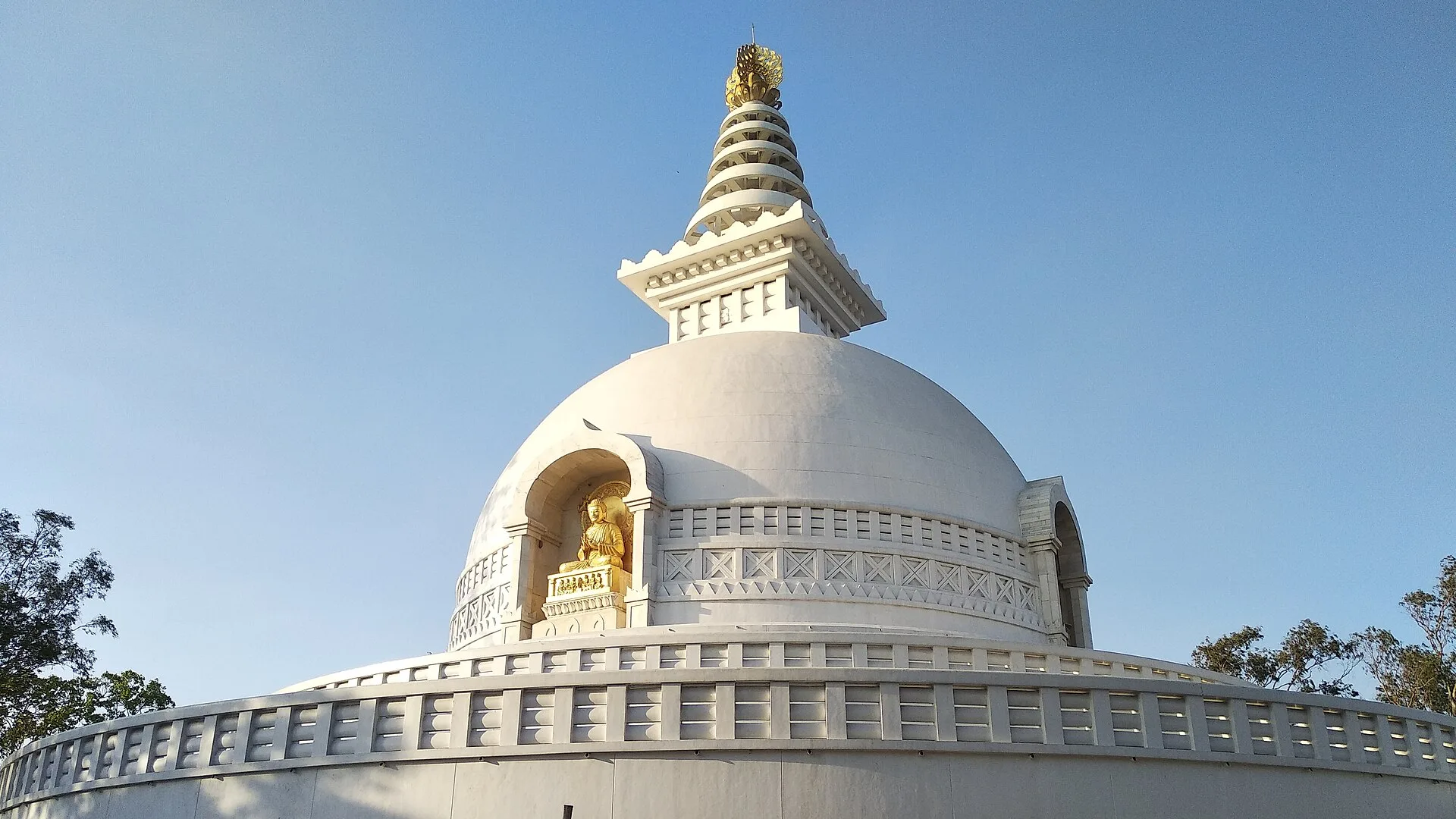
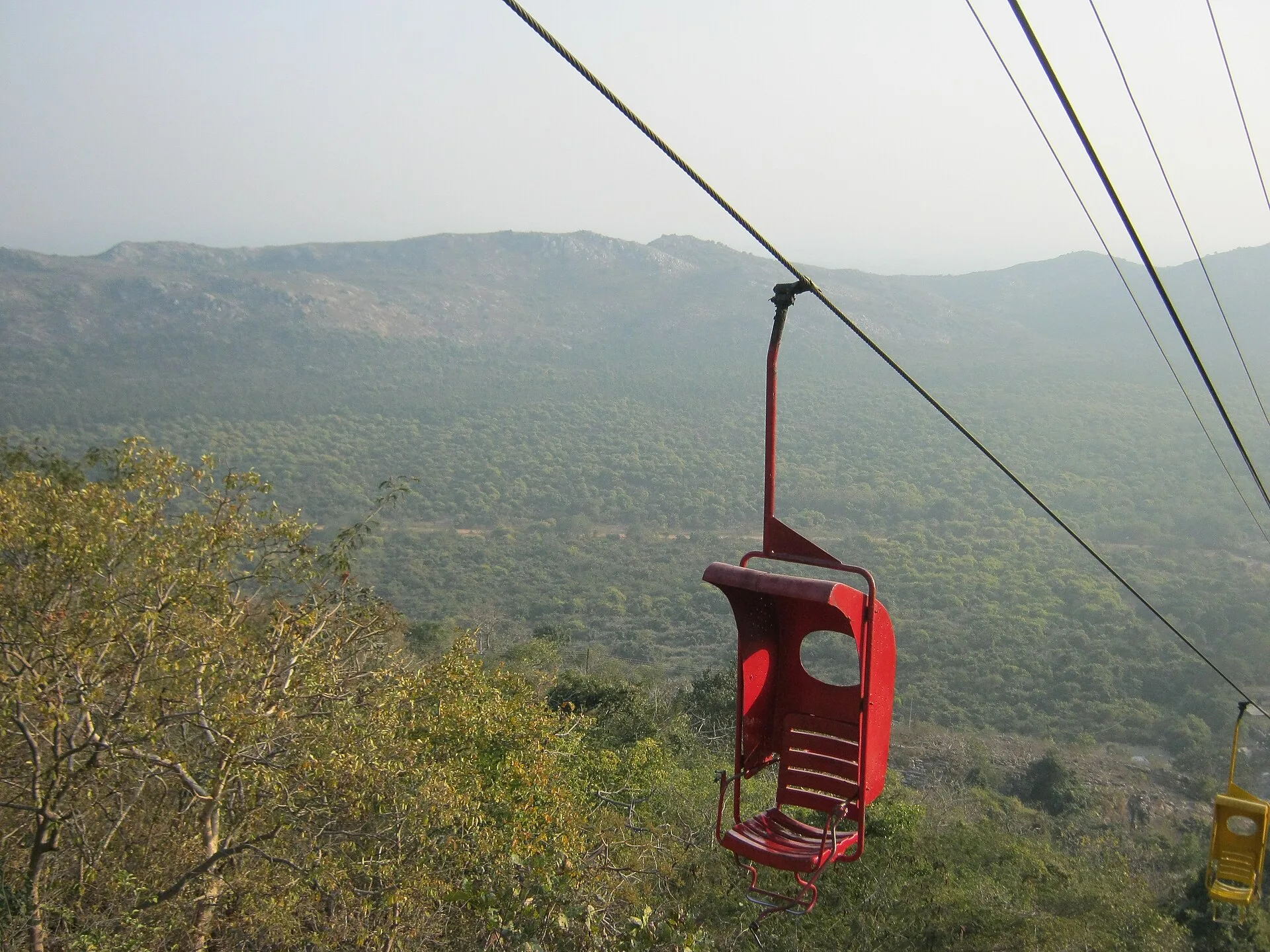
The white Vishwa Shanti Stupa, the World Peace Pagoda, stands at the top of Ratnagiri hill. Bihar Tourism gives its altitude as about 400 m. It is built in white marble with four golden statues of the Buddha, showing his birth, enlightenment, preaching and death. You can climb up by a long staircase, but many visitors take the single-seat chairlift ropeway run by the Bihar State Tourism Development Corporation. The corporation lists ropeway hours of 10 am to 4 pm. Other sources quote slightly different hours with a lunch break, so check at the counter on the day.
From the top, a short walk leads toward Griddhakuta, or Vulture's Peak, which Buddhist tradition remembers as one of the Buddha's preaching places. Remove your footwear at the stupa and keep your voice down. On weekends the ropeway queue can be long, which is another reason to get Nalanda done early.
Rajgir Nature Safari and the glass bridge, if your day allows
Families with teenagers often want the glass skywalk at the Rajgir Nature Safari. The official Rajgir Safari site lists entry with the Glass Bridge at ₹300 per person above six years and ₹150 for children aged two to six. Hours are 7 am to 3 pm, subject to weather. No child below six years or four feet in height is allowed on the glass bridge. Book only through the official site; it warns about fake booking pages. Offline tickets are limited and sold at Gate No. 5 from 7 am on a first-come basis.
Two dates matter. The Rajgir Zoo Safari is closed on Mondays, and the older Nature Safari site lists Tuesday to Sunday opening, so do not plan this day for a Monday. The official site also says both the Zoo Safari and Nature Safari will be closed on 20 October 2026 for Vijayadashami.
Honestly, the Nature Safari and the ropeway together make a tight afternoon. If you want both, go straight from Nalanda to the Safari before 1 pm and take the ropeway after lunch. If you would rather keep the day calm, pick one and spend the spare hour at Venu Van, the bamboo grove near Brahmakund, or at the hot springs themselves.
A quick note on Brahmakund and Venu Van
Brahmakund's hot springs are a working pilgrimage site, so dress modestly and expect crowds, especially on weekends. Venu Van, a quiet garden with a pond, is a good place for elders to rest. The Rajgir Safari site lists Venu Van entry at ₹20 for adults and ₹10 for children.
Stop 3: Pawapuri Jal Mandir on the way back
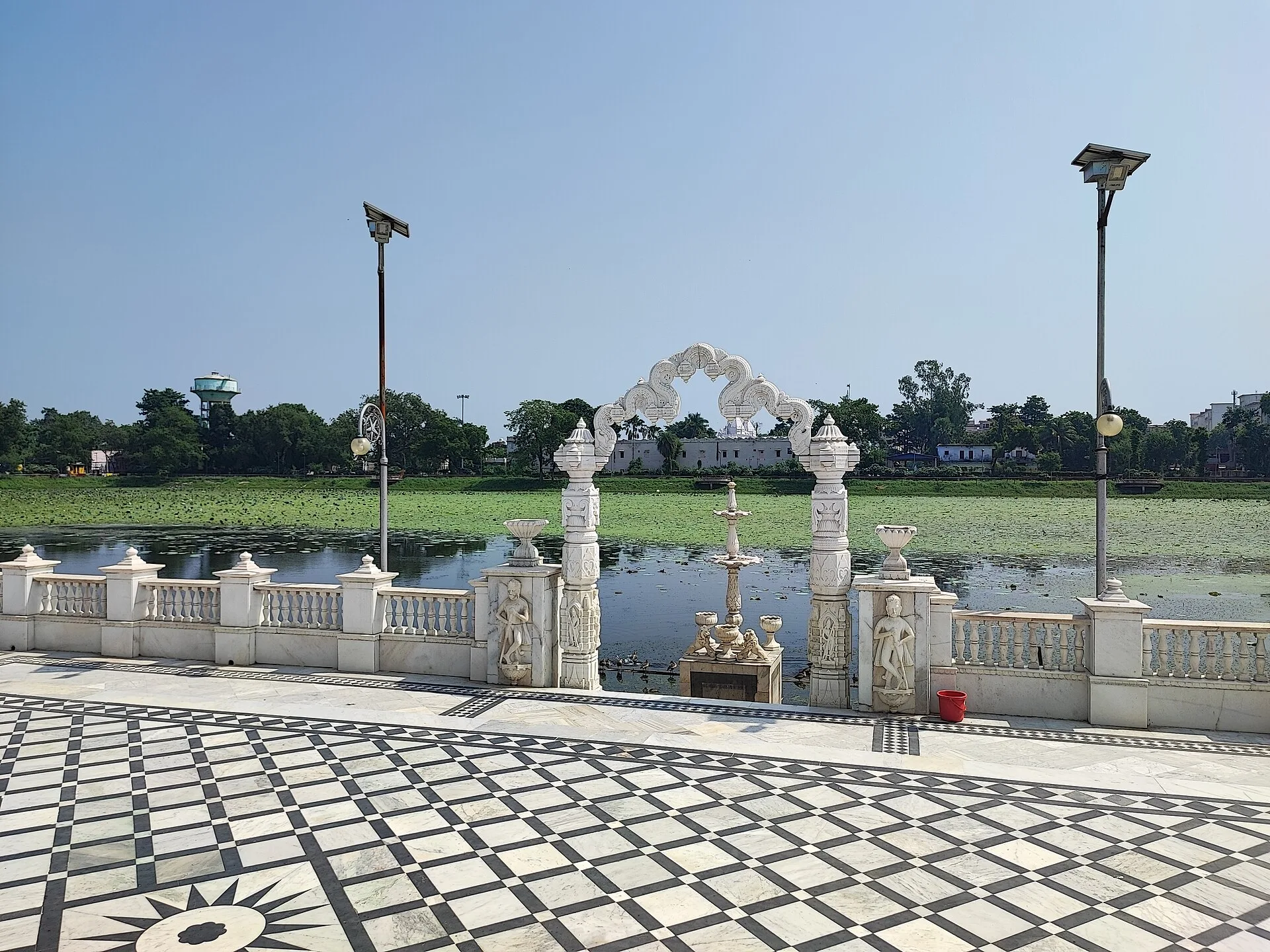
The Nalanda district administration describes the Jal Mandir, or Water Temple, as one of the most revered Jain shrines. Jain tradition holds that Lord Mahavira, the 24th Tirthankara, attained nirvana and was cremated at Pawapuri. The white marble temple stands in the middle of a tank covered with lotuses, and a stone causeway of roughly 600 feet leads out to it. Pawapuri sits about 13 km from Bihar Sharif, at the end of a short branch road. That makes it an easy last stop as you head back toward the Patna highway.
Late afternoon is a lovely time here, when the marble cools and the light drops low over the water. Remove your footwear where asked, walk the causeway slowly, and keep photography respectful around worshippers. If you are travelling close to Diwali, which Jains observe as the anniversary of Mahavira's nirvana, expect much larger crowds than on an ordinary October weekday.
A realistic one-day timetable
- 6:30 am: leave Patna with a full tank; breakfast stop near Bakhtiyarpur or Bihar Sharif.
- 9:00–11:30 am: Nalanda ruins, then the site museum.
- 11:30 am–12:00 pm: drive about 14 km to Rajgir.
- 12:00–2:30 pm: lunch, then the ropeway to the Vishwa Shanti Stupa (or the Nature Safari if you booked it, keeping its 3 pm close in mind).
- 2:30–3:30 pm: Venu Van or Brahmakund if you still have energy.
- 4:00–5:00 pm: Pawapuri Jal Mandir.
- 5:15 pm: head back toward Patna, aiming to cover most of the highway in what is left of the daylight.
That is a full day of roughly 240 to 260 km in total. If you are travelling with children or elders, the Patna page itself suggests a slower two-day version: Nalanda and Rajgir on day one with a night in Rajgir, then Bodh Gaya on day two. Book Rajgir hotels early, because the winter pilgrim season fills rooms quickly.
Driving and parking tips for this route
- Use official parking at Nalanda, the ropeway base and Pawapuri. Do not stop on the shoulder of the main road for photos.
- Expect slow tractors, autos and occasional livestock on the approach roads to the sites. Keep speeds moderate even on good stretches.
- From December, dense morning fog is common on Bihar highways. In October it is rarely an issue, but early-morning haze can still cut visibility, so use low beams if needed.
- Keep your licence, ID and rental documents in the car, and photograph the fuel gauge and odometer at pickup.
- Footwear comes off at the stupa and the Jal Mandir. Slip-on shoes save time at every stop.
- Watch the ropeway's 4 pm closing and the Nature Safari's 3 pm closing more than the clock at Nalanda. Those are the times that decide the afternoon.
Want more Buddhist heritage by car?
If this loop works for you, the same calm, early-start approach suits other Buddhist sites reachable from Hire N Ride cities. From Varanasi, our guide to a quiet Sarnath morning after the ghats pairs well with a self-drive car rental in Varanasi. In Odisha, the brick monasteries of Ratnagiri, Lalitgiri and Udayagiri make a similar day from Bhubaneswar.
Conclusion: an old road, an easy day
Nalanda's brick courts, Rajgir's white pagoda and Pawapuri's marble causeway tell three different stories, yet they sit within a single day's drive of Patna. October is when that drive starts to feel easy again. Leave early, see the ruins before the heat, ride the ropeway after lunch, and let the water temple close the day. A self-drive car rental in Patna keeps the schedule yours, from the first chai stop to the last turn back onto the highway.
Ready to drive south? Book a self-drive car in Patna, check today's rates and deposit, and pick a date that is not a Monday.
About the author: Manjot Kaur writes self-drive travel guides for Hire N Ride. She focuses on heritage routes and the practical details, such as opening hours, ticket rules, daylight and parking, that help a rental car day run smoothly.
.jpg)


