October is when Varanasi starts to breathe again after the monsoon. Mornings feel clearer, the light on the river softens, and the short drive northeast to Sarnath becomes one of the easiest heritage half-days you can still fit around evening aarti. If you would rather not wait for a cab after a long ghat walk, self-drive car rental in Varanasi turns that ~10–12 km hop into a calm, timed loop.
This guide is not another festival rewrite. Hire N Ride already covered Varanasi Navratri 2026 with Vindhyachal and Ramnagar. Here the angle is cooler weather and Buddhist Sarnath: how early to leave the lanes, where parking usually works, what ASI tickets and museum hours look like, and how a reviewed local host keeps the car ready. Browse cars on the Hire N Ride Varanasi car rental page, or list your vehicle if you host in the city.
Key Takeaways
- Sarnath sits roughly 10–12 km from central Varanasi; most self-drives take 25–45 minutes depending on start point and traffic.
- Cool season from October to March is the most comfortable window for stupa and museum walking.
- ASI Sarnath Circle lists archaeological-site tickets around ₹25 / ₹20 (online) for Indian/SAARC/BIMSTEC visitors and ₹300 / ₹250 (online) for foreign visitors; museum entry is listed at ₹5 (under-15 free). Confirm on arrival.
- The Archaeological Museum Sarnath is commonly open 9:00 AM–5:00 PM and closed on Fridays and some national holidays.
- Self-drive car rental in Varanasi helps you leave early, park once near the complex, and return for evening aarti without cab hunting.
- Hire N Ride is a host marketplace: profiles, reviews and compliance reminders (surveys, GPS, insurance, PUC, RC, permits, servicing) keep vehicles trip-ready.
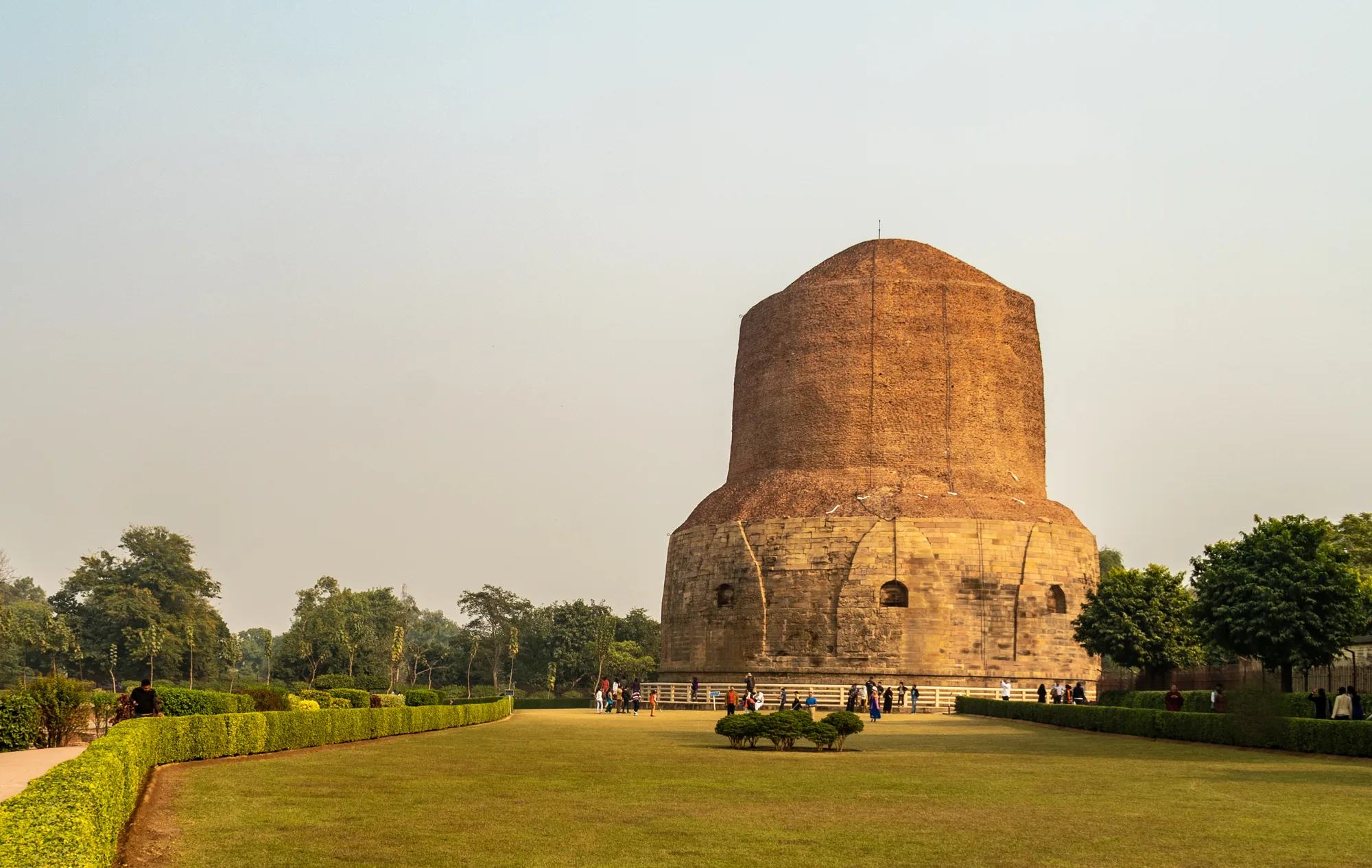
Feature image: Dhamek Stupa at Sarnath, Uttar Pradesh, by Joygopal008, via Wikimedia Commons, licensed under CC BY-SA 4.0. Cropped and resized.
Why Sarnath works as a Varanasi self-drive morning
The old city rewards walking. The lanes around Assi, Dashashwamedh and Godowlia are not where you want to force a car at midday. Sarnath is the opposite problem solved: a compact archaeological landscape just outside the densest traffic, with a stupa skyline, Deer Park paths and a site museum that holds the Lion Capital of Ashoka.
A self-drive morning lets you:
- Leave before tour buses thicken the approach roads
- Carry water, a light layer and camera gear without juggling autos
- Park once and explore on foot for two to three hours
- Be back in Varanasi with time for a late lunch and evening aarti
That rhythm is hard to buy from a last-minute ride when the city is already full of festival-season visitors. Hosts on Hire N Ride set availability on the marketplace the same way a good homestay lists open dates — and renters leave reviews that shape the next booking.
Distance, route and a realistic clock
Travel guides and route maps put Sarnath about 9.5–12 km from central Varanasi, commonly via Madan Mohan Malviya Road / Sarnath Road corridors linked to NH 31. In light traffic many drivers report about 25–30 minutes; with cantonment or school peaks, plan 35–45 minutes.
A practical cool-season clock:
- 7:00–7:30 AM: pick up the car or leave your hotel with a full tank check done the night before
- 8:00–8:30 AM: reach the Sarnath complex, park, and buy tickets
- Morning: Dhamek Stupa, monastery ruins and Deer Park walking
- Late morning: Archaeological Museum (if it is not Friday)
- Early afternoon: drive back toward Assi or your hotel before the heavier city return rush
If your hotel is deep in the old city, ask the host to deliver the car to a wider road — Cantonment, Sigra, Lanka or a riverside hotel access point — rather than attempting a ghat-side handover.
What to see without rushing
Dhamek Stupa and the archaeological park
Dhamek Stupa is the landmark most people recognise first: a massive cylindrical brick structure traditionally linked to the Buddha’s first sermon. Give yourself time to walk the surrounds rather than treating it as a single photo stop. The ASI Sarnath Circle publishes visitor information including ticket slabs for Indian/SAARC/BIMSTEC and foreign visitors — see their visitor information page and reconfirm rates at the counter, because online and cash prices can differ.
Archaeological Museum Sarnath
The site museum, managed by the Archaeological Survey of India, is where many travellers finally understand why Sarnath matters nationally: the Lion Capital and Gupta-period Buddha images sit among finds from centuries of excavation. Museums of India lists the museum open from 9:00 a.m. to 5:00 p.m. on days other than Friday, with a modest entry fee (commonly listed at ₹5, free for visitors under 15). Details: Archaeological Museum Sarnath on Museums of India.
Friday planning tip: if your only free morning is a Friday, prioritise the outdoor archaeological complex and Mulagandha Kuti Vihara area, and keep the museum for another day.
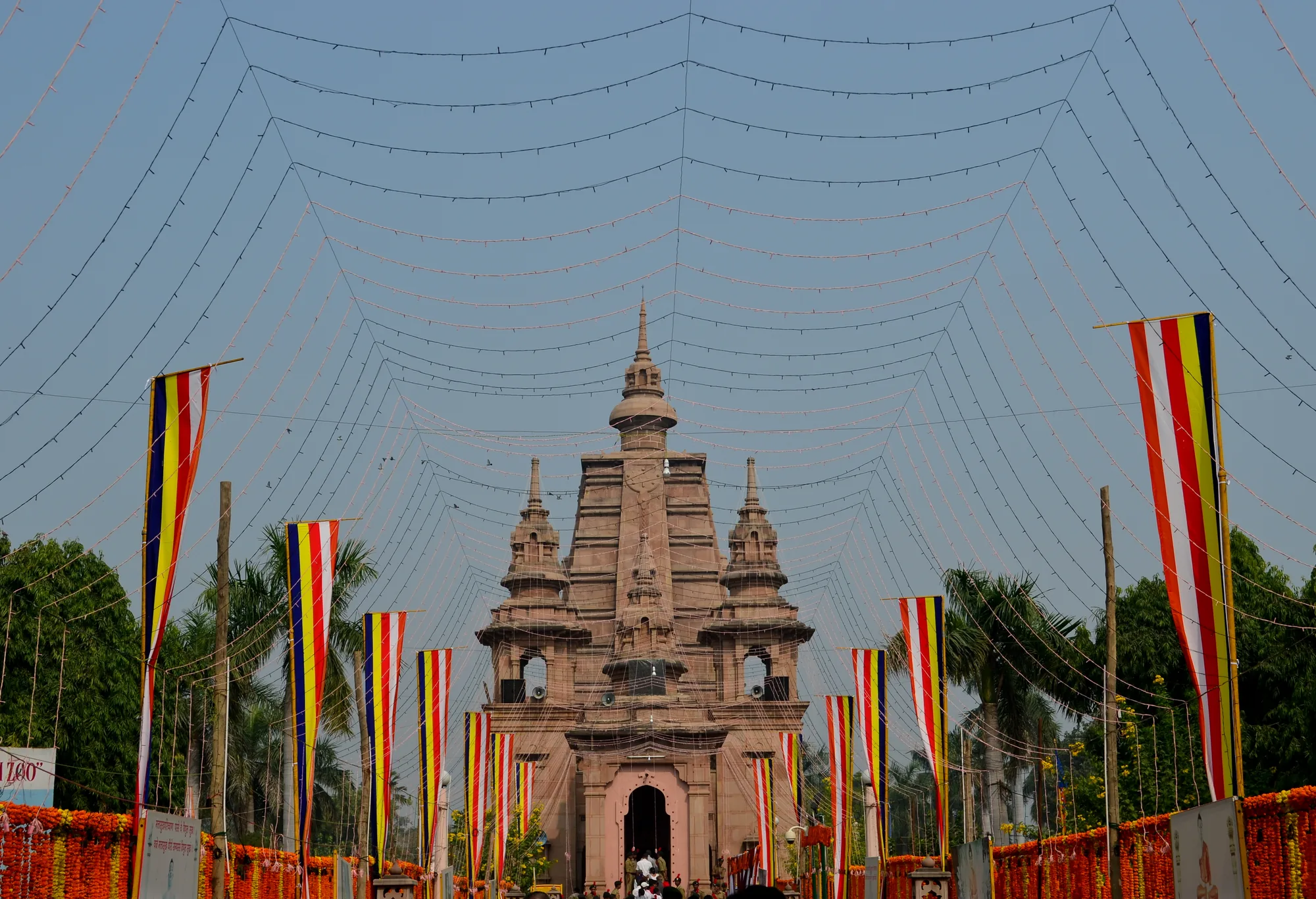
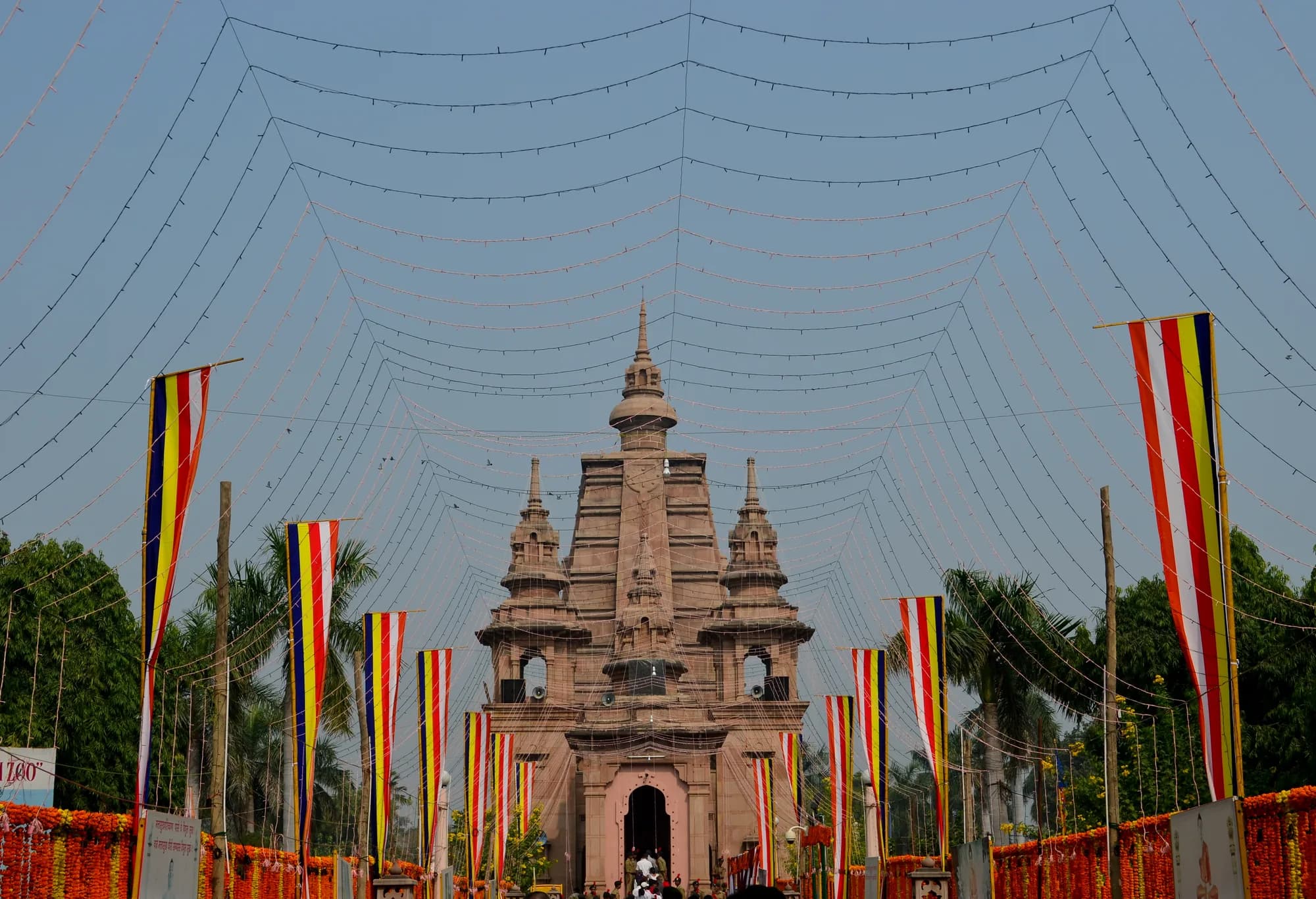
Mulagandhakuti, Sarnath, by Pankaj Purohit (Thephilocalistmind), via Wikimedia Commons, licensed under CC BY-SA 4.0. Cropped and resized.
Mulagandha Kuti Vihara and Deer Park
The modern Mulagandha Kuti Vihara temple and the surrounding Deer Park paths add a quieter layer after the stupa circuit. They are close enough that you do not need to move the car again. Wear comfortable shoes; October mornings can still leave grass damp.
Parking, driving etiquette and city return
Paid and informal parking pockets sit near the main visitor approaches. Arrive earlier on weekends and around school holidays. Do not leave valuables visible. On the return into Varanasi, expect slower merges near cantonment and market belts — maps help, but local diversions and festival barriers still win.
A few practical rules that keep both riders and hosts happy:
- Photograph the fuel gauge and existing marks at handover
- Keep the original licence and rental agreement in the cabin
- Avoid forcing the car into lanes that are clearly pedestrian-only near the ghats later in the day
- Refuel before returning if your agreement expects a similar fuel level
How Hire N Ride fits a heritage half-day
Hire N Ride is built more like an Airbnb-style marketplace than a nameless depot. You book a car from a local host who builds a professional profile, collects reviews and earns more bookings when those reviews stay strong. That reputation loop matters on a short morning trip: you want an on-time handover, a clean cabin and a host who answers when you ask about parking near Sarnath.
Behind the listing, Hire N Ride helps hosts keep compliance from becoming a last-minute scramble:
- Vehicle surveys
- GPS management during trips
- Insurance renewal reminders
- PUC certificate tracking
- RC tracking
- Permit expiry reminders
- Servicing schedules
Riders get a clearer car. Hosts get a business that can grow with reviews rather than with guesswork. If you already own a well-kept hatchback or compact SUV in Varanasi, cool-season tourism is a sensible window to become a host.
Platforms such as Zoomcar also serve some Indian cities for self-drive demand; what Hire N Ride adds is the host profile, review trail and compliance support wrapped around each listing. Always compare the exact car, pickup point and review history for your dates rather than chasing fleet-size claims.
Checklist before you pick up the car
- Licence: valid four-wheeler licence, typically at least one year old; minimum age 21 on Hire N Ride. See the Hire N Ride FAQ.
- Deposit: a refundable security deposit applies; refunds are initiated after the ride is completed per platform policy.
- Fuel: usually not included — fill early, before you head toward Sarnath.
- Timing: skip Friday if the museum is your priority; otherwise outdoor monuments still reward an early start.
- Pairing: keep evening aarti or a quiet Assi walk for after you return the car or park it safely at your stay.
Who this morning is for — and who should pick another plan
Choose Sarnath by self-drive if you want cooler air, Buddhist heritage and a half-day that does not fight the densest ghat lanes. It suits couples, small families and travellers who already know they will spend evenings by the river.
Choose a different day if your only free slot is a Friday and the museum is non-negotiable, or if heavy city processions have closed your exit roads. In peak festival weeks, re-check local traffic advisories the night before.
Dev Deepavali is later — keep this morning separate
Dev Deepavali (Kartik Purnima) falls on Tuesday, 24 November 2026 according to Drik Panchang for Varanasi. That festival night is a different trip entirely: vehicle restrictions near the ghats, boat crowds and hotel demand spike. Sarnath in early–mid October is the complementary move — a cool-season heritage half-day before the late-November crush, not a substitute for the lamp-lit riverfront.
If you are building a longer Varanasi stay, use self-drive days for Sarnath and any out-of-town errands, then park and walk when the ghats are the point of the evening.
Conclusion
Quiet after the ghats does not mean leaving Varanasi behind. It means using a short, well-timed self-drive to Sarnath while October’s cooler mornings still make outdoor walking easy. Book a reviewed host on the Varanasi car rental page, leave early, park once, and keep the evening for the river.
- Book a ride: self-drive cars in Varanasi from local Hire N Ride hosts (or browse all vehicles).
- Become a host: list your vehicle and build reviews as cool-season visitors look for reliable cars.
Hire N Ride Team
We write practical road guides for riders and hosts across the Hire N Ride marketplace — from compliance reminders to cool-season half-days like Varanasi to Sarnath. Drive safe, respect monument rules, and leave the lanes cleaner than you found them.