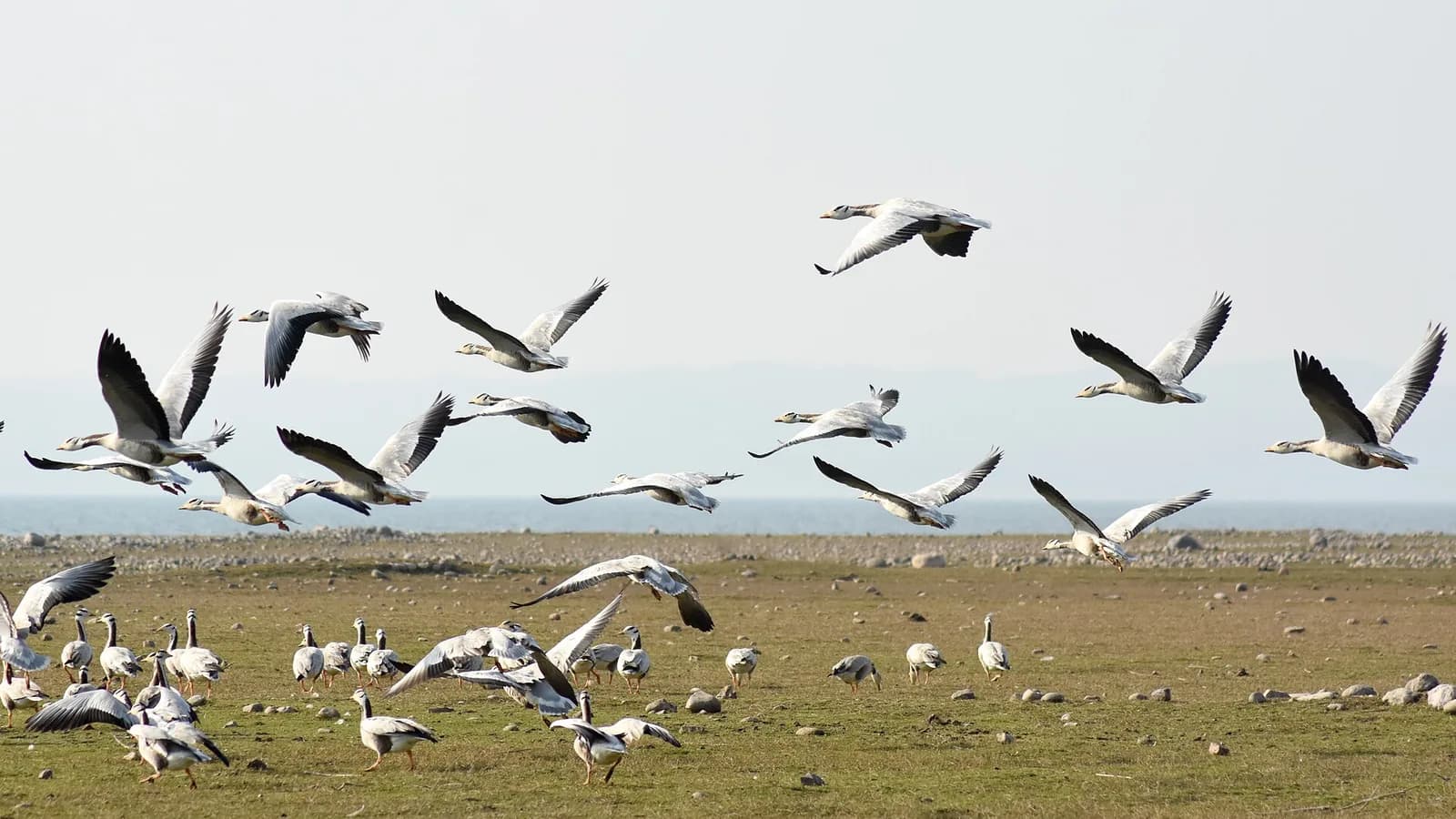
Manali to Pong Dam by car works best as a three-day loop: about 230 km down to Kangra on day one, Kangra Fort, the Masroor rock-cut temples and the Pong wetland at Nagrota Surian on day two (about 55 km), and roughly 270 km back to Manali on day three. The winter birds are already in. On 11 November 2026 Amar Ujala reported a routine count of about 35,000 birds of 45 species at Pong, and a day later Divya Himachal put the number above 40,000, with more expected after 15 November.
On 13 November 2026 the Hire N Ride Manali car rental page listed Maruti Suzuki Jimny 4x4s at Rs 4,299 a day with 300 km a day included, so three days cover the whole loop with distance to spare.
Key Takeaways
- Route: Manali, Kullu, Mandi, Jogindernagar, Baijnath, Palampur and Kangra on day one (about 230 km). Kangra Fort to Masroor (about 42 km) and Masroor to Nagrota Surian on the Pong lake shore (about 12 km) on day two. Back via Jawalamukhi, Hamirpur and Mandi on day three (about 270 km).
- Time: map apps show about 4 hours 40 minutes for day one and about 5 hours for day three. Plan 7 to 8 hours each way, because the Mandi to Pathankot highway has daily jams around Palampur and Baijnath.
- Birds: Pong is a Ramsar wetland. The 2026 winter census counted 1,24,344 waterbirds of 115 species. This season's count passed 40,000 by 12 November and the wildlife wing expects numbers to keep rising into December.
- Car and cost: on 13 November 2026 a Jimny was Rs 4,299 a day (Rs 12,897 for three days before fuel), with a Rs 5,000 deposit and 300 km a day included. Fuel is not included.
- Weather: IMD has thunderstorm and lightning warnings for Himachal on 13 and 14 November and no warning from 15 to 19 November. Leave Manali on 15 November or later.
Why Go to Pong Now
The Pong Dam on the Beas was finished in 1974–75, and the reservoir behind it, Maharana Pratap Sagar, is now one of the most important wetlands in north India. The Kangra district page on Pong Lake Wildlife Sanctuary says it became Himachal's first Ramsar site in 2002, that more than 420 bird species have been recorded there, and that November to February or March is the best time for migratory birds.
The flagship bird is the bar-headed goose, which flies over the Himalaya to winter here.
The numbers tell you why the timing matters:
- 11 November 2026: the forest department's wildlife wing recorded about 35,000 birds of 45 species in its routine count, according to Amar Ujala. The department expects more birds once it turns colder after 15 November.
- 12 November 2026: Divya Himachal reported more than 40,000 birds of about 50 species, with bar-headed geese the most numerous, and said the total could reach about one lakh by December.
- Last winter: the annual census on 1 February 2026 counted 1,24,344 waterbirds of 115 species, including 62,293 bar-headed geese (Hindustan Times, 3 February 2026). The record is still the 2025 count of 1,53,719 birds.
So any trip from mid-November should find large flocks, and December should be busier still. Carry binoculars: most ducks stay well out on the water.
The Route at a Glance
Distances and map times below are from OpenStreetMap routing (OSRM), checked on 13 November 2026. Real driving times are longer, so use the last column to plan.
| Stretch | Distance | Map time | Plan for |
|---|---|---|---|
| Day 1: Manali to Mandi (via Kullu and the Bajaura to Mandi road) | 105 km | 1 h 50 min | 2.5 to 3 h |
| Day 1: Mandi to Baijnath on NH154 (via Jogindernagar) | 75 km | 1 h 45 min | 2 to 2.5 h |
| Day 1: Baijnath to Palampur | 16 km | 27 min | 45 min |
| Day 1: Palampur to Kangra town | 34 km | 45 min | 1 to 1.25 h |
| Day 1 total: Manali to Kangra Fort | 230 km | 4 h 40 min | 7 to 8 h with stops |
| Day 2: Kangra Fort to Masroor temples | 42 km | 56 min | 1.25 h |
| Day 2: Masroor to Nagrota Surian (Pong shore) | 12 km | 26 min | 30 to 40 min |
| Day 2 option: Nagrota Surian back to Kangra | 43 km | 1 h 3 min | 1.25 h |
| Day 3: Nagrota Surian to Manali (via Jawalamukhi, Hamirpur, Ner Chowk and Mandi) | 272 km | 5 h | 7.5 to 8.5 h |
The whole loop, with a little driving around Kangra, comes to roughly 560 to 620 km. That sits well inside the 900 km that three rental days include on the Manali listings.
Day 1: Manali to Kangra (About 230 km)
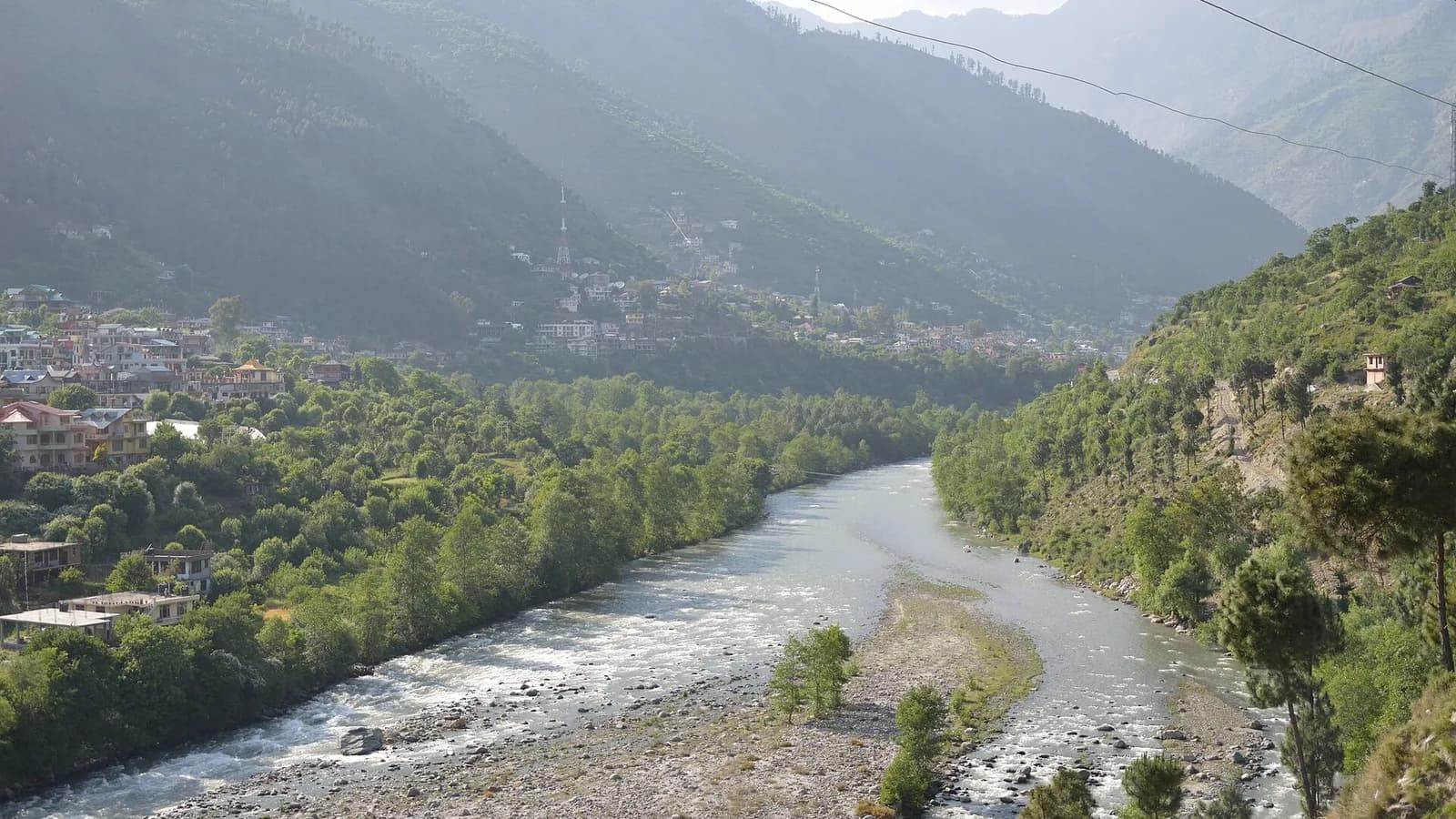
Leave Manali by 8 am. The first part follows the Beas down past Kullu. Routing sends you over the Bajaura to Mandi road, which is shorter but narrow and twisty. If it has rained, stay on the NH3 through Aut and the Pandoh gorge instead; it adds roughly 10 km. Our Manali to Dharamshala drive guide covers this first half in detail, because the two trips share the road as far as Palampur.
From Mandi you join the Mandi to Pathankot highway (NH154). There is good news here. On 4 November 2026 the new 19 km four-lane section from Narla to Bijni near Mandi opened to traffic, and News18 reported that Mandi to Padhar now takes about 25 minutes instead of an hour. Speed cameras are installed on the new road, so keep to the limit.
The slow part is further west. The Tribune reported on 3 November 2026 that queues are now routine at Baijnath, Paprola, Maranda, Nagrota Bagwan, Mattor and Gaggal, and on 10 November that a dug-up stretch at Maranda market near Palampur was causing daily jams. Expect to crawl through Palampur, especially around midday and on weekends.
Stop at the stone Shiva temple at Baijnath, right beside the highway, and for tea at Palampur, then stay the night in Kangra town, about 3 km from the fort.
Day 2 Morning: Kangra Fort
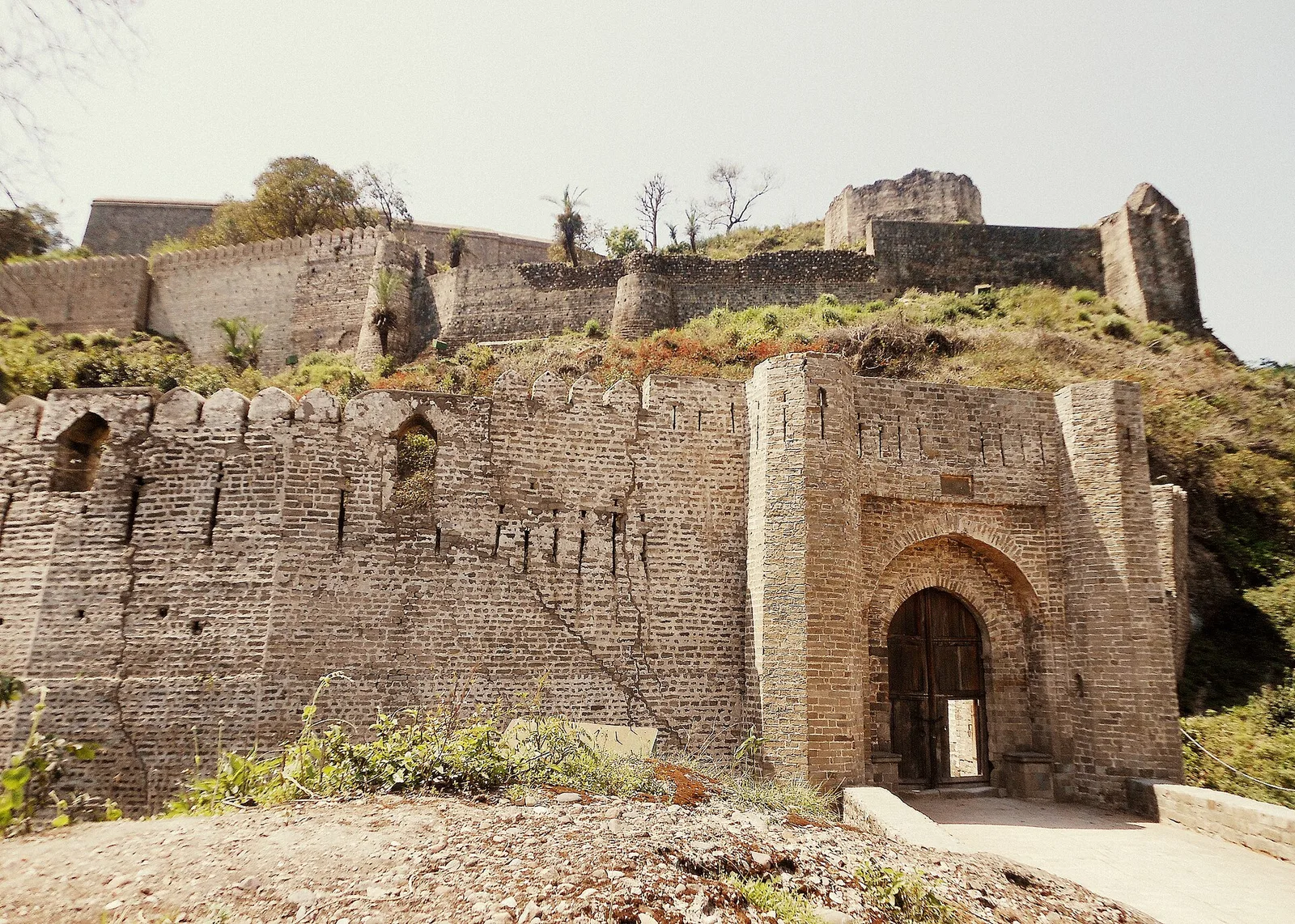
Kangra Fort, also called Nagarkot or Kot Kangra, sits on a steep ridge above the meeting of the Banganga and Manjhi rivers on the south-west edge of the old town. The Archaeological Survey of India (ASI), which protects it, dates the earliest surviving remains inside, Jain and Hindu temples, to around the 9th and 10th centuries. Mahmud of Ghazni attacked it for its treasure in 1009. Most of the big buildings fell in the 1905 Kangra earthquake, which is why you now walk up through gates and ramparts to ruined palaces and shrines.
Plan 1.5 to 2 hours. The climb is on uneven stone ramps and steps, so wear shoes with a good grip.
| Item | Kangra Fort |
|---|---|
| Entry (Indian citizens) | Rs 25 at the counter on the ASI fee list; online ticket listings show Rs 20. Children up to 15 free |
| Entry (most foreign visitors) | Rs 300 on the ASI fee list |
| Hours | 9 am to 6 pm on Incredible India; arrive by 4 pm to finish in daylight |
| Time needed | 1.5 to 2 hours |
Fees and hours can change, so check at the gate.
Day 2 Midday: The Masroor Rock-Cut Temples
From the fort, drive about 42 km west to Masroor. Allow about an hour and a quarter. The last stretch is on the Ranital to Kotla state highway and then a small link road into the village.
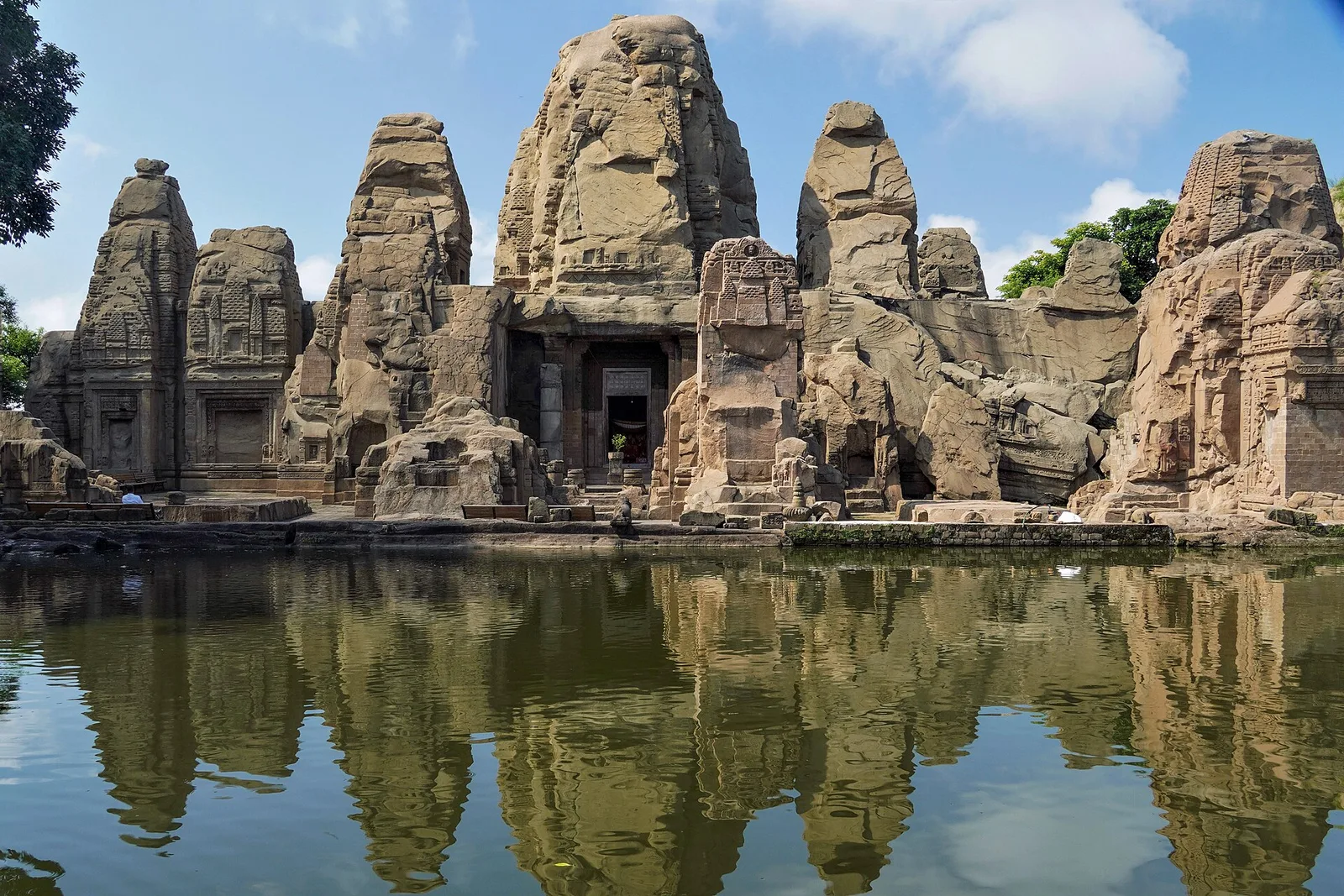
Masroor is unlike anything else in Himachal. It is a group of early 8th-century Hindu temples carved out of a single rock ridge, in the north Indian Nagara style, facing north-east towards the Dhauladhar range. A sacred pool in front of the temples reflects the carved spires on a still day, which is the photograph everyone comes for. The complex was never finished, and much of its sculpture was lost or damaged, most likely in earthquakes.
- Time needed: about 1 hour, more if you climb the rock-cut steps for the view from the top.
- Hours: Incredible India lists 7 am to 7 pm; other listings give shorter hours, so plan to be there by early afternoon.
- Ticket: it is an ASI site, and online ticket listings show entry for Indian visitors from Rs 20. Keep mobile data on in case you have to pay online at the gate.
Day 2 Afternoon: Birds at Nagrota Surian
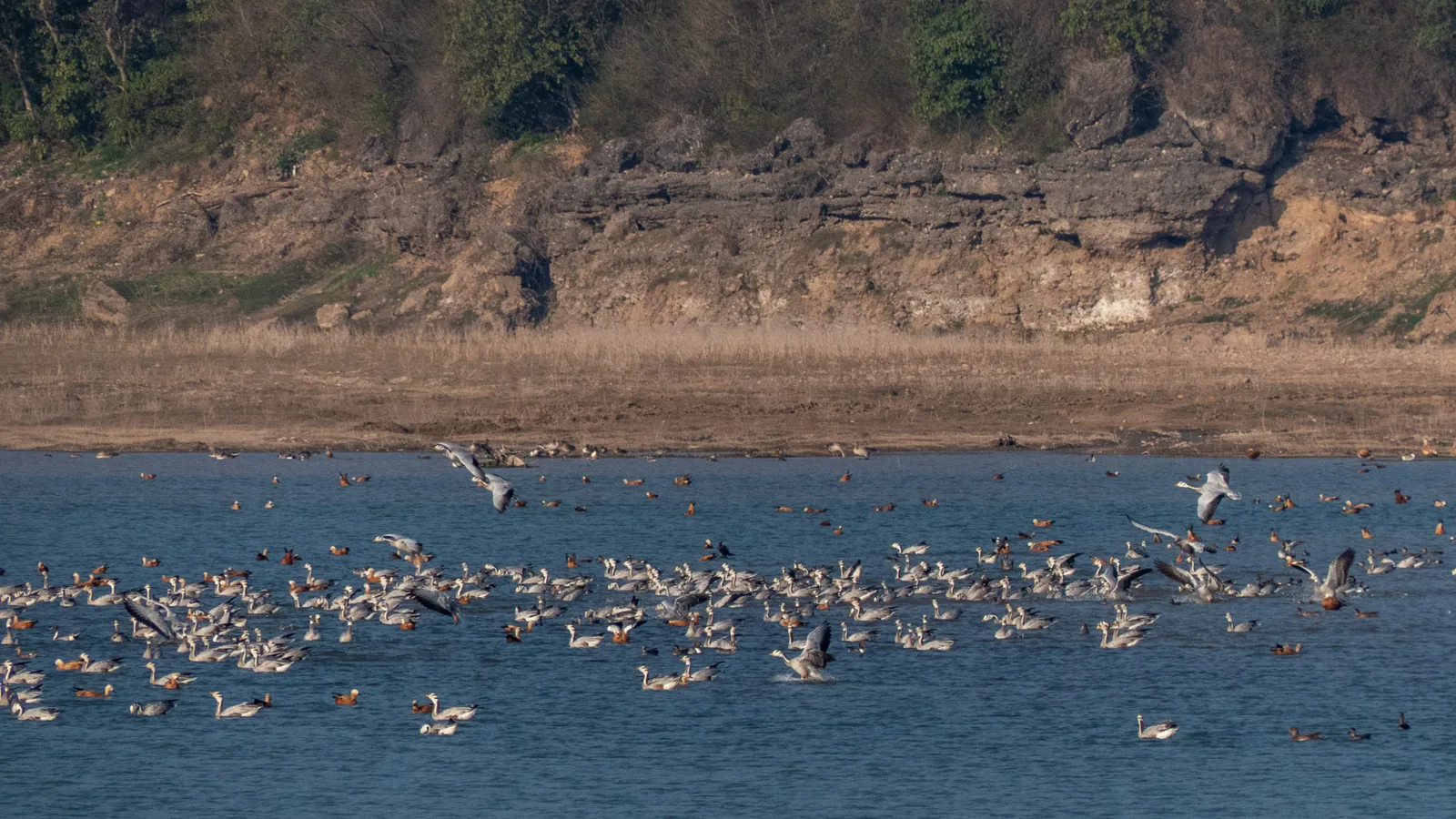
Nagrota Surian is only about 12 km from Masroor, roughly half an hour on narrow village roads. The Kangra district page names Nagrota Surian as the main birdwatching area, along with the mudflats and wet grasslands around the lake. Dhameta and Khatiyar are other entry points on the shore.
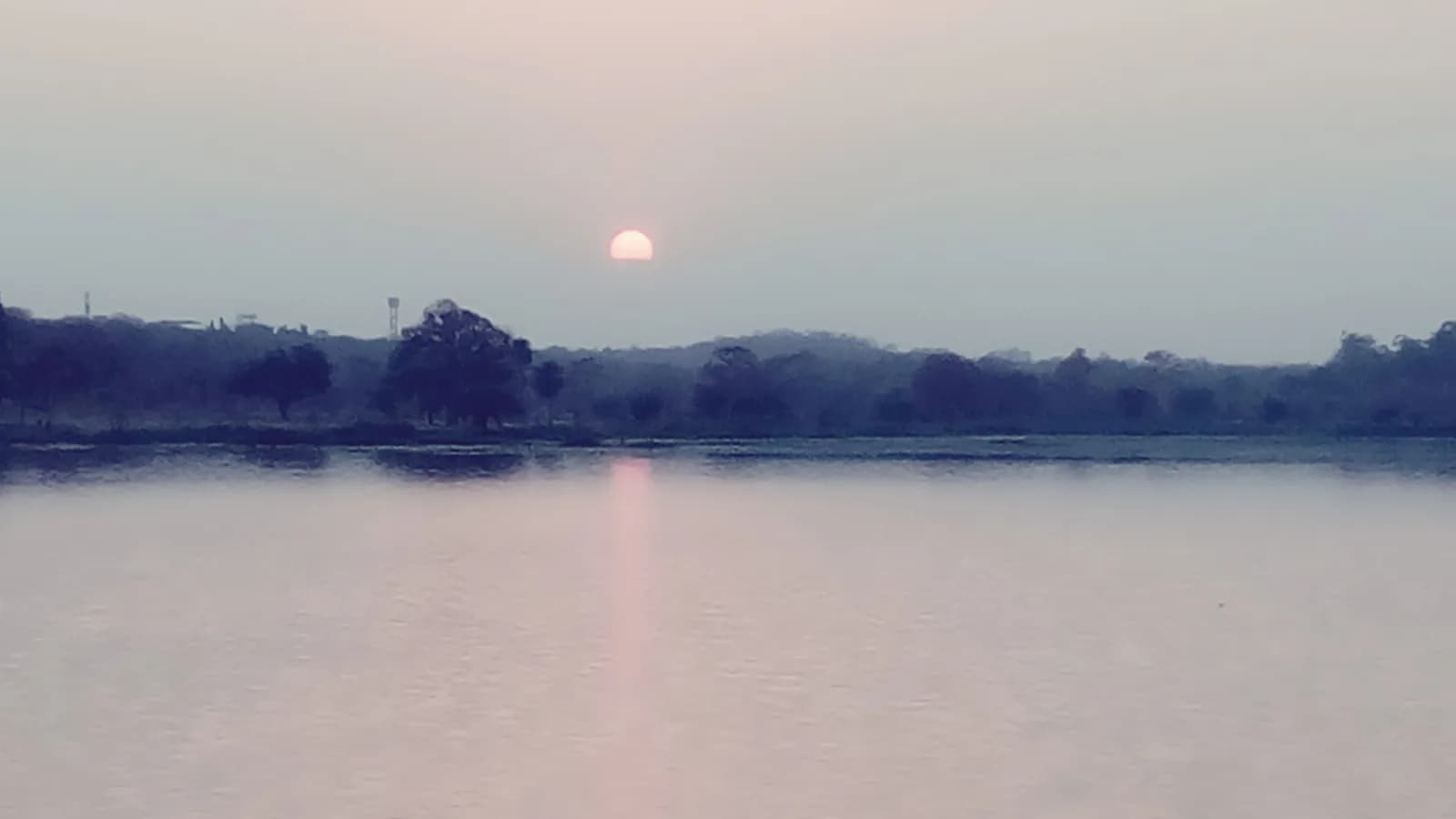
Get to the shore by about 3 pm. Sunset at Nagrota Surian is at about 5:25 pm in mid-November, and the last hour of light, when flocks fly in and out, is often the best. The district page mentions an entry fee of about Rs 100 for a light vehicle plus a small charge per person. Confirm the current amount at the barrier.
| What you may see | Where to look | Tip |
|---|---|---|
| Bar-headed geese, the most numerous this season | Grassy shore and mudflats | Large flocks lift off together. Stay still and let them settle |
| Ruddy shelduck, greylag geese | Shallow edges and fields near the shore | Look for orange-brown shelducks among the geese |
| Northern pintail, common teal, pochards, coots | Open water | Binoculars help. Most ducks stay well out from the bank |
| Cormorants, gulls, egrets, waders | Water's edge, posts and snags | Walk slowly along the shore rather than driving up to the flocks |
Keep your distance from the flocks, do not chase birds for photographs, keep music off and never drive onto the mudflats.
You can sleep near the lake in the Nagrota Surian or Jawali area, or drive about 43 km (around 1 hour 15 minutes) back to Kangra if you already have a room there. Do not plan long drives after dark on the village roads.
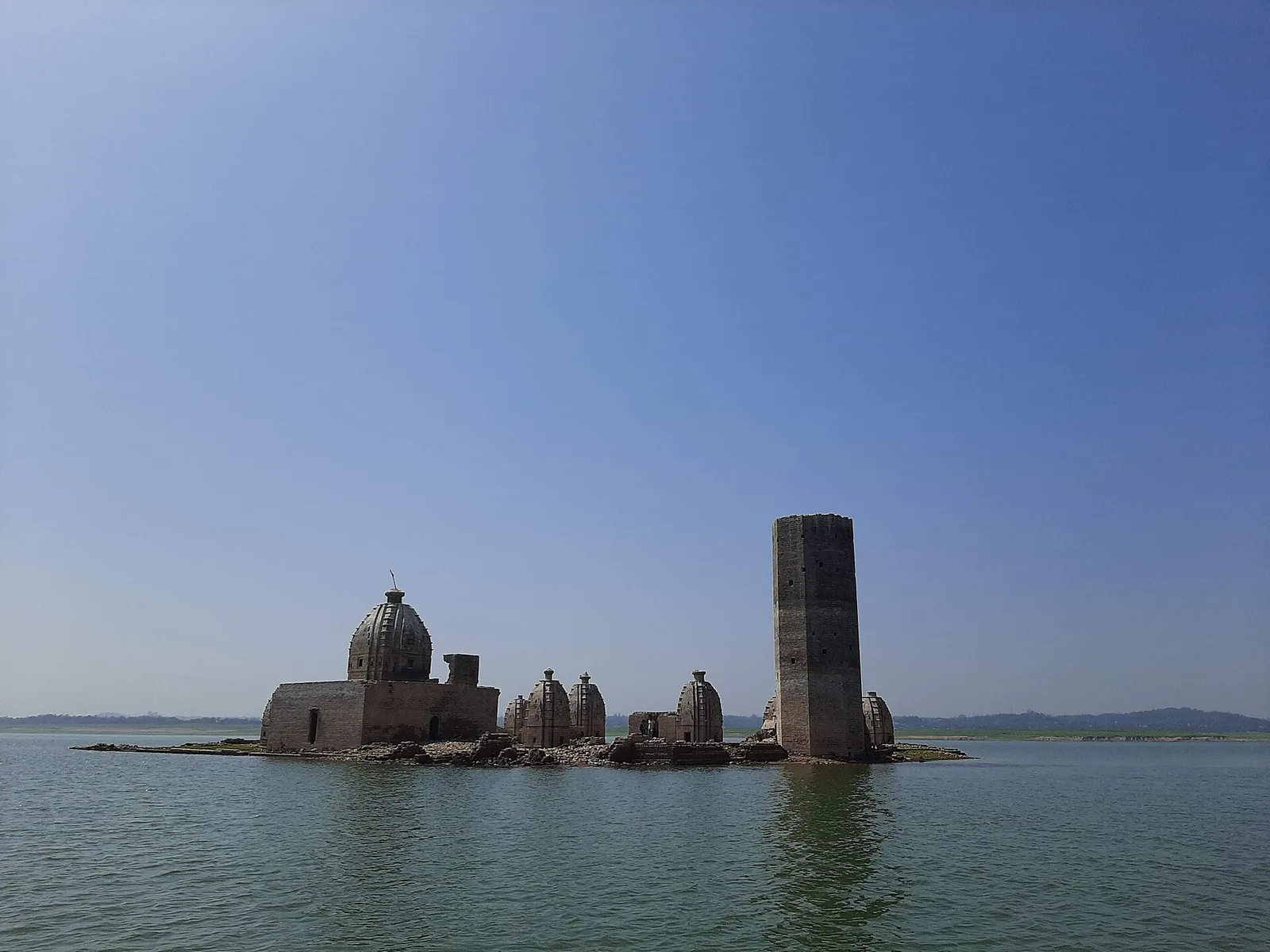
The Bathu Ki Ladi Temples
Inside the lake stand the Bathu ki Ladi temples, a cluster of stone shrines that is submerged when the reservoir is full and comes into view when the water level drops. Ask locally whether they are visible before you go looking.
Day 3: Back to Manali (About 270 km)
For the return, you have two roads of almost the same length:
- Via Jawalamukhi, Hamirpur and Ner Chowk to Mandi (about 272 km, about 5 hours on the map). This avoids the Palampur and Baijnath jams and passes the Jawalamukhi temple, famous for its natural flames, about 40 km from Nagrota Surian.
- The same way you came, via Kangra, Palampur and Mandi (about 271 km, about 5 hours 15 minutes on the map). Expect the same traffic.
Either way, leave by 8 am so that the climb from Mandi through the Beas valley to Kullu and Manali is done before dark. Refuel in Hamirpur or Mandi; fuel is not included in the rental.
Which Car to Rent in Manali for This Trip
These were the cars listed on the Manali car rental page on 13 November 2026. Every listing includes 300 km a day and a Rs 5,000 security deposit; the Jimny and Thar are manual 4x4s.
| Car | Fuel | Price per day | 3 days (before fuel) | Good for |
|---|---|---|---|---|
| Maruti Suzuki Jimny (2023 to 2026 models) | Petrol | Rs 4,299 | Rs 12,897 | Two to four people with light bags; easy to park in Kangra and Palampur |
| Mahindra Thar LX 2022 | Petrol | Rs 5,399 | Rs 16,197 | Those who want a higher seating position and a little more room |
| Toyota Fortuner 3.0 2013 | Diesel | Rs 6,875 | Rs 20,625 | Bigger groups with more luggage on the highway |
Prices change with dates and offers, so check the live listing. This route is mostly lower hills, where a 4x4 is not needed, but you will want it if you add snow days around Manali; see which Manali roads stay open in November.
Before you set off, confirm with the listing that driving to Kangra district is allowed, photograph the car and note the fuel level at handover. The Manali page says the deposit refund starts within 24 hours of the trip ending, and most listings offer home delivery within a few kilometres.
Weather and Daylight
The IMD sub-division warnings for Himachal Pradesh issued on 13 November 2026 show a thunderstorm, lightning and squall warning for 13 and 14 November and no warning from 15 to 19 November. Rain on the Bajaura road or in the Pandoh gorge is the main risk on day one, so the dry days from 15 November are the ones to use.
| Date | Sunrise at Kangra | Sunset at Kangra | Sunset at Nagrota Surian |
|---|---|---|---|
| 15 Nov 2026 | 6:53 am | 5:24 pm | 5:25 pm |
| 20 Nov 2026 | 6:58 am | 5:22 pm | 5:23 pm |
| 25 Nov 2026 | 7:02 am | 5:20 pm | 5:21 pm |
| 30 Nov 2026 | 7:06 am | 5:20 pm | 5:20 pm |
| 10 Dec 2026 | 7:14 am | 5:20 pm | 5:21 pm |
Times are calculated for Kangra Fort and Nagrota Surian in IST. Sunset in Manali is a few minutes earlier, about 5:20 pm in mid-November, so on days one and three aim to be off the mountain roads by about 5 pm.
A Simple Three-Day Plan
| Day | Time | Plan |
|---|---|---|
| Day 1 | 8:00 am | Pick up the car in Manali (or have it delivered). Drive down the Beas valley to Mandi |
| Day 1 | 11:00 am to 3:30 pm | NH154 to Baijnath (temple stop), Palampur (tea and lunch) and on to Kangra |
| Day 1 | Evening | Check in at Kangra. Short walk in the bazaar |
| Day 2 | 9:00 to 11:00 am | Kangra Fort |
| Day 2 | 11:15 am to 2:00 pm | Drive to Masroor, visit the rock-cut temples, lunch nearby |
| Day 2 | 2:30 to 5:30 pm | Nagrota Surian and the Pong shore for birds until sunset |
| Day 3 | 8:00 am to 4:30 pm | Return via Jawalamukhi, Hamirpur, Ner Chowk and Mandi to Manali. Refuel on the way |
Want a shorter Mandi-side trip instead? Rewalsar lake, about 4 hours from Manali, makes a good overnight drive. For every other drive and ride we have mapped from Manali, Kasol and Bhuntar, see the Himachal bike and car rental guide.
Conclusion
Manali to Pong Dam by car is an easy trip to plan once you give it three days: Kangra on day one, Kangra Fort, Masroor and the Pong shore on day two, and home on day three. The geese are already arriving in their tens of thousands, the weather clears from 15 November, and a Jimny from Manali covers the whole 600 km loop inside its included distance. Leave early, allow for the Palampur traffic, and be on the shore at Nagrota Surian for the last hour of light.
Ready to go? Check dates and book a 4x4 on the Hire N Ride Manali car rental page.
Banner image (not repeated below): bar-headed geese in flight at Pong, by Neha Sharma (CC BY-SA 4.0), Wikimedia Commons.
About the Author
Manjot Kaur writes Hire N Ride's Himachal driving guides, with a focus on mountain drives from Manali, seasonal road conditions and multi-day trips for self-drive renters.