By Manjot Kaur · 19 October 2026
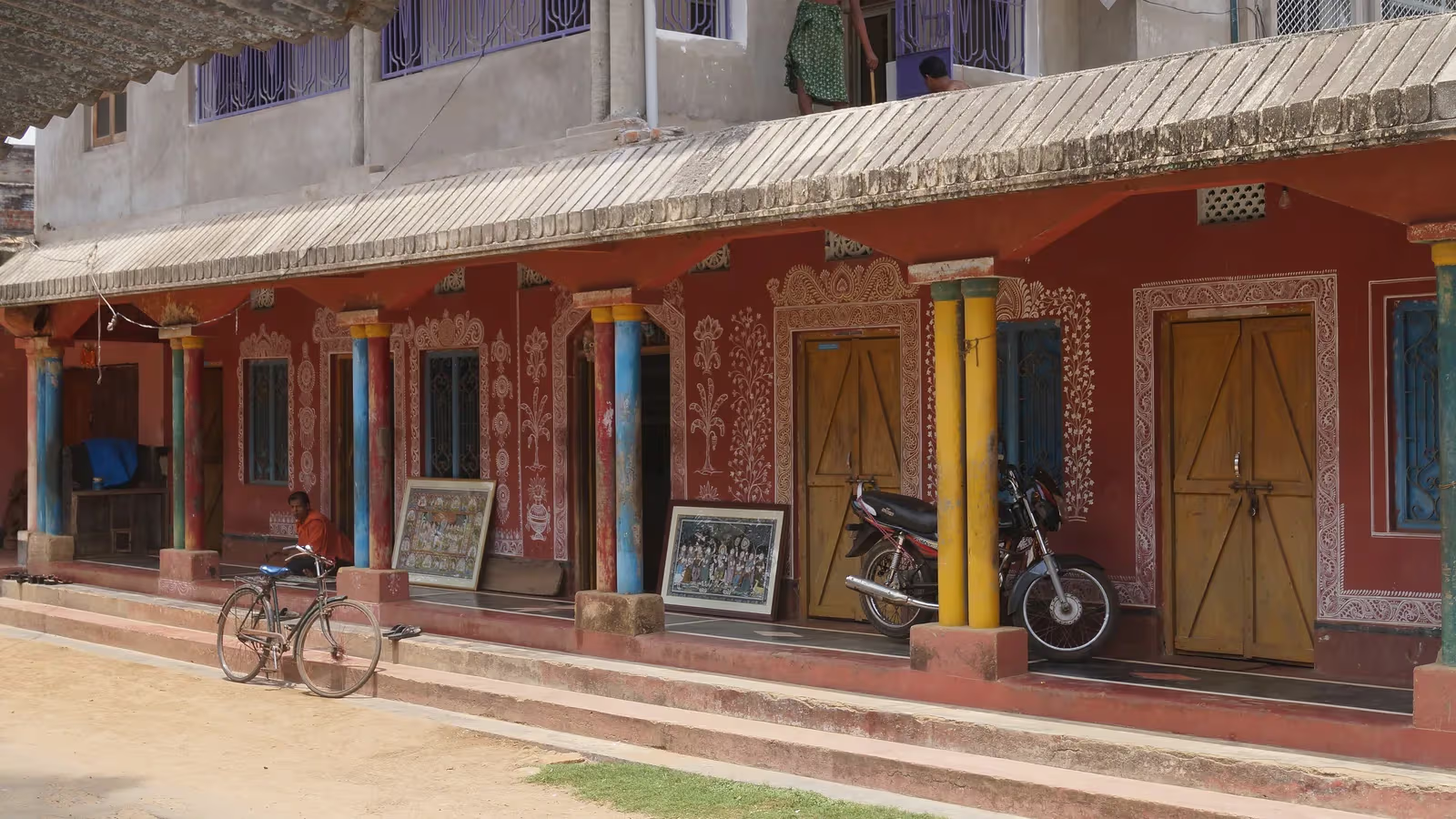
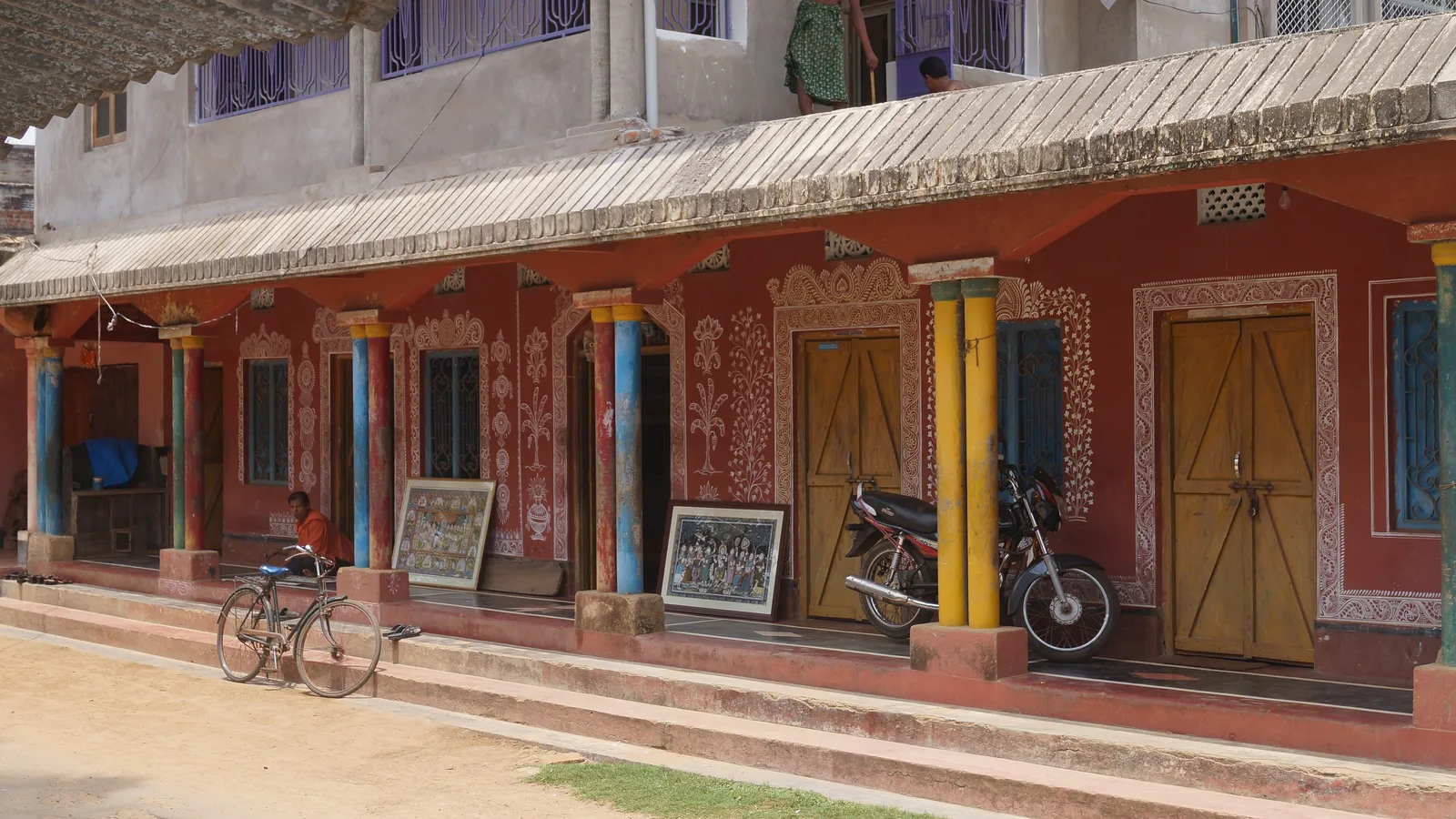
In most villages, the paintings are inside the houses. In Raghurajpur, near Puri, they are on the outside too. The house fronts are covered in murals, the verandas double as studios, and almost every family makes something by hand, most famously Pattachitra, the cloth paintings of Odisha. The village is about 48 km from Bhubaneswar, which makes it an easy day out with a self-drive car rental in Bhubaneswar.
This plan adds one more stop on the way: a ninth-century temple to sixty-four goddesses at Hirapur, on the edge of the city, which has no roof at all. Book a self-drive car in Bhubaneswar, then use the guide below.
Key Takeaways
- Distance: by OSRM map routing, Bhubaneswar railway station to Hirapur is about 9 km, Hirapur to Raghurajpur about 45 km on NH316, and Raghurajpur back to the station about 48 km. The whole loop is roughly 100 km.
- Season: Odisha Tourism lists October to March as the best time for both places.
- Timings and fees: Odisha Tourism gives 6 am to 6 pm for the Hirapur temple and 9 am to 6 pm for Raghurajpur. Neither charges an entry fee.
- Why now: the state laid the foundation stone for a ₹23 crore tourism project at Raghurajpur in August 2026, and the season for visitors is just starting.
- Buy original: artists in the village say cheap digital prints sold as handmade work are their biggest problem, so buy from the people who paint.
- Car: on 19 October 2026, the Hire N Ride Bhubaneswar page listed self-drive cars from ₹1,350 for one day, with unlimited kilometres.
Why this day works by car
A car of your own lets you reach Hirapur soon after it opens, drive on to Raghurajpur while the artists are starting work, stay as long as you like in one studio, and keep your purchases flat and dry on the back seat on the way home. It is also an easy drive. The highway to Puri is wide and busy, and both stops are only a short way off it.
Why go in October
Odisha Tourism gives October to March as the best time to visit both Raghurajpur and the Hirapur temple. The heavy monsoon rain is over, the fields around Hirapur are still green, and the hottest months are a long way off. Days can still be warm and humid, though. In its bulletin of 18 October 2026, the India Meteorological Department's Bhubaneswar centre forecast a daytime high of about 34°C for the city, with light to moderate rain or a thundershower at one or two places in Puri and Khordha districts until the morning of 20 October, and mostly dry weather after that. Check the latest forecast the evening before you go.
There is a second reason. On 18 August 2026, Odisha's Deputy Chief Minister and Tourism Minister Pravati Parida laid the foundation stone for a ₹23 crore integrated tourism development project at Raghurajpur, Prameya News reported. The state says the money will go into the village's infrastructure, facilities for artisans and amenities for visitors, and into promoting its Pattachitra, Gotipua dance, wood carving and terracotta work. It is a sign of how much attention the village is getting, and one more reason to see it this season.
If you are thinking about Diwali gifts before 8 November, a painting, a palm-leaf engraving or a painted mask bought straight from the person who made it is a good place to start.
The route at a glance
OSRM map routing gives these road distances from Bhubaneswar railway station. Its time estimates assume clear roads, so allow extra time for city traffic and for the stretch near Puri on weekends.
- Bhubaneswar station to the Hirapur temple: about 9 km, through the city's southern side.
- Hirapur to Raghurajpur: about 45 km, most of it on NH316, the Bhubaneswar to Puri highway. The road passes through Pipili, the applique town, about 19 km from the station.
- Raghurajpur back to Bhubaneswar station: about 48 km.
- Raghurajpur to the Jagannath Temple in Puri: about 11 km, if you want to add the town.
In normal traffic, plan on about an hour to an hour and a quarter from the city to Raghurajpur, and a little more on the way back in the evening rush.
Stop 1: The roofless temple at Hirapur
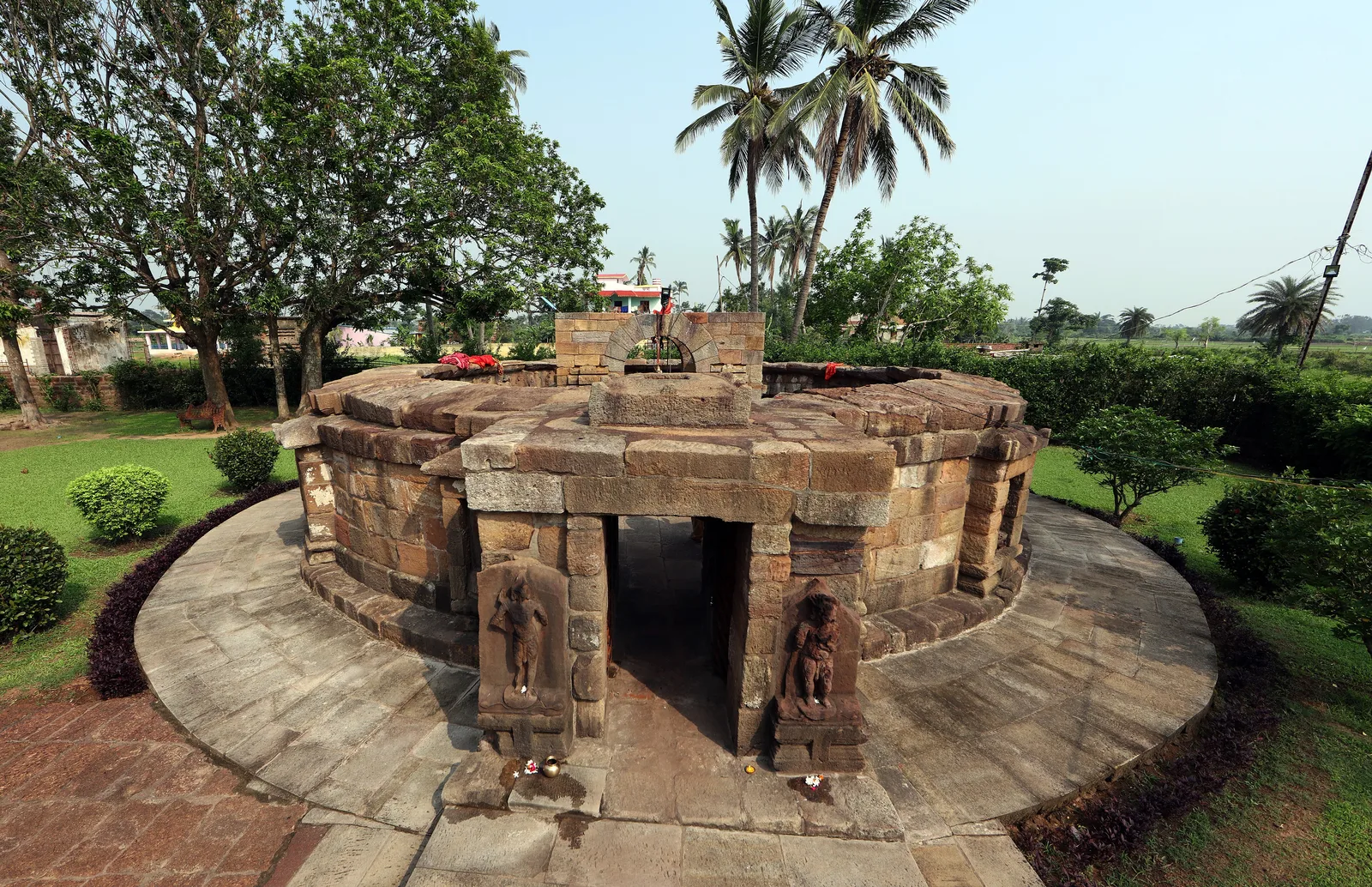
The Chausathi Yogini temple at Hirapur is easy to miss. It stands in a small garden among fields on the city's south-eastern edge, and it is no taller than a village house. According to Odisha Tourism, it dates from the ninth century, was built by Queen Hiradevi, and is dedicated to sixty-four yoginis, female deities of the Tantric tradition. It was rediscovered in 1953 by the historian Kedarnath Panigrahi and later restored.
What makes it unusual is the shape. The temple is a circle, open to the sky. Odisha Tourism explains this as a reflection of the belief that each yogini is a centre of energy that should flow freely, not be held in by a roof. The entrance is a narrow passage, and inside, the yoginis stand in niches around the wall, each one different, carved from dark chlorite stone. A pavilion in the middle holds Bhairava figures, and the presiding deity is Mahamaya.
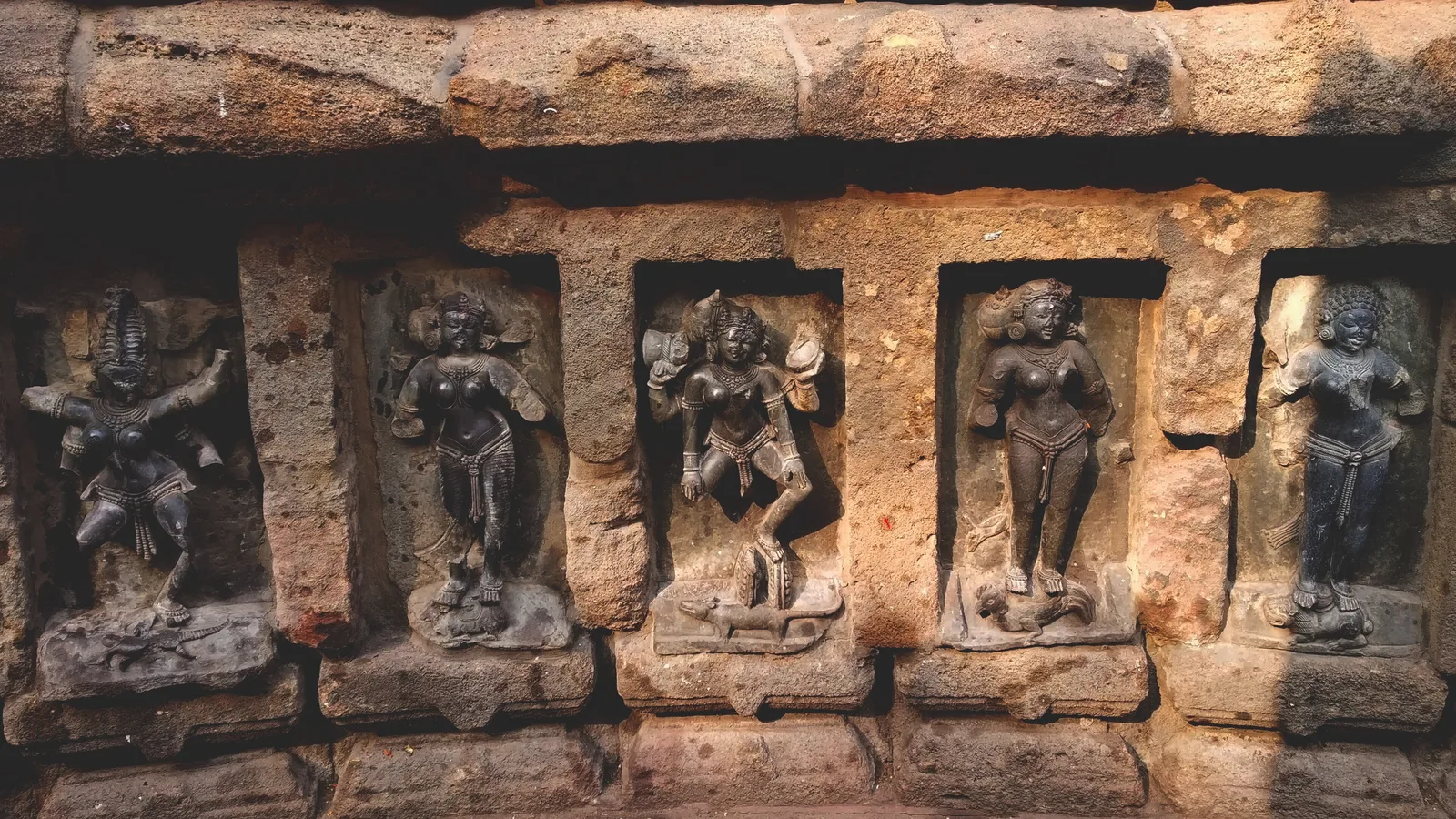
It is also very small. In a 2025 entry on India's tentative list for UNESCO World Heritage status, a serial nomination of Chausath Yogini temples across four states, Hirapur is described as the smallest of them all, only about thirty feet across, with stone walls barely eight feet high. The walls are sandstone blocks and the yoginis are carved in fine-grained grey chlorite. Odisha has one other yogini temple, at Ranipur-Jharial in Balangir district, so this is a rare sight so close to a state capital.
Odisha Tourism lists the temple as open from 6 am to 6 pm with no entry fee, and suggests one to two hours. Half an hour is enough for most people, though you may want longer with the carvings. It is a living temple, so remove your shoes, dress modestly, and ask before taking photos of anyone praying. Come early: the stone is cooler, the light is soft, and you will often have the circle to yourself.
On the way: Pipili
Back on the highway, Pipili comes up at about 19 km from the station. It is known across Odisha for applique, bright pieces of cloth cut into shapes and stitched onto a base to make canopies and wall hangings. We covered it as a stop in our drive from Bhubaneswar to Chilika. If you want to shop here too, do it on the way home, and park well off the road: the highway through town is busy with buses and trucks heading to Puri.
Stop 2: Raghurajpur, the painted village
Raghurajpur is a short turn off NH316 shortly before Puri. According to the Odisha Tourism page for the village, it is about 14 km from Puri and is known as India's first heritage crafts village. Almost every household practises a traditional art, and many artists have won national and international recognition. The walls of the houses are painted with scenes from Hindu mythology.
The best-known craft is Pattachitra, painting on prepared cloth, with fine lines, bright colours and stories from the Jagannath tradition and the epics. You will also see palm-leaf engraving, known as tala Pattachitra, where images are cut into dried palm leaves with a stylus, as well as stone carving, wooden toys and masks. Most work happens in the front rooms and verandas of the houses, so walking down the street is like walking through a gallery that is also somebody's home.
Raghurajpur is also the birthplace of two great dancers, Odisha Tourism notes: the Odissi master Kelucharan Mohapatra, a Padma Vibhushan, and the Gotipua guru Maguni Charan Das, a Padma Shri. Gotipua is a dance traditionally performed by young boys, and Odisha Tourism says performances for visitors are organised only occasionally. If you would like to see one, ask in the village well ahead of time. Do not expect a show on the spot.
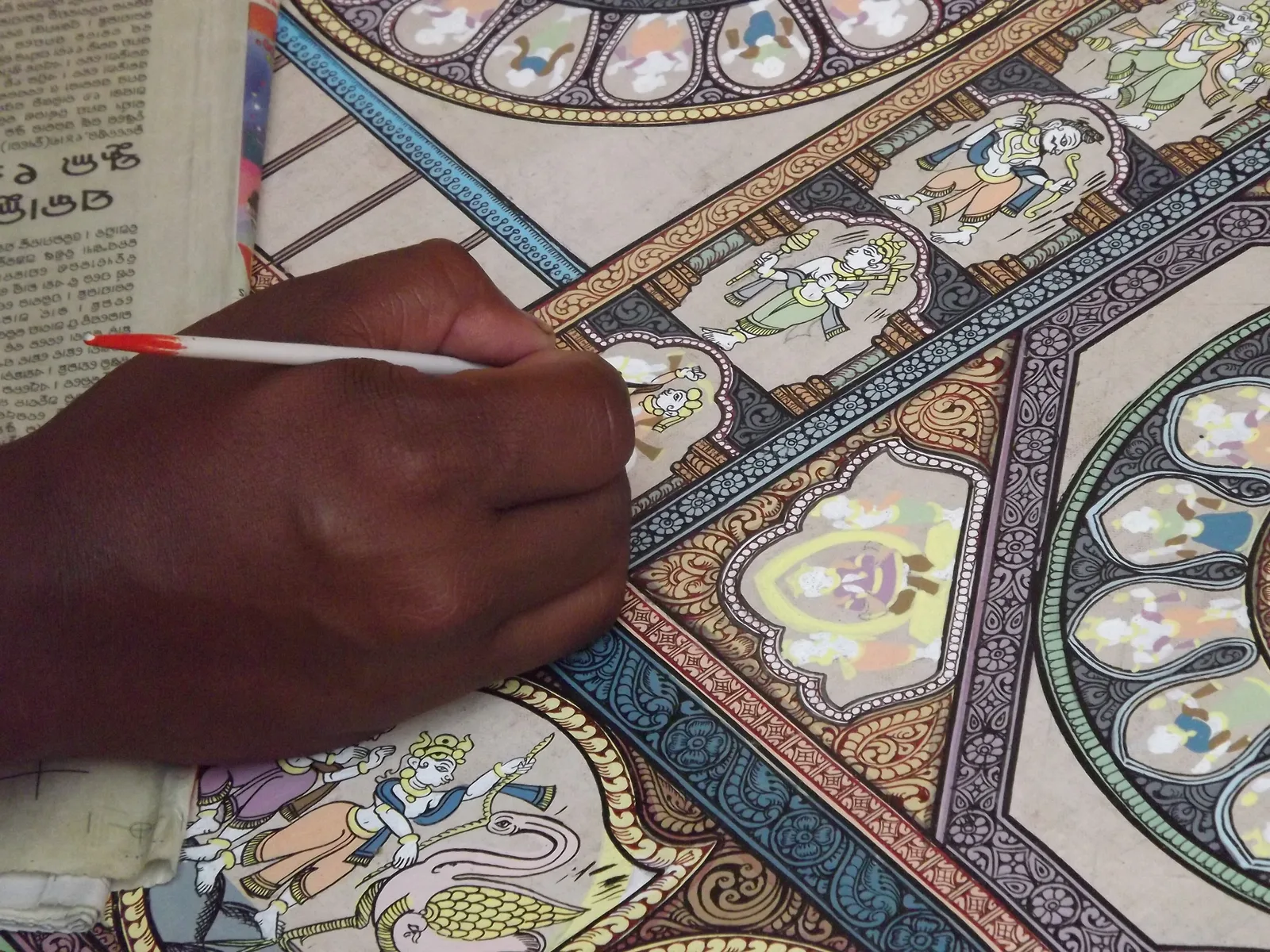
Odisha Tourism lists the village as open from 9 am to 6 pm and suggests two to three hours. There is no entry fee. In the mornings, many artists are at their benches and happy to show how they prepare the cloth, mix colours and draw the borders. Walk slowly, accept the cup of tea if one is offered, and ask before you photograph people or step inside a home.
How to buy original work
On 7 October 2026, The Indian Sun published a visit to Raghurajpur in which Deepika Sahu wrote that around 160 families in the village live by painting, carving and dance, and that their biggest threat now is the cheap digital print. A sixth-generation Pattachitra artist, Sachikant Sahoo, told her that digital prints are being sold as original work, which hurts artists whose paintings take a long time to make.
A few simple habits help:
- Buy from the maker. In Raghurajpur, you can usually see the artist at work and the half-finished pieces next to the finished ones.
- Look closely. A hand-painted piece shows brush strokes, slight changes in line and colour, and texture on the cloth. A print looks perfectly flat and even.
- Ask about the process. Artists are usually glad to explain how the canvas is prepared and how the colours are made. If nobody can tell you, be careful.
- Agree on the price first. Prices depend on size, detail and the time a piece took. Ask, compare a few houses, and do not haggle too hard over work that took weeks.
- Carry cash. Do not count on cards or UPI at every house.
- Pack it flat. Ask for a tube or a flat wrap, and keep paintings away from the sun and from wet bags in the car.
A sample day
- 7:00 am: pick up your car and leave the city before the traffic builds.
- 7:30 am: the Hirapur temple, about 30 to 45 minutes.
- 8:30 am: breakfast, then join NH316 and drive south through Pipili.
- 10:00 am: arrive in Raghurajpur, when most artists are working. Spend two to three hours walking, watching and buying.
- 1:00 pm: lunch in Puri, about 11 km away, or start back towards Bhubaneswar.
- 3:00 pm: shopping stop in Pipili on the way home.
- By 5:00 pm: back in the city. The calculated sunset at Raghurajpur is about 5:20 pm on 19 October, 5:16 pm on 25 October and 5:12 pm on 1 November.
Driving tips for this route
- Leave early: the city's southern side and the first stretch of NH316 get slow from mid-morning.
- Watch the highway: NH316 carries buses, trucks, two-wheelers and pilgrims. Keep to your lane and give way at the junctions near Pipili.
- Go slowly in the village: Raghurajpur's streets are narrow, with children, cycles and work laid out on the verandas. Park at the edge and walk in.
- Avoid big festival days in Puri: traffic near the town can be very heavy on major temple days. Check the calendar before you pick a date.
- Carry water and a cap: October afternoons on the coast can be hot and humid.
- Licence and papers: carry your original driving licence, and keep the rental documents in the glovebox.
Choosing your car
This is a flat, paved route on a national highway and short village roads, so any small car is enough. A hatchback is the easiest to park in Raghurajpur, and an automatic makes the city traffic less tiring.
On 19 October 2026, the Hire N Ride Bhubaneswar page listed self-drive cars from ₹1,350 for one day, the rate for a 2026 Renault Kwid automatic (petrol) after a 10% discount from ₹1,500. A 2024 Maruti Suzuki Swift LXi was listed at ₹2,117 and a 2023 Baleno Delta at ₹2,156 for one day. The page showed a deposit from ₹5,000 and unlimited kilometres. Some listings show roadside assistance only within a few kilometres of the pickup point, and Raghurajpur is about 48 km out, so check the assistance terms when you book. Rates and availability change, so check the live page before you book.
More drives from Bhubaneswar
With more days in the city, the same car opens up other trips. Go looking for dolphins on the lagoon in our Chilika and Satapada guide, see the stone wheels in the morning light on the Konark day drive, or head north-east to the old Buddhist hill sites on our drive to Ratnagiri, Lalitgiri and Udayagiri.
Conclusion: art you can watch being made
Hirapur and Raghurajpur make a quiet, rewarding pair. One is a small stone circle where sixty-four goddesses stand under the open sky. The other is a village where the paintings come out of the houses and onto the walls, and where you can sit next to the person holding the brush. With a self-drive car rental in Bhubaneswar, you can see both in a single unhurried day, buy something real, and be back in the city before dark.
Ready to go? Book a self-drive car in Bhubaneswar, start early, and take your time in the studios.
About the author: Manjot Kaur writes ride and road-trip guides for Hire N Ride. She enjoys routes where history and craft sit close to the road, and she focuses on the practical details that make a rental day work, such as distances, opening hours and the weather.