By Nitin Kanish · 9 October 2026
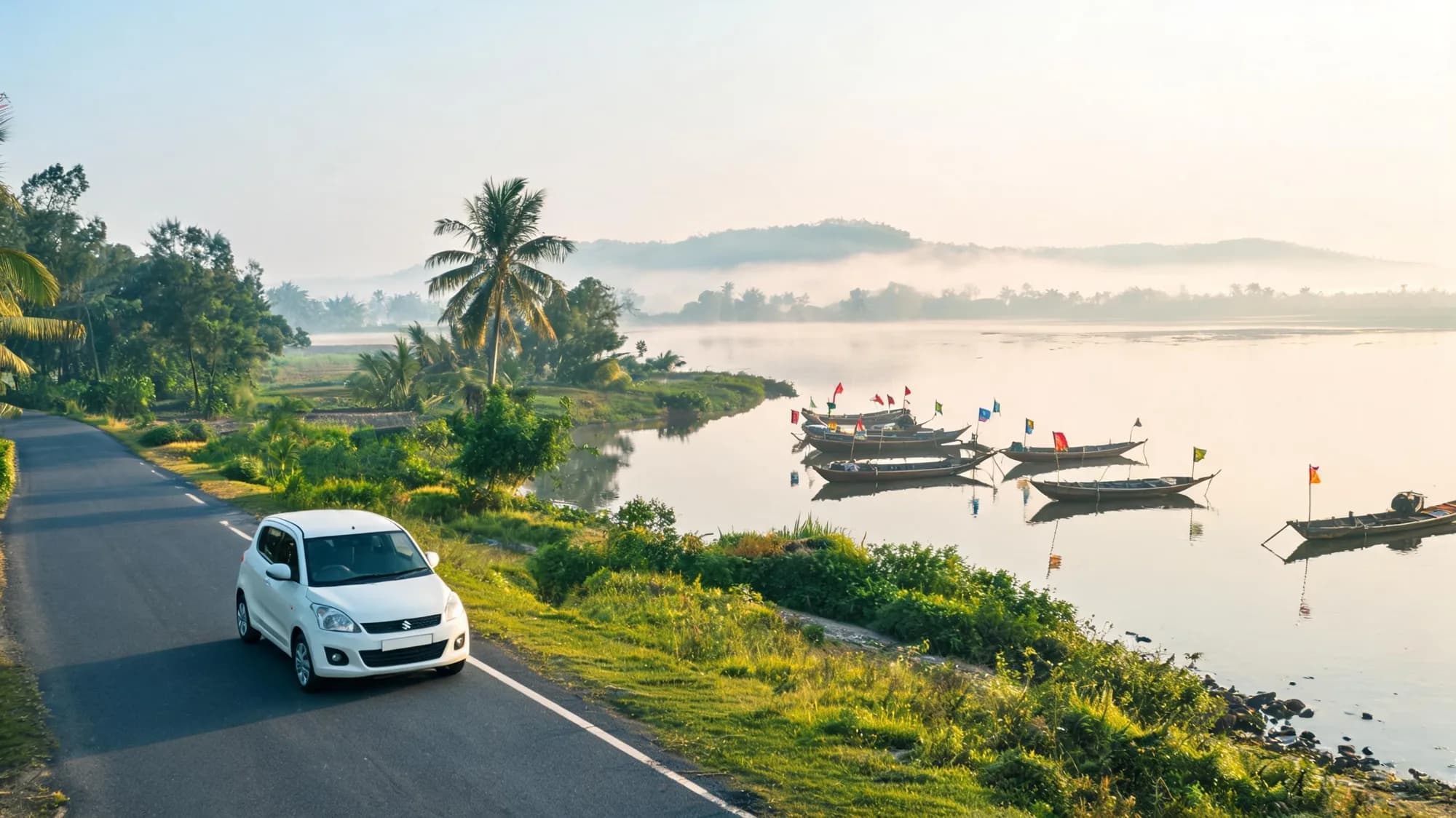
Chilika Lake is one of those places that sounds like a long expedition and turns out to be a comfortable day drive. From Bhubaneswar, the road runs south past the hill where Ashoka is said to have turned to peace, through a town of hand-stitched applique, around Puri and out along a strip of land between the sea and the lagoon. At the end is Satapada, where small motorboats head out to look for Irrawaddy dolphins. With a self-drive car rental in Bhubaneswar, you set the pace, choose your stops and avoid the rush of a packed tour bus.
This guide is for travellers planning a Chilika day this October, and for Bhubaneswar car owners curious about how routes like this turn into bookings.
Key Takeaways
- Season: Wikipedia's Chilika Lake article lists October to January, and May to June, as the peak tourist seasons at Chilika.
- Distance: open-source routing (OSRM) gives about 107 km from central Bhubaneswar to Satapada. Going via Puri is about 62 km to Puri plus about 48 km on to Satapada. Allow around two and a half hours each way with traffic.
- The three stops: Dhauli (about 8 km south of the city), Pipili (about 18 km out, on the Puri road) and Puri, before the final run to Satapada.
- The dolphins: Chilika holds India's only lagoon population of Irrawaddy dolphins, an endangered species. Sightings are never guaranteed.
- Timing: leave Bhubaneswar by 6:30 AM, be on the water by mid-morning, and drive the coastal stretch back in daylight.
- Book: pick a car on the Bhubaneswar car rental page.
Why Chilika in October
Chilika is the largest brackish-water lagoon on India's east coast. It spreads across Puri, Khordha and Ganjam districts and opens to the Bay of Bengal. In 1981 it became one of the first two Indian wetlands named a Ramsar site, a wetland of international importance. The lagoon supports more than 225 bird species and around 200,000 fisherfolk from over 130 villages along its shores, according to Wikipedia.
October is when the lake starts to get busy again. The monsoon is easing, the water is calmer, and the tourist season that runs through to January begins. It is also the start of the winter bird migration that makes Chilika famous later in the season. Go early in the month and you get green country, softer crowds and long, bright mornings. Weekends and holidays are busier at the Satapada jetty, so a weekday is the calmer choice.
One honest note on weather: the Odisha coast can still see heavy rain or a passing cyclone warning in October. Check the forecast the evening before you leave, and if there is a weather alert for the coast, save the trip for another day. The lake will still be there.
Stop one: Dhauli, the hill of Ashoka
Leave Bhubaneswar early and head south on the Puri road. About 8 km out of the city, a turn takes you up to Dhauli, a low hill on the banks of the Daya river. Dhauli is widely believed to be the site of the Kalinga War, the battle that changed the emperor Ashoka and led him to Buddhism. On top stands the white Dhauli Shanti Stupa, a peace pagoda built by the Japan Buddha Sangha and Kalinga Nippon Buddha Sangha in 1972.
At sunrise the view over the river and the green plain below is quiet and wide, and the light on the white dome is lovely. Twenty to thirty minutes is enough. Park in the marked area, take off your shoes where signs ask you to, and keep your voice low near the shrine.
If Ashoka's story interests you, Hire N Ride has also written about his rock edict in the Himalayan foothills, on the drive from Dehradun to Kalsi and Chakrata. It is a nice reminder that the same emperor left his mark from Odisha to Uttarakhand.
Stop two: Pipili and its applique
Back on the main road, Pipili comes up about 18 km from Bhubaneswar, where the Konark road branches off the Bhubaneswar to Puri road. Pipili is famous for applique work, known locally as chandua: bright pieces of cloth cut into shapes and stitched onto a base to make canopies, wall hangings, lamp shades, umbrellas and bags. The main road through town is lined with shops, their colours spilling out on to the pavement.
It is an easy stop for a cup of tea and a short walk. If you want to buy something, pick it up on the way back, so it does not sit in a hot car all day. Park off the carriageway: the highway through Pipili is busy with buses and trucks heading to Puri.
Stop three: Puri, then the lagoon road
Puri is about 36 km beyond Pipili. Many travellers pair Chilika with a visit to the Jagannath Temple, one of the Char Dham pilgrimage sites, but the temple area is crowded and parking near it can take time. On a Chilika day it is often easier to keep Puri brief, perhaps breakfast and a look at the sea, and save the temple for a separate visit when you have more time.
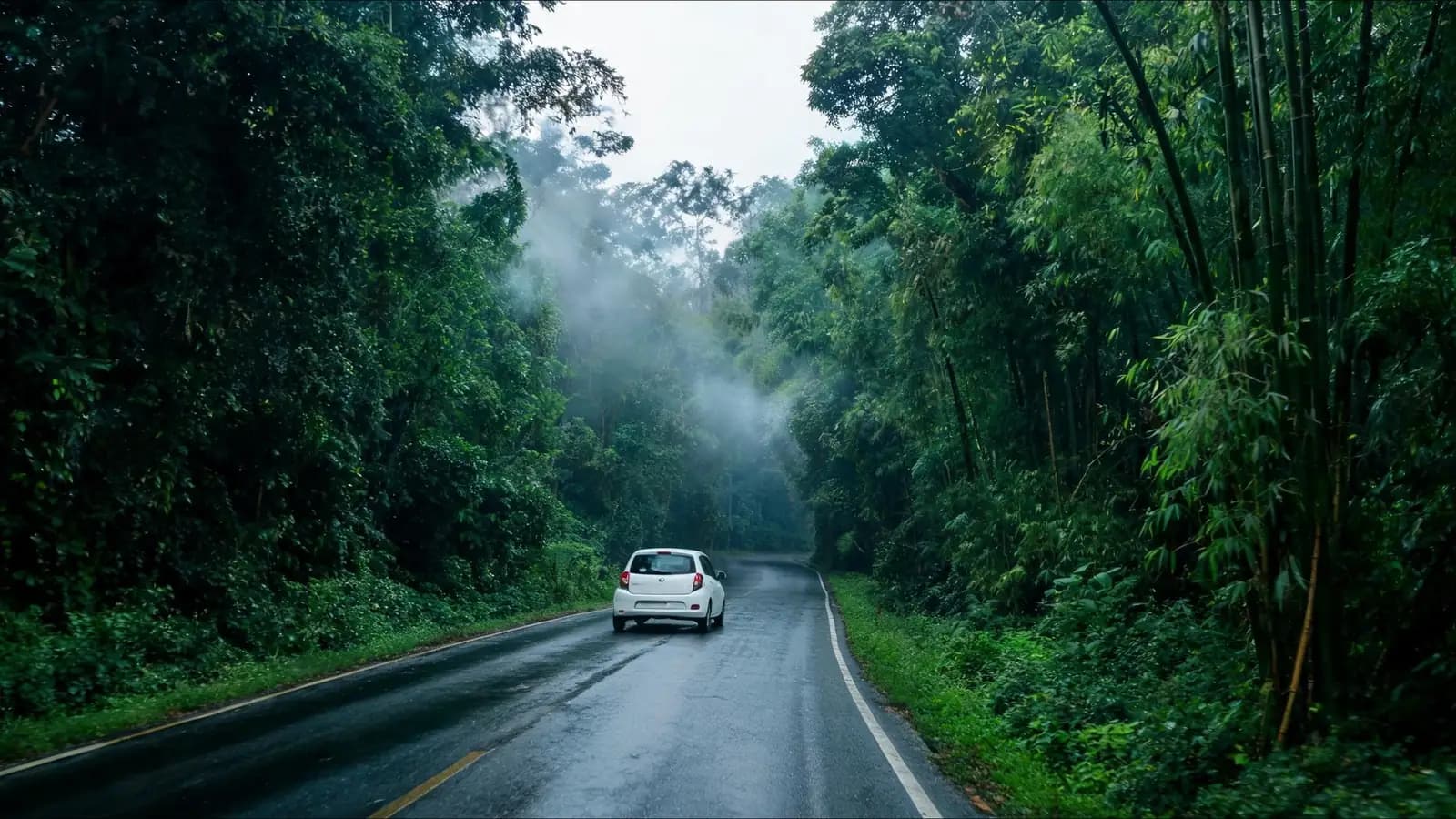
From Puri, the road to Satapada runs south-west along the narrow strip between the Bay of Bengal and the lagoon. OSRM puts this stretch at about 48 km. It is flat and mostly straight, with villages, coconut palms, casuarina belts and glimpses of water on both sides. Drive it steadily, watch for cycles, cattle and people walking along the edge, and slow right down through each village.
At Satapada: the dolphin boats
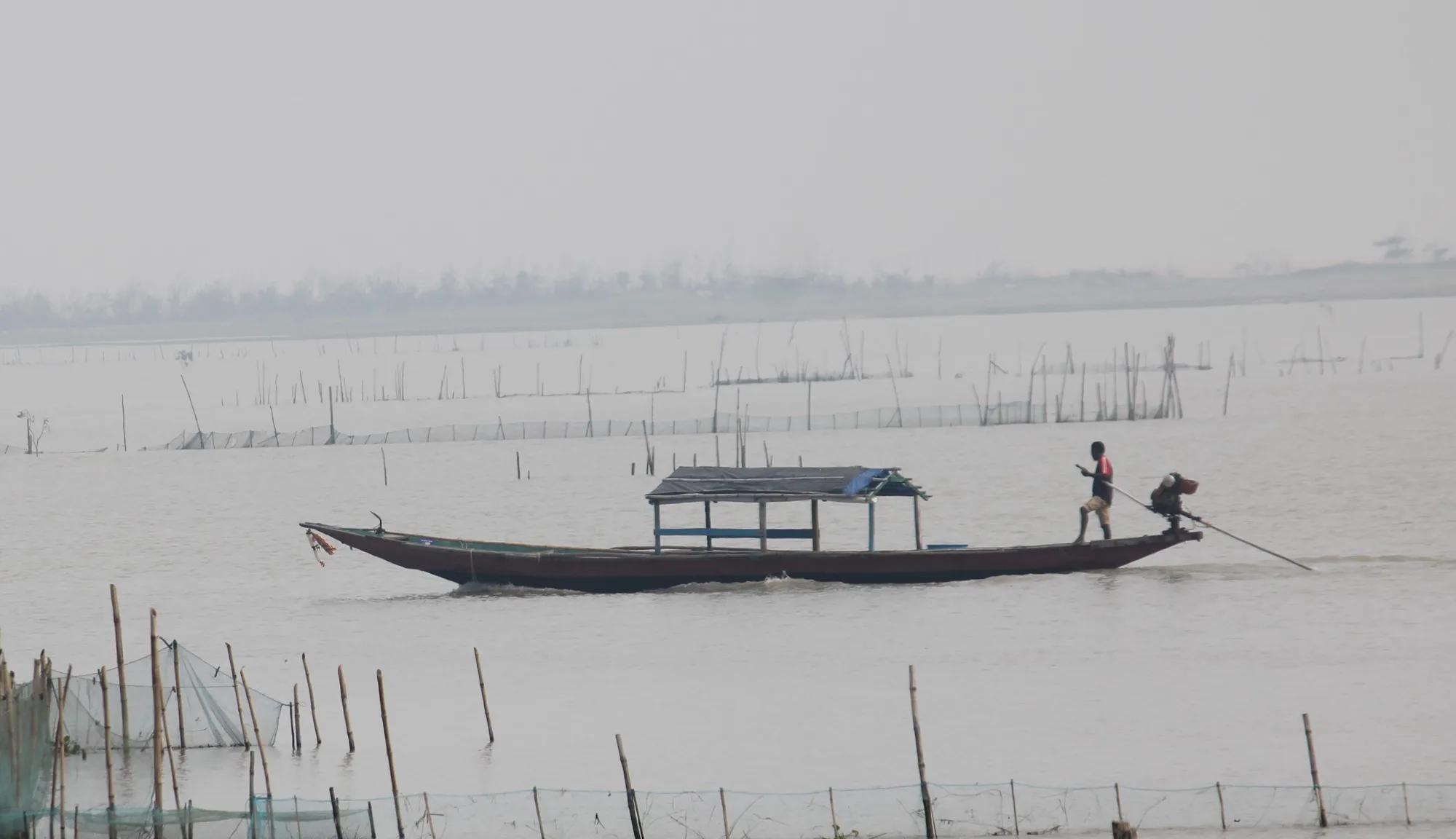
Satapada, which means "seven villages" in Odia, sits on the eastern side of the lake, close to where Chilika meets the sea. It is the main base for dolphin watching. Motorboats leave from the jetty area and take you out into the part of the lake where Irrawaddy dolphins are usually seen, and many trips continue towards the sea mouth.
What to know about the Irrawaddy dolphin
The Irrawaddy dolphin is a small, slate-grey dolphin with a rounded forehead and no beak. Its only concentrated lagoon populations in the world are in Chilika and in Songkhla Lake in southern Thailand. The species is listed as endangered, and Wikipedia records 156 dolphins in Chilika as of 2021. A new mouth opened between the lake and the sea at Satapada in 2000 helped restore the lake's salinity and fish life, and the dolphins have since spread more widely across the central and southern parts of the lake.
Do not expect the leaping dolphins of a nature film. Irrawaddy dolphins surface quietly for a breath and slip back under. You will usually see a curved grey back and a small rounded fin for a second or two. Watch the water around the boat, be patient, and enjoy the lake itself while you wait.
How to be a good guest on the water
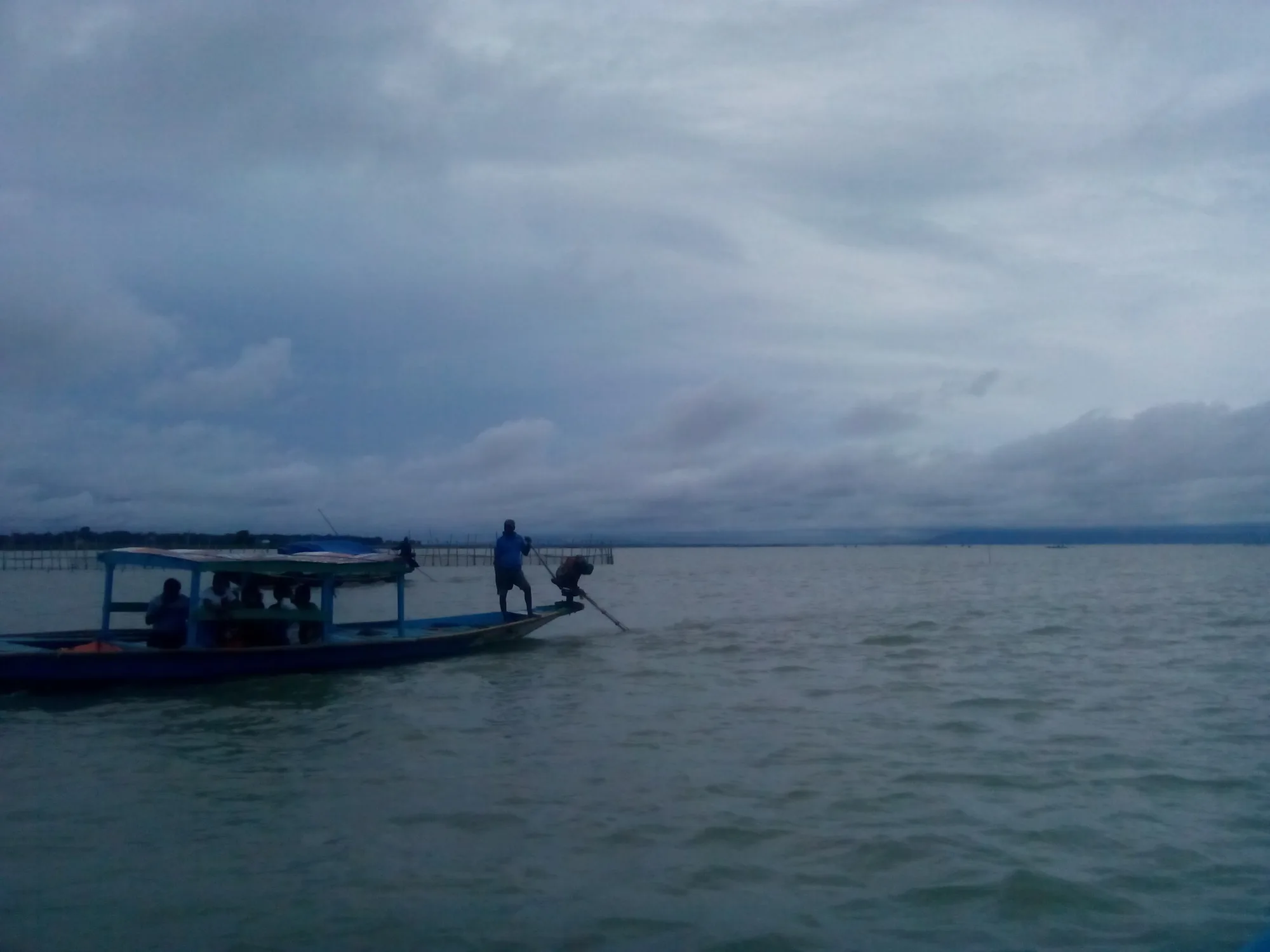
- Use a registered boat. Book at the official counters or with recognised boat operators at the jetty, and confirm the price, route and duration before you board. Prices change, so ask on the day rather than relying on old figures online.
- Wear the life jacket for the whole trip, and keep children seated.
- Ask the boatman to keep his distance and to cut the engine near dolphins. Chasing them stresses the animals and rarely gives a better view.
- Take nothing into the water and leave nothing behind. Plastic and food waste harm the lake that the fishing villages depend on.
- Protect your phone and camera from spray with a zip bag, and wear a hat: there is little shade on the open lake.
Kalijai and the wider lake
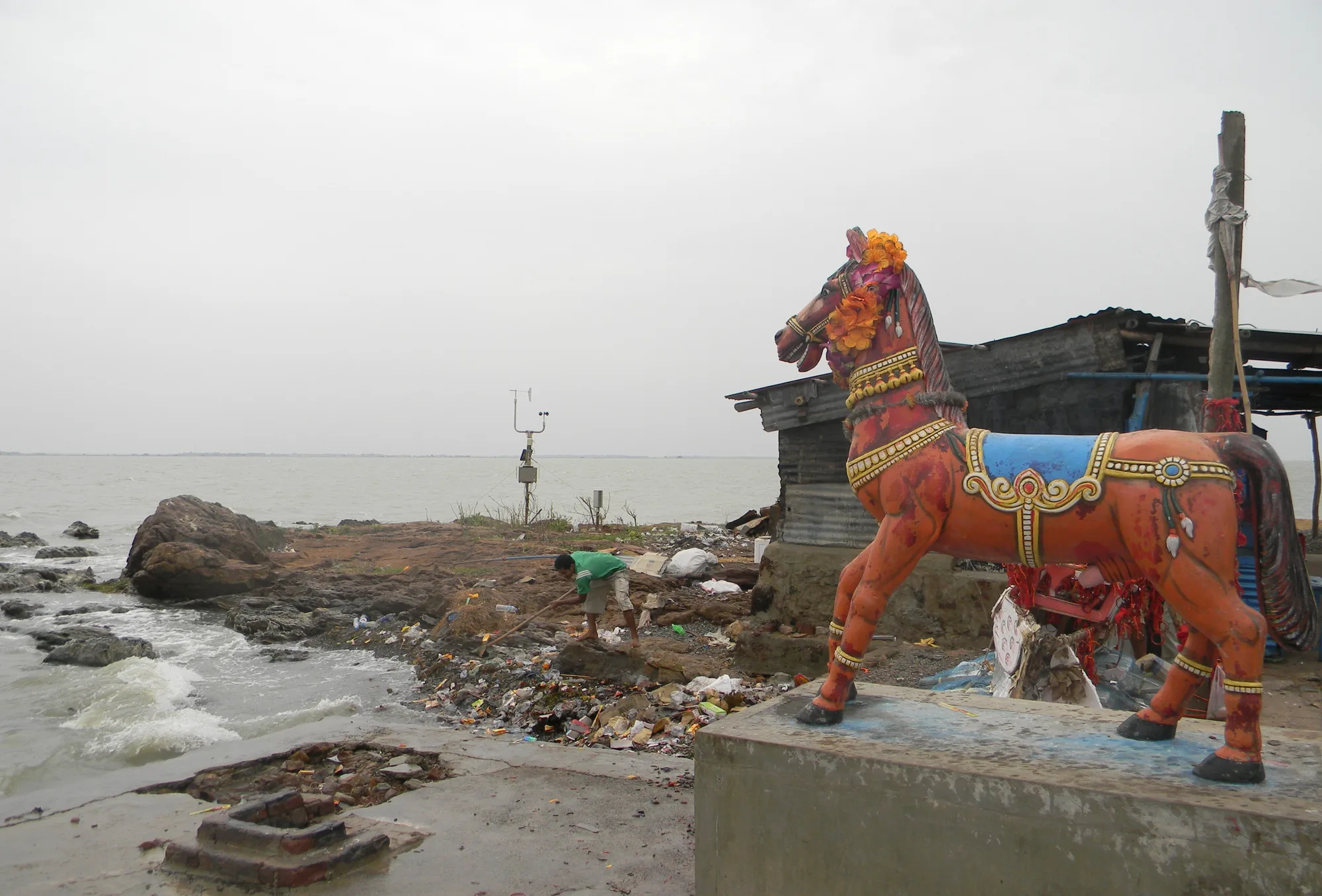
Chilika has many islands. One of the best known is Kalijai, a small hill island with a shrine to the goddess Kalijai, a form of Kali. Local legend tells of a young bride named Jaai who was lost when her boat capsized in a storm on the lake, and who came to be worshipped as the goddess. A large fair is held there every January during Makar Sankranti.
Boat trips to Kalijai are commonly run from the western shore, around Barkul, rather than from Satapada; ask locally which jetty suits your plan. It is a separate trip. If you would like to see it, consider an overnight stay near the lake, or a second day from Bhubaneswar going to the western shore. Trying to fit both sides of Chilika into one day means a lot of time in the car and a rushed return in the dark.
A simple day plan
- 6:30 AM: leave Bhubaneswar. Short stop at Dhauli for the sunrise view.
- 7:30 AM: tea at Pipili.
- 8:30 AM: breakfast in Puri and a short look at the sea.
- 10:00 AM: reach Satapada. Book your boat and head out while the water is calm.
- 1:00 PM: lunch near the lake. Fresh fish and prawns are a local speciality.
- 2:30 PM: start back towards Puri, with a stop at Pipili for shopping.
- Before dark: be back on the main highway. In October the sun sets early on the east coast, so do not linger on the lagoon road.
The round trip is around 210 to 220 km. That is a full day, but an easy one on flat roads.
Driving tips for the Odisha coast
- Fuel up in Bhubaneswar or Puri. The lagoon road has fewer options, so start with a full tank.
- Expect slow traffic around Puri, especially on weekends and festival days. Plan your route around the temple area rather than through it.
- Watch for animals and cyclists on the narrow road to Satapada, and be extra careful after rain, when the edges can be soft.
- Carry water, snacks, sunscreen and a cap. The coastal sun is strong even in October.
- Keep your documents handy: your driving licence, a photo ID and your booking details.
- Use offline maps. Phone signal can be patchy in some lagoon villages.
Why a self-drive car works for Chilika
Group tours to Chilika are fixed to a timetable: one boat slot, one lunch stop and a fast drive home. A car of your own lets you leave at dawn for Dhauli, stay longer on the water if the dolphins are showing, stop wherever the light looks good, and turn back when you are ready. For families with children or older parents, it also means air conditioning, your own snacks and a place to rest between stops.
When you book, check a few things with your host:
- The kilometre allowance on the booking (the Bhubaneswar page currently mentions unlimited kilometres, but confirm the terms for your car).
- That the car has working air conditioning, good tyres, a spare wheel and a jack.
- The fuel policy, and whether the car should come back full.
- Who to call if anything goes wrong on the road.
Booking through Hire N Ride means you can see a host's profile and reviews before you choose, which matters on a long day out. You can also compare other platforms such as Zoomcar; wherever you book, read the reviews for the specific car and host.
Like lagoon country? See how Kerala's backwaters compare in our Cochin to Alleppey canal drive.
Book a self-drive car in Bhubaneswar on Hire N Ride
For Bhubaneswar car owners: why routes like this matter
Bhubaneswar is the gateway to Puri, Konark and Chilika, and many visitors arrive by train or flight without a car of their own. From October to January, families and small groups look for comfortable cars for exactly this kind of coastal day out. That is steady demand for well-kept hatchbacks, sedans and SUVs.
Hire N Ride works like Airbnb for vehicles. You list your car, set when it is available and build a professional host profile. Every good trip earns a review, and more reviews bring more bookings. Hire N Ride also helps you run the business side: vehicle surveys, GPS management, and reminders for insurance renewal, PUC certificates, RC, permit expiry and servicing, so the paperwork stays on track while your car is out on the coast road.
Become a host: list your car on Hire N Ride
Conclusion
A Chilika day from Bhubaneswar has a gentle rhythm: a peace pagoda at sunrise, a bazaar full of colour, a quick look at the sea at Puri, and then the wide, quiet lagoon where a grey back breaks the surface for a moment. October is when the season begins and the country is still green. Start early, choose a registered boat, keep your distance from the dolphins and be back on the highway before dark. With a self-drive car rental in Bhubaneswar, it is one of the easiest and most memorable days on the Odisha coast.
About the author
Nitin Kanish writes road-trip and travel guides for Hire N Ride, with a focus on practical day drives from the cities where Hire N Ride hosts operate, and on helping vehicle owners turn their cars into a steady business.
Banner image: AI-generated with Imagine.art for Hire N Ride. In-article photos: Wikimedia Commons, credited in each caption. Distances are from OSRM routing and Wikipedia; check current road and weather conditions before you travel.