By Nitin Kanish · 19 October 2026
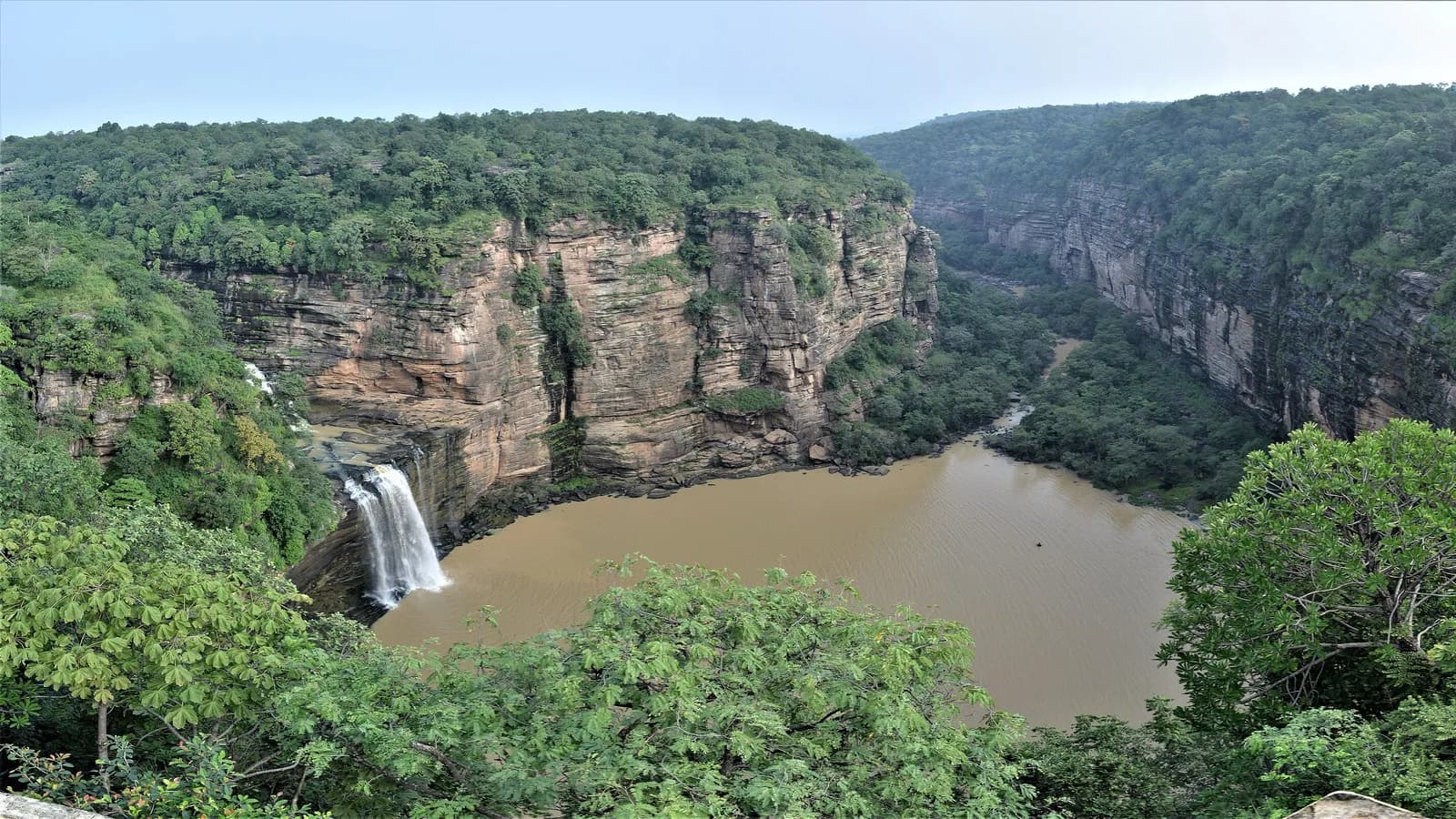
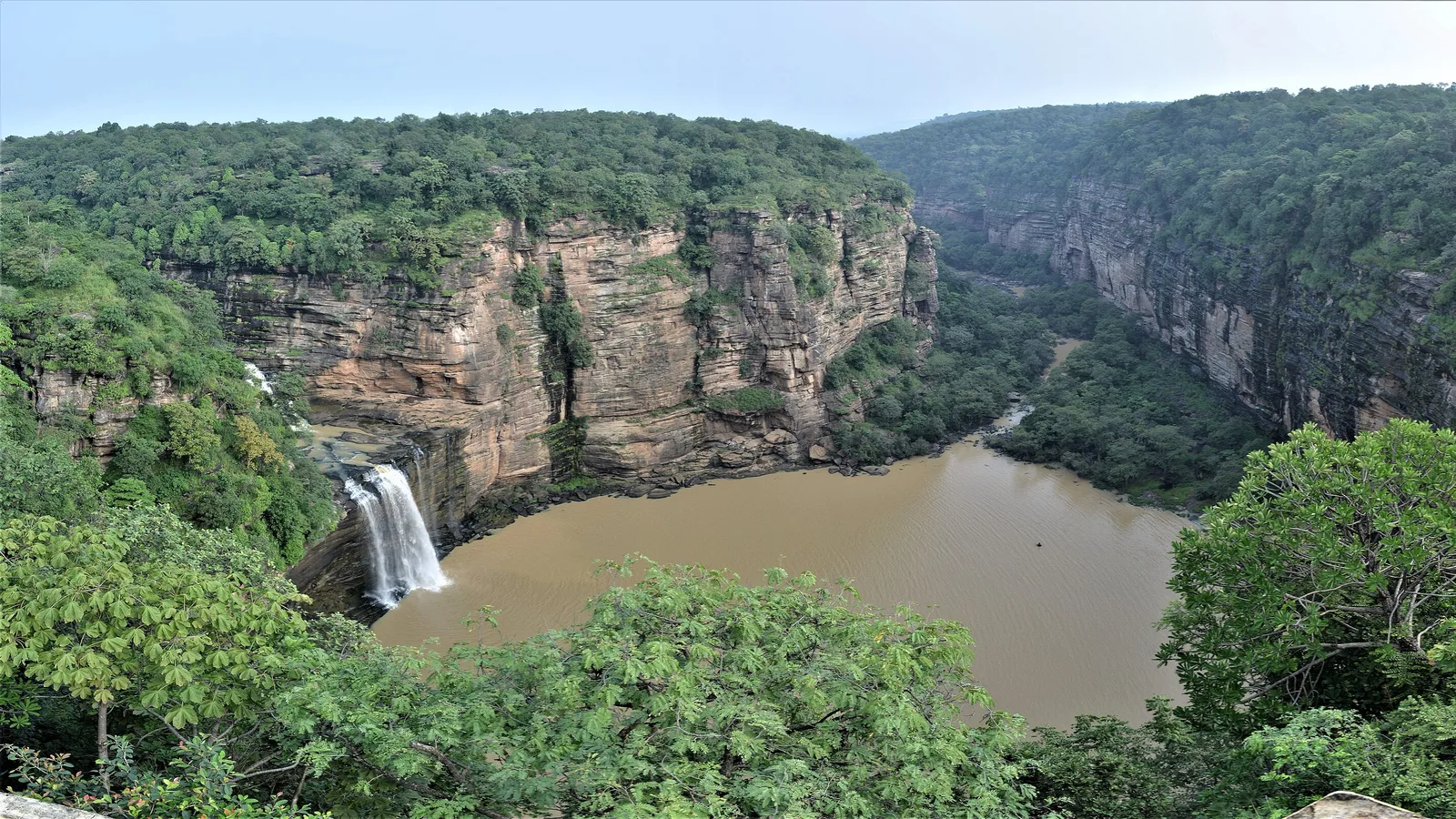
In 1957, three Asiatic lions from Gir were brought to a patch of forest in the Vindhya hills south-east of Varanasi. The lions are gone, but the forest they came to, the Chandraprabha Wildlife Sanctuary, is still there, and so are its two famous waterfalls, Rajdari and Devdari. Both are fed by the rains, so the weeks after the monsoon are the time to see water on the rocks before winter thins it out.
The falls are about 60 km from the ghats, past Ramnagar and the market town of Chakia. That is close enough for a relaxed day out with a self-drive car rental in Varanasi, and far enough that a car you control makes the trip much easier than a shared jeep. Book a self-drive car in Varanasi, then use the plan below.
Key Takeaways
- Distance: by OSRM map routing, Godowlia to Rajdari is about 60 km one way, and the full loop in this guide, including a stop at the Latif Shah dam, is about 150 km.
- Timing: Incredible India lists July to February as the best time to visit the sanctuary. The falls are rain-fed, so October still beats the winter months for water.
- Day trip only: the Chandauli district administration says there is no accommodation at the falls, only eateries selling snacks and drinks.
- Carry ID: during this year's Sawan rush, Naugarh police turned back visitors without valid photo ID, so keep yours in the car.
- Daylight: calculated sunset at Rajdari is about 5:26 pm on 19 October and 5:16 pm on 1 November. Plan to leave the forest by about 4 pm.
- Car: on 19 October 2026, the Hire N Ride Varanasi page listed self-drive cars from ₹2,592 for one day, with 240 km a day included.
A sanctuary with an unusual history
According to UP Ecotourism, the official ecotourism website of the Uttar Pradesh government, the sanctuary was set aside in 1957 in Chandauli district and is part of the Kashi Wildlife Division. It was chosen as a second home for the Asiatic lion. A male called Raja and two females, Rani and Jayshree, were brought from Gir in Gujarat. The site says they roamed the area until about 1970, but the experiment failed because of heavy pressure on the forest from people and livestock.
Today the sanctuary is known for its woods, waterfalls and picnic spots. UP Ecotourism lists chital, sambar, nilgai, wild boar, porcupine and the Indian gazelle among its animals, along with gharial and python. Incredible India adds that it covers about 78 sq km of the Vindhya hills, that it takes its name from the Chandraprabha river, a tributary of the Karamnasha, and that there are caves, rock shelters, watchtowers and a sunset point inside. Not every species is easy to find, though. In January 2026, Amar Ujala reported that a recent wildlife count found no sarus cranes in the sanctuary.
Why go in October
Rajdari and Devdari have no glacier or spring behind them. They depend on the monsoon, so the flow is strongest in July and August and falls steadily after the rains end. In the peak months the falls are at their loudest, but the paths are muddy and the weekend crowds are heavy. By the dry winter months, the water can drop to a trickle.
Mid-October to early November sits in between. The forest is still green, the heavy rains are over, the mornings are pleasant, and there is usually still water on the rocks, though less than in August. The photo of the Devdari gorge further down was taken on an October afternoon and shows how thin the main plunge can get, so the sooner you go, the more water you are likely to see.
There is also a reason to go thoughtfully. On 12 October 2026, the Chandraprabha Range and the Kashi Wildlife Division held an environment and wildlife awareness programme at the Rajdari-Devdari eco-tourism site, with children and teachers from the primary school at Jamsoti and local villagers, Dainik Bhaskar reported. Officials asked visitors not to leave plastic at the falls and to keep the site clean. Take your rubbish back to Varanasi with you.
The route at a glance
OSRM map routing gives these road distances. Its time estimates assume empty roads, so allow more time for town traffic and the slow forest stretch.
- Godowlia to Rajdari: about 60 km. The route crosses the Ganga on the Samne Ghat bridge, passes Ramnagar Fort, then follows the state highway south-east through Chakia and into the hills. From Varanasi Cantt railway station it is about 64 km.
- Rajdari to Devdari: about 2.3 km by road.
- Devdari to the Latif Shah dam near Chakia: about 24 km.
- Latif Shah dam back to Godowlia: about 50 km.
That makes about 150 km for the whole day, well inside the 240 km a day shown on the Varanasi rental page. In normal traffic, expect about one and a half to two hours each way, more if you leave the city at rush hour.
Stop 1: Ramnagar on the way out
Ramnagar Fort is right on the route, just across the river from the city. It was the residence of the Maharajas of Benares and now has a museum of vintage cars, royal costumes and weapons. On the way out, a quick look from the road is enough. If you want to go inside, keep it for the return, or for a separate morning paired with our Chunar Fort day drive, which leaves the city the same way.
Stop 2: Rajdari
After Chakia the land rises. Near the falls, a turn known locally as Jalebiya Mod marks the start of the climb, and during this year's Sawan rush the police kept a special watch there. Drive slowly on this stretch. Expect two-wheelers, cattle and the odd jeep on the forest road.
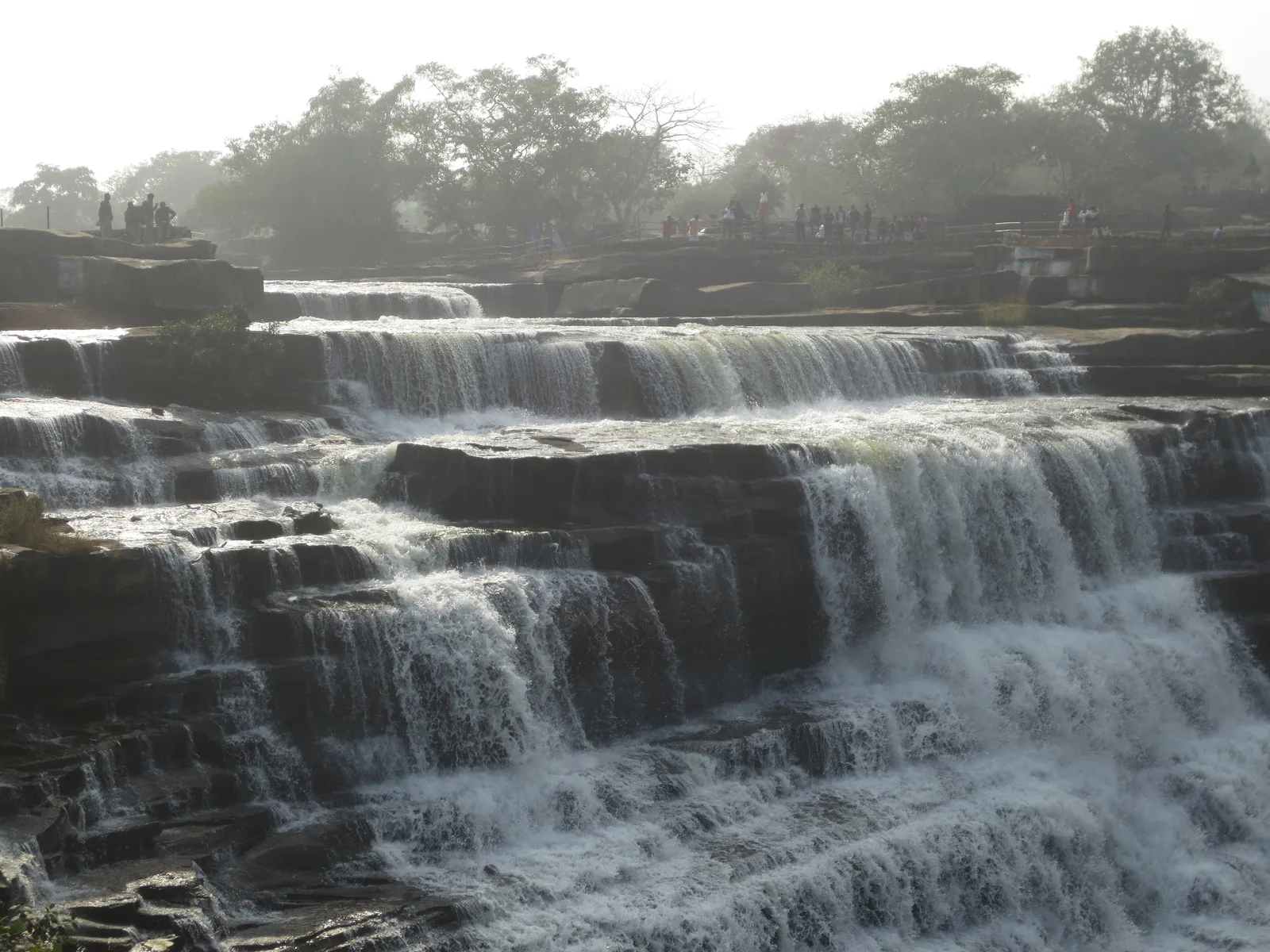
Rajdari is the wider of the two falls. The water runs over a broad shelf of layered sandstone and drops in a series of steps, so in a good-water week you see a curtain of small cascades rather than one tall plunge. There are railings and viewpoints along the top. The Chandauli district website describes the clear water gurgling over the rocks and the tranquil setting, and notes that people come for the day and that small eateries serve snacks and drinks.
Give it about an hour. The best views are from the railings near the top, and the rock here is smooth, flat and slippery when wet. Stay in the marked areas, keep children close, and do not climb down to the edge for a photo, however calm the water looks.
Stop 3: Devdari
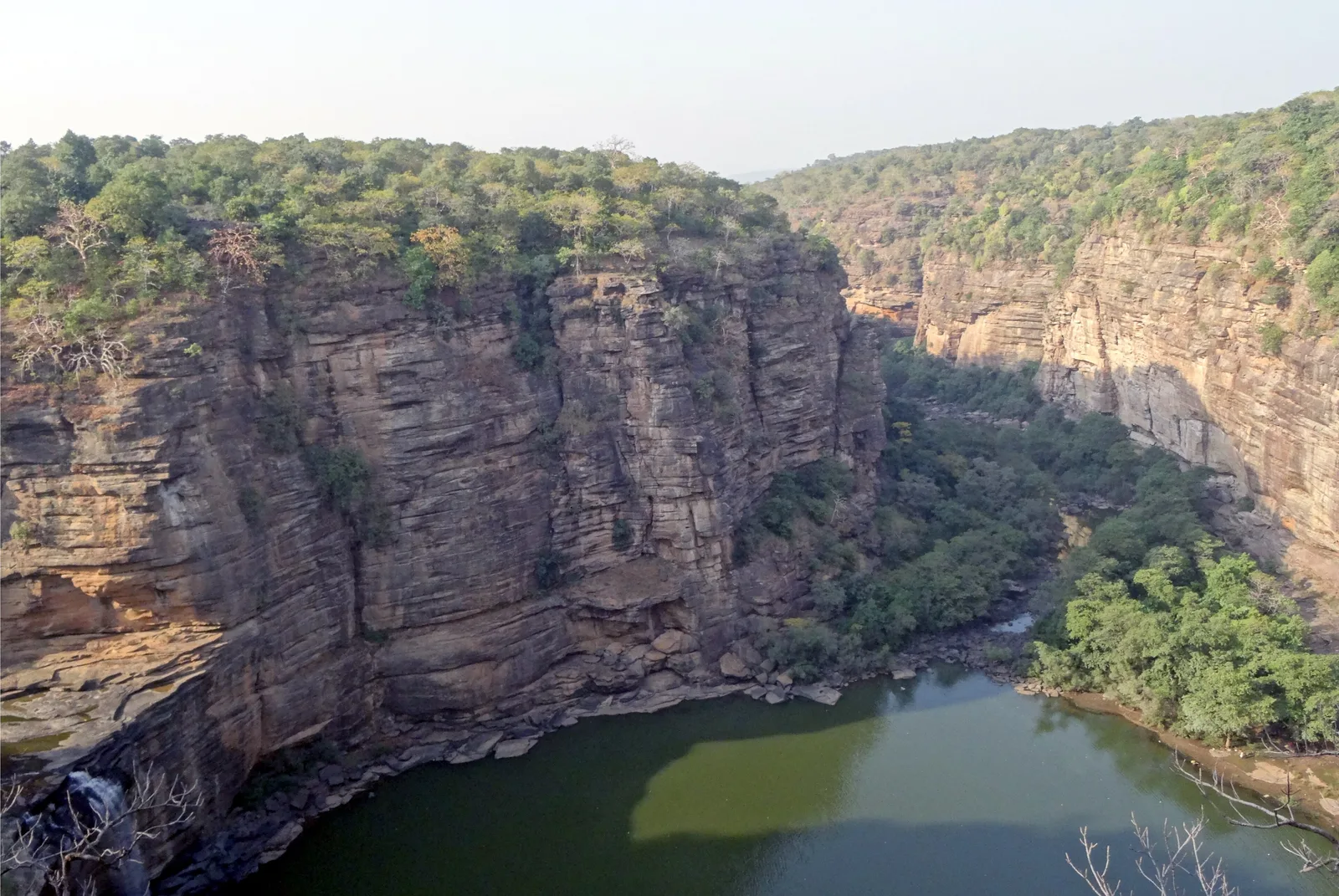
Devdari is a few minutes' drive further on. Here the scene is quite different. The river leaves the plateau and drops into a deep gorge with sheer, banded sandstone walls and a pool at the bottom. From the top you look down on the fall and along the gorge as it winds away into the forest.
This is the spot that makes the drive worth it, and it is also the one to treat with the most respect. There is a long drop from the edge. Use the viewpoints, do not cross barricades, and keep well back if the rock is damp. In a dry week the plunge itself may be thin, as in the photo above, but the gorge alone is a remarkable sight so close to the Gangetic plain.
Stop 4: The Latif Shah dam on the way home
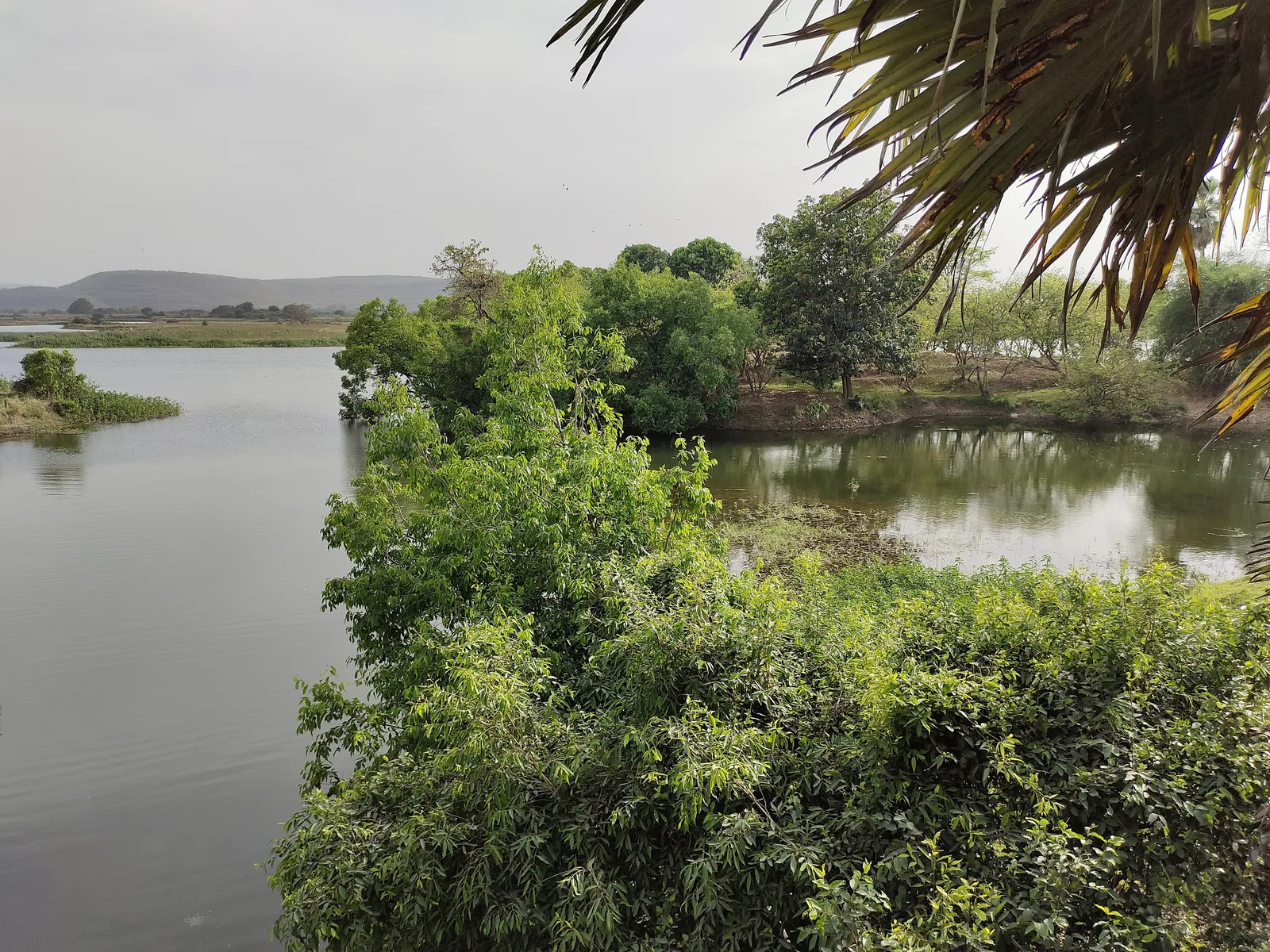
On the way back, a short detour near Chakia brings you to the old Latif Shah dam and its lake, close to the shrine of Baba Latif Shah. The district lists both the Latif Shah lake and dam among the attractions of Chandauli. It is a quiet place to stretch your legs and watch the water in the late-afternoon light before the last hour of driving.
A sample day
- 6:30 am: pick up your car and leave Varanasi before the city traffic builds. Fill the tank in the city.
- 8:00 to 8:30 am: breakfast in Chakia, then drive on to the falls.
- 9:30 am: Rajdari, about an hour.
- 11:00 am: Devdari, about an hour, then lunch at one of the eateries or from your own picnic box.
- 2:00 pm: start back down. Stop at the Latif Shah dam for half an hour.
- By 5:30 pm: back in Varanasi. The calculated sunset at Rajdari is about 5:26 pm on 19 October, 5:21 pm on 25 October and 5:16 pm on 1 November.
Local travel sites usually list the falls as a day-use spot open from about 9 am to 5 pm, but there is no official timetable online, and the forest gets dark early under the trees. Aim to be out of the hills by about 4 pm.
Rules at the falls
The falls get very crowded in the monsoon, and the police have tightened the rules. In August 2026, during the Sawan rush, Dainik Bhaskar reported that Naugarh police were allowing nobody to the falls without valid photo ID, photographing visitors and checking their ID, with barricades at six points along the route and women officers in plain clothes on patrol. The same report said that drinking, loud music, rowdy behaviour and plastic litter are strictly banned around the falls.
The crowds are lighter now, but expect the same rules to apply:
- Carry photo ID for every adult in the car.
- No alcohol and no loud music. This is a wildlife sanctuary.
- No plastic left behind. Carry a bag for your rubbish.
- Do not feed or chase animals, and keep to the main road and marked paths.
- Carry some cash. Do not count on cards or UPI if the mobile signal is weak, and travel sites disagree on whether there is an entry or parking fee, so be ready for small charges at the gate.
Driving tips for this route
- Leave early: crossing the river and getting through Ramnagar is the slowest part of the day. Leaving by 6:30 am saves a lot of time.
- Take it slow in the hills: after Jalebiya Mod the road climbs through forest. Use a low gear on the way down rather than riding the brakes.
- Weekdays are quieter: weekends and holidays bring large groups from Varanasi and nearby towns. With Diwali on 8 November, expect busier weekends in early November.
- Download offline maps: in case mobile data is weak inside the sanctuary.
- Pack food and water: the eateries at the falls are small, so a picnic box and plenty of water make the day easier.
- Shoes with grip: wear trainers or sandals with a good sole, not slippers, for the wet rock.
- Licence and papers: carry your original driving licence, and keep the rental documents in the glovebox.
Choosing your car
The route follows the state highway and district roads, so you do not need a large SUV. A compact car or a sedan handles the trip easily and is simpler to park at the falls. If you are a group of five or more, a seven-seater gives everyone room for the drive.
On 19 October 2026, the Hire N Ride Varanasi page listed self-drive cars from ₹2,592 for one day, the rate for a 2017 Mahindra KUV100 (diesel, manual). A 2025 Maruti Suzuki Dzire VXi was listed at ₹2,752 for one day with an offer applied. The page also showed a deposit from ₹5,000 and 240 km a day included. Some listings show roadside assistance only within a set distance, and the falls are about 60 km out, so check the assistance terms when you book. Rates and availability change, so check the live page before you book.
More drives from Varanasi
If you have more days in the city, the same car opens up other easy trips. Spend a quiet morning at the Buddhist sites in our Sarnath self-drive guide, or head to the riverside fort on the drive to Chunar. If you are coming back in November for the lamps on the ghats, read our planning tips for driving into Varanasi first.
Conclusion: catch the water while it lasts
The lions that were meant to make Chandraprabha famous did not stay, but the forest has kept something just as good: a wide, stepped waterfall at Rajdari and a deep sandstone gorge at Devdari, a couple of hours from the ghats of Varanasi. The rains feed them, so the weeks after the monsoon are the time to go. With a self-drive car rental in Varanasi, you can leave at dawn, see both falls before the midday crowds, and be back in the city in time for the evening aarti.
Ready to go? Book a self-drive car in Varanasi, pick a weekday, and leave the city early.
About the author: Nitin Kanish writes self-drive and road-trip guides for Hire N Ride. He likes day trips that take you out of a busy city and into open country, and he focuses on the practical details that make a rental day go smoothly: distances, timings, rules on the ground and daylight.