By Nitin Kanish · 12 October 2026
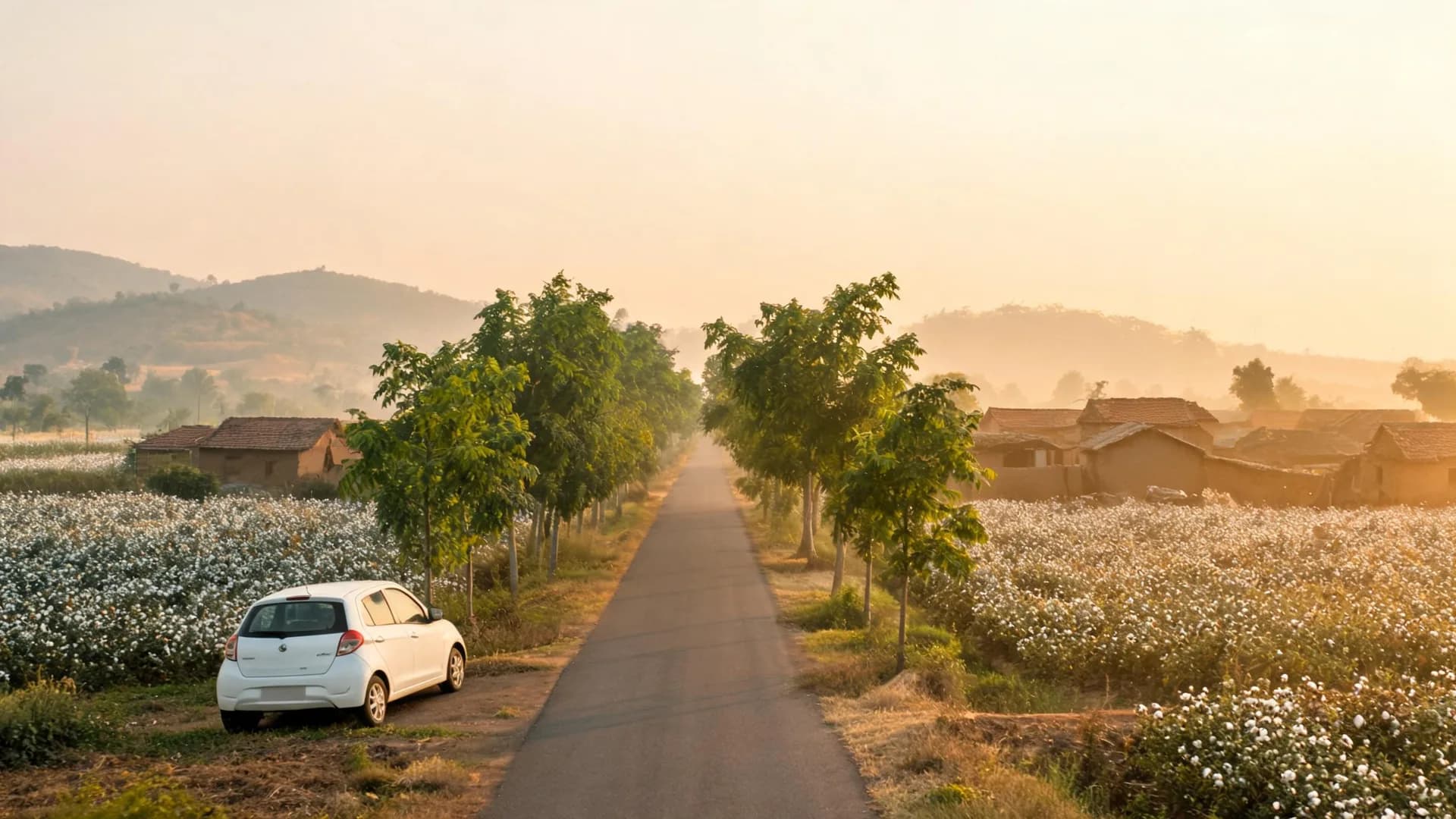
Most day trips out of Nagpur chase something big: a tiger at Pench, the hills at Chikhaldara, the stupas on the Buddhist circuit. This one is smaller and quieter, and that is the point. About 80 km south-west of the city, past Wardha, is Sevagram, the village where Mahatma Gandhi set up his home in 1936. Seven kilometres beyond it, on the bank of the Dham river, is Paunar, where Vinoba Bhave built his own ashram two years later.
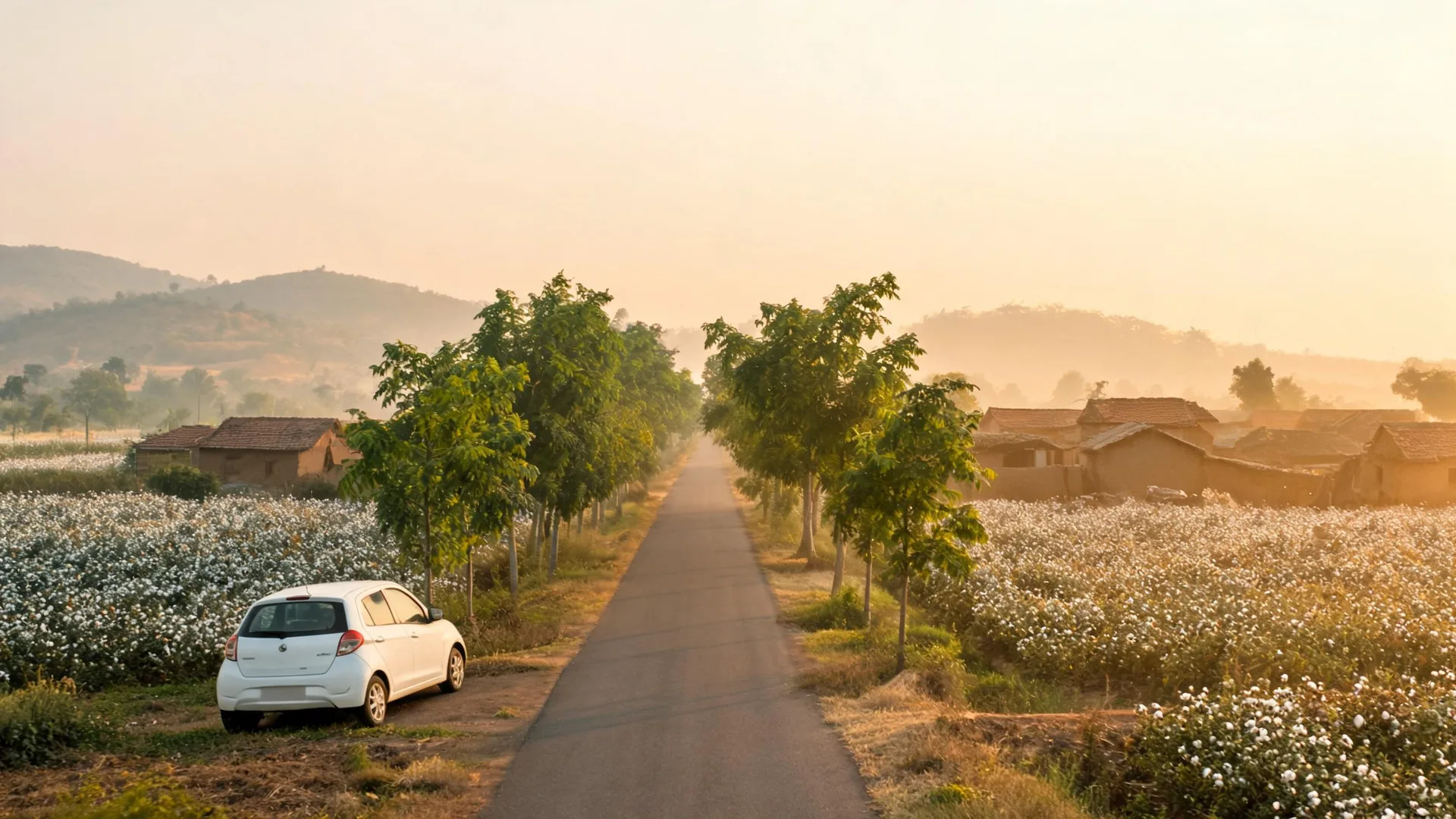
You can see both in one unhurried day. With car rental in Nagpur on Hire N Ride, you leave when you like, stop where you like, and come home before dark. This guide covers the route, a sensible timetable, what to see at each place, how to behave in a working ashram, and what Nagpur car hosts should check before a guest takes their vehicle out on the highway.
Key Takeaways
- OSRM routing puts Sevagram Ashram about 82 km from central Nagpur (a little over an hour of pure driving). Sevagram to Paunar is about 7.5 km, and Paunar back to Nagpur about 73 km. The full loop is roughly 165 km.
- Sevagram is a living ashram, not a museum. Gandhi's huts (Adi Nivas, Ba Kuti, Bapu Kuti, Akhiri Nivas) are preserved, and the prayer ground is still used.
- Visitor listings report daytime opening and free entry at Sevagram. The ashram does not publish fixed visitor hours online, so call the number on its official site before you go.
- Magan Sangrahalaya in Wardha, the rural-industries museum Gandhi opened in 1938, fits neatly between the two ashrams. An official listing gives Tuesday to Sunday, 10 am to 5 pm.
- Paunar is where Vinoba Bhave lived from 1938 and later founded Brahma Vidya Mandir, a women's ashram that still runs today.
- Book a self-drive car on the Nagpur car rental page. If your own car sits idle on weekdays, list it on Hire N Ride and let it earn.
Why Sevagram Is Worth a Day
When Gandhi set out from Sabarmati on the Salt March in 1930, he vowed not to return there until India was free. After his release from prison and a period of travel, he came to Wardha in 1934 at the invitation of Jamnalal Bajaj. In April 1936 he moved into a small village nearby called Shegaon. Because another, better-known Shegaon in the region kept receiving his post, the village was renamed Sevagram, "village of service", in 1940. The Sevagram page on mkgandhi.org tells the story in detail and lists every hut on the site.
Gandhi was 67 when he arrived. Over the next decade the ashram became a working base for the freedom movement and for his experiments in village industry, basic education and self-reliance. Many decisions on national movements were taken here. Today it is run by the Sevagram Ashram Pratishthan, and residents still follow a daily routine of prayer, study, farm work and community spinning.
For a visitor, that is the draw. You are not looking at glass cases. You are walking between low mud-and-bamboo huts with tiled roofs, under old trees, in a place where people still sweep the paths and spin cotton in the afternoon.
The Route: Nagpur to Sevagram, Paunar and Back
We checked distances with the open-source OSRM routing engine from central Nagpur. Outbound to Sevagram Ashram it is about 82 km. The suggested route leaves the city on Wardha Road, joins the Samruddhi Mahamarg (ME-2) for part of the way, and then follows NH 361 towards Wardha. You can also stay on the older Wardha road via Butibori. Load a live map on the morning you leave; junctions and diversions change as highway work moves along.
From Sevagram, Wardha town and Magan Sangrahalaya are a short hop. Paunar is about 7.5 km from the ashram by road, on the Nagpur side of Wardha, so it makes a natural last stop before you head home. The return to Nagpur is about 73 km.
That gives a loop of around 165 km. Pure driving time is under two and a half hours. Allow a full day so that you are never in a rush at the ashrams.
A Sensible Timetable
- 7:30 am: Pick up your car in Nagpur. Fuel up and grab breakfast or carry it.
- 9:00 am: Reach Sevagram. Morning light is soft and the paths are quiet.
- 9:00–11:30 am: Walk the ashram slowly: Adi Nivas and the prayer ground, Ba Kuti, Bapu Kuti, the secretariat room, Akhiri Nivas, and the photo exhibition across the road.
- 12:00–2:30 pm: Drive into Wardha for Magan Sangrahalaya and lunch. The Magan Sangrahalaya Samiti runs an organic restaurant called Rasoi on the campus that serves Vidarbha food.
- 3:00–5:00 pm: Paunar. Walk down to the Dham river and see the old sculptures displayed at the ashram.
- 5:00 pm: Start back to Nagpur so you finish most of the highway in daylight.
If you have a free day in the festival week, such as Dussehra on Tuesday 20 October 2026, this is a calm alternative to crowded city venues. Weekdays are quieter than weekends. Just remember the Monday note on the museum below.
What to See at Sevagram
Adi Nivas and the prayer ground
Adi Nivas was the first hut built at the ashram, and Gandhi lived here with other members in the early days. In front of it is the open sand prayer ground, where prayers of many faiths were held under the sky. They still are. The ashram's published routine lists morning prayer before dawn and evening prayer around 6 pm, with timings shifting by about half an hour with the seasons.
Ba Kuti and Bapu Kuti
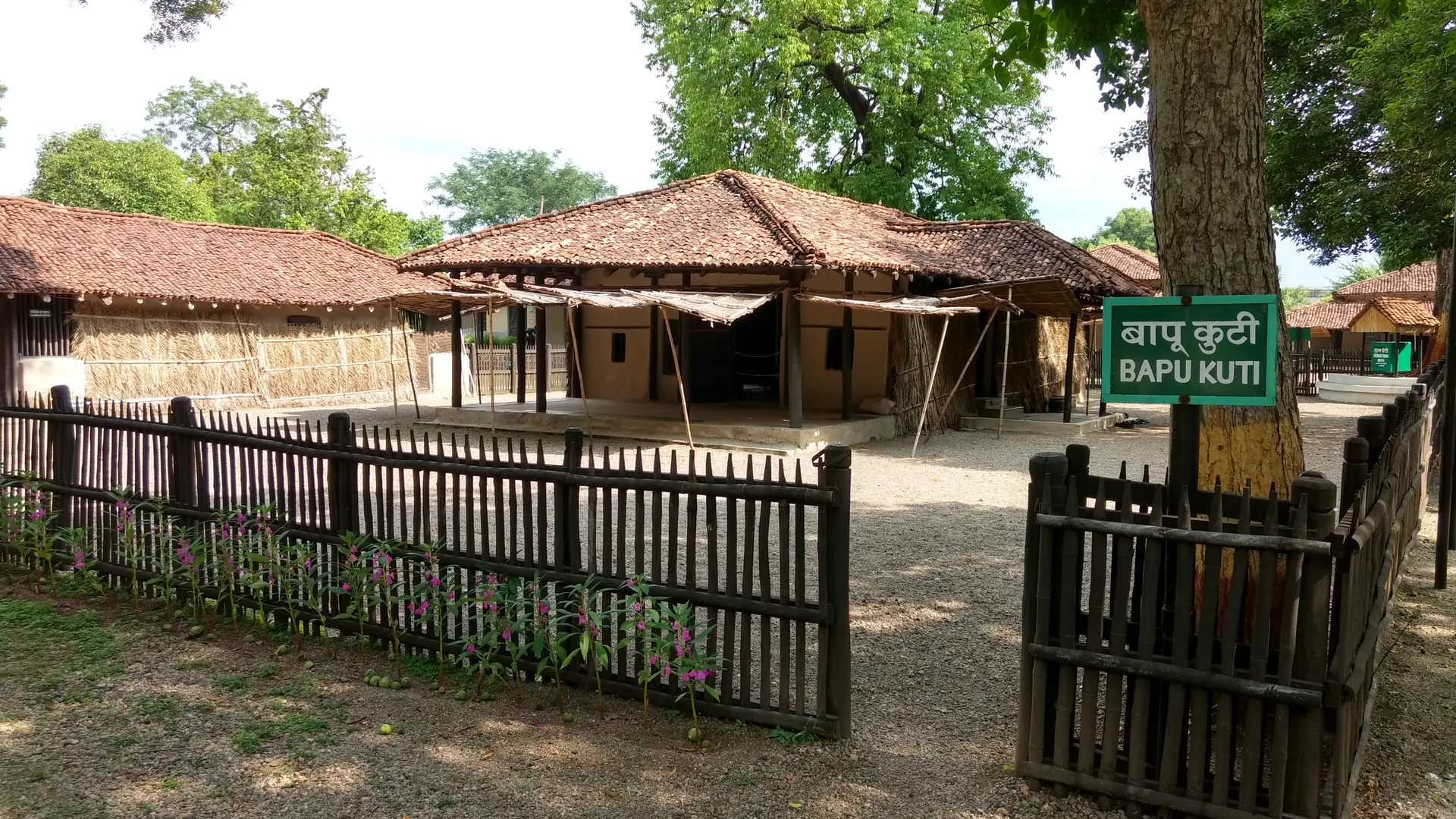
Ba Kuti was Kasturba Gandhi's home. Bapu Kuti was Gandhi's: his everyday belongings are kept here, along with his massage table and sleeping cot in the next room. This is where he met visitors from India and abroad. The adjoining secretariat room shows how he stayed in touch with the world, including the telephone the British authorities installed so they could consult him.
Akhiri Nivas and the smaller huts
Akhiri Nivas, "the last abode", started as a hospital for villagers. Gandhi stayed here to recover from a cough and cold before he left for Noakhali, and he never returned, which is how the hut got its name. Nearby are Parchure Kuti, Mahadev Kuti (home of his secretary Mahadev Desai) and Bapu's kitchen, which is still used.
The photo exhibition
Across the road on the western side is a Gandhi photo exhibition, developed in 1991. It is a useful primer if you are visiting with children or friends who know only the headline history.
A Stop in Wardha: Magan Sangrahalaya
Before Sevagram, Gandhi lived at Maganwadi in Wardha, named after his associate Maganlal Gandhi. On 30 December 1938 he opened the Udyog Bhawan here, a museum of rural technology now called Magan Sangrahalaya. It has wings on khadi and village industries, and the Samiti that runs it describes it as the only museum in India founded by Gandhi himself.
The National Gandhi Museum's listing for Magan Sangrahalaya gives visiting days as Tuesday to Sunday and hours as 10 am to 5 pm. Other listings differ slightly, so if your trip falls on a Monday, check before planning lunch around it.

Paunar: Vinoba Bhave's Ashram on the Dham
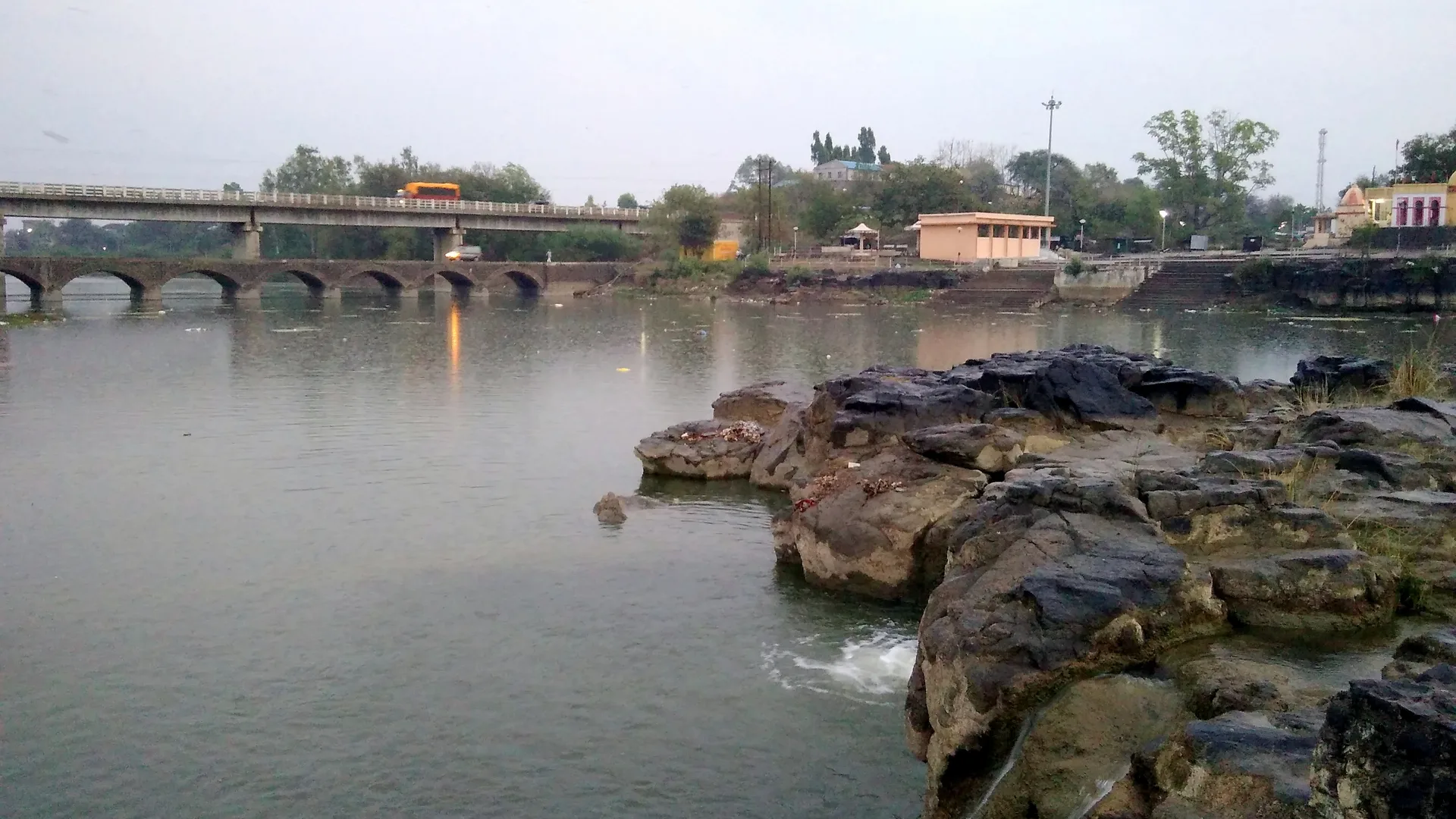
Vinoba Bhave came to Wardha in 1921. In 1938, in poor health, he turned down Gandhi's suggestion of a hill station and moved instead into a bungalow Jamnalal Bajaj had built on the bank of the Dham at Paunar. In his memoirs he describes arriving on 7 March 1938 and naming the place Paramdham, "beyond the Dham". The Jamnalal Bajaj Foundation notes that he carried on the work of his Bhoodan (land-gift) movement, launched in 1951, from this ashram. In 1959 he founded Brahma Vidya Mandir, an ashram for women, in the same premises. He spent his last years at Paunar and died there on 15 November 1982.
Paunar is also old ground. The Jamnalal Bajaj Foundation's Paunar page notes that it was Pravarpur, a Vakataka capital, and that sculptures found during construction of the ashram are displayed on site. They include figures of Ganga and a Ram–Bharat meeting about 1,500 years old.
Ashram Etiquette for Visitors
- Dress simply and modestly. Both places are homes to residents, not attractions.
- Keep voices low, especially near Bapu Kuti and around prayer times.
- Ask before photographing residents or inside rooms, and skip flash and drones.
- Remove footwear where signs ask you to.
- Buy something useful. Khadi and village-industry shops near the ashrams support the people who keep this work going.
- Call ahead if you plan to stay over or join a prayer. The Sevagram Ashram Pratishthan lists its contact details on its official website.
Driving Tips for the Day
- Fill up in Nagpur and keep water in the car. The route is short, but village lanes near the ashrams have fewer services.
- On the expressway, follow posted speed limits and lane discipline, and take the exit you planned rather than braking late.
- Park only where signed near Sevagram and Paunar; do not block village lanes or gates.
- Watch for cattle and two-wheelers on the smaller roads, especially around dusk.
- Keep the return in daylight if you are new to the highway. A 5 pm start back keeps most of the drive before dark.
Pair It with Other Nagpur Drives
If this quiet heritage day suits you, there is more in our Nagpur series. The Nagpur Buddhist trail drive covers Deekshabhoomi and the city's Buddhist heritage. For a safari, see our Pench guide built around the Turia gate morning slot. For a weekend in the Satpura hills, try Nagpur to Chikhaldara.
For Nagpur Car Hosts
A Sevagram and Paunar day is a classic one-day booking: about 165 km, part of it on a high-speed expressway, with a clear start and end. That makes it a good fit for hosts on Hire N Ride, and a good test of how you run your listing.
- Keep documents current. Insurance, PUC, RC and any permits should be valid before every highway booking. Hire N Ride sends compliance reminders so expiry dates do not slip.
- Service on schedule. Tyres, brakes and coolant matter more at expressway speeds. Hire N Ride helps you track servicing and arranges vehicle surveys.
- Use GPS management so you can see where your car is without calling the guest.
- Write a clear kilometre and fuel policy so a 165 km day has no surprises at drop-off.
- Collect reviews. On Hire N Ride, hosts build a professional profile, and more good reviews bring more bookings, much like a stay listing on Airbnb.
Not hosting yet? Become a host on Hire N Ride and put your car to work on the days you do not need it.
Conclusion
Sevagram and Paunar will not give you a tiger sighting or a mountain view. They give you something rarer on a day out: quiet. You walk through the huts where Gandhi lived, see where Indian village industry was rethought in Wardha, and end by a river where Vinoba Bhave settled. With a car of your own for the day, the 165 km loop is easy and you set the pace.
Ready to go? Book a self-drive car in Nagpur for your Sevagram day. Own a car in Nagpur? List your vehicle on Hire N Ride and start earning from guests who want trips like this one.
About the Author
Nitin Kanish writes Hire N Ride's road-trip guides for riders and hosts. He plans every route with real distances and official sources, and he likes day trips that leave time to slow down at the other end.