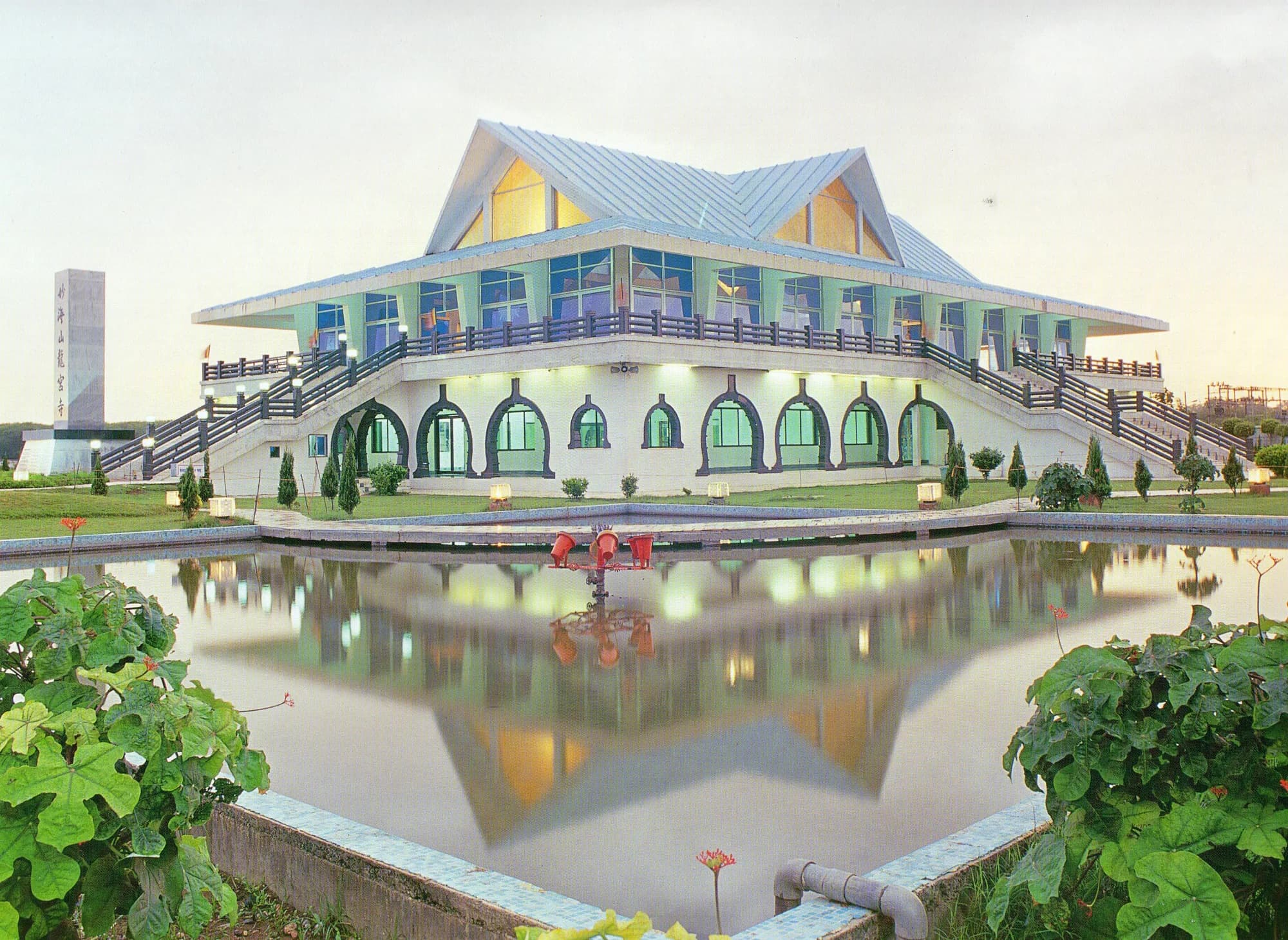
On 14 October 1956, on open ground in Nagpur, Dr B. R. Ambedkar and his wife took the Three Jewels and the Five Precepts from the Burmese monk Mahasthavir Chandramani. Ambedkar then administered the same oath, along with his 22 vows, to hundreds of thousands of his followers. The ground became Deekshabhoomi, and Nagpur became the starting point of a Buddhist revival that reshaped modern India.
This October is the 70th anniversary. The main gathering, Dhammachakra Pravartan Din, follows Ashoka Vijayadashami, the date on which the 1956 ceremony took place, so in 2026 it falls on Tuesday, 20 October. Lakhs of followers travel to Nagpur for it, many arriving two days early. For the first time the state is setting up 21 temporary shelter domes at Deekshabhoomi, each meant for about 1,000 people, plus separate accommodation for around 5,000 bhikkhus.
That makes this a month to visit Nagpur's Buddhist landmarks with care. This guide sets out a one-day route with self-drive car rental in Nagpur: Deekshabhoomi, the Walking Buddha at Nagaloka, the Dragon Palace Temple at Kamptee and the Ambedkar museum at Shantivan Chicholi. It also explains when to drive, and when to park the car and take a bus.
Key Takeaways
- The route: Shantivan Chicholi → Deekshabhoomi → Nagaloka → Dragon Palace Temple, Kamptee. Starting and ending at Nagpur Junction, it is about 77 km of driving.
- The big day is 20 October 2026, the 70th Dhammachakra Pravartan Din. Followers start arriving about two days before, and Dragon Palace expects crowds from 14 to 21 October.
- Drive on a normal weekday before 14 October or after 21 October. During the observance, park outside the closed roads and use the special buses or walk.
- Timings: Nagaloka is open daily from 10 am to 8 pm and Dragon Palace from 10 am to 7 pm. Both are free to enter.
- Book a reviewed local car on the Nagpur car rental page.
Why 14 October 1956 still brings people to Nagpur
Ambedkar declared in 1935 that although he had been born a Hindu, he would not die one. He spent the next two decades studying the world's religions before choosing Buddhism, as a way out of the caste system for himself and his followers. The Buddhist world was marking the 2,500th Buddha Jayanti in 1956, and 14 October was Ashoka Vijayadashami, linked by tradition with the Emperor Ashoka's own conversion.
He chose Nagpur, he explained in his speech, because it was the homeland of the Nag people, who had embraced Buddhism early and helped spread it across India. The ceremony was held on ground near Ramdaspeth. Ambedkar died on 6 December 1956, less than two months later, but the conversions continued, and Deekshabhoomi became the first pilgrimage centre of Ambedkarite Buddhism. The Government of Maharashtra grades it as an A-class tourism and pilgrimage site.
Today Nagpur and its eastern neighbour Kamptee hold a cluster of Buddhist sites within an hour's drive of each other. You can see them by bus and auto, but a car lets you link all four in one day, and choose your own start time to beat the heat.
Before you drive: the two kinds of October day
An ordinary day. Outside the observance, Deekshabhoomi is a calm city landmark. A local guide that checked its listing in August 2026 gives regular hours of about 7 am to 8 pm, with free entry. Nagaloka and Dragon Palace keep their usual hours, and you can park close to each site. This is when a self-drive day works best. Early and mid-October weekdays are ideal, and so is late October, once the crowds have gone home.
The observance, roughly 14 to 21 October. The city's preparations run on a deadline of 14 October. The district administration expects large crowds at Dragon Palace from 14 to 21 October, and has planned 125 special buses between Deekshabhoomi and Kamptee. Around Deekshabhoomi itself the traffic police close roads. In 2024, for example, they shut the roads around Kachipura Square, Mata Kacheri Square and the Ramdaspeth T-point, along with stretches of Wardha Road, for four days. They also named parking grounds for visitors, including Dharampeth Science College and the Bajaj Nagar Basketball Ground. Expect a similar notification this year. Watch for the Nagpur Traffic Police announcement, park at a designated ground, and walk or take the special buses from there. Navratri runs from 11 October and Dussehra falls on the same day, so the whole city is busy.
If you're travelling for the observance itself, a rented car is still useful. Use it for the days before and after, for the sites outside the closure zone, and for getting to and from the airport or your hotel. Just don't plan to drive up to the stupa on 20 October.
Stop 1: Shantivan Chicholi, the Ambedkar museum
Start early on the city's north-western edge, near Fetri. Shantivan Chicholi holds Ambedkar's personal belongings, preserved by the Indian Buddhist Council Trust. A 2019 report in the Times of India counted 988 items, including his suits, ties, shoes, typewriter, chairs and stoves, which were being restored for display. The museum also has rare photographs, a wooden replica of the Deekshabhoomi memorial and a full-size Buddha statue from Thailand. The memorial's website gives museum hours of 7 am to 7 pm, so you can be through the doors before the day warms up.
The site is still being developed with state funds, so expect parts of the campus to be under construction. Allow about an hour, then drive roughly 18 km (about 25 minutes) to Deekshabhoomi.
Stop 2: Deekshabhoomi
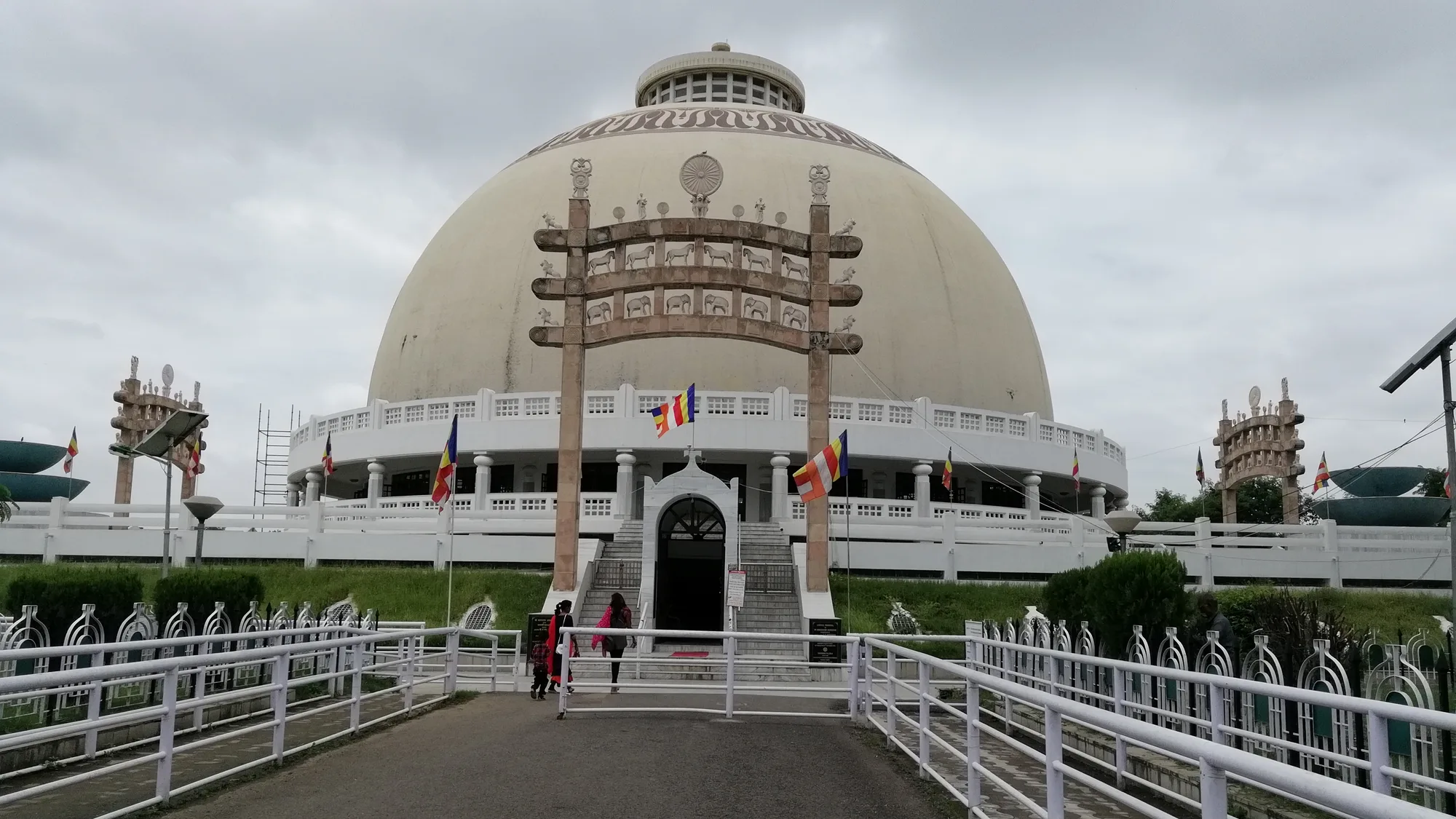
The stupa stands on about four acres off South Ambazari Road, close to the spot where the 1956 ceremony was held. It was designed by the architect Sheo Dan Mal. Work on the stupa began in July 1978, and President K. R. Narayanan inaugurated it on 18 December 2001. The design borrows from the great stupa at Sanchi, including the carved gateways, but it has one key difference: the Deekshabhoomi stupa is hollow, and you can walk inside.
Inside the ground-floor hall is an image of the Buddha, a gift from Thai students at Nagpur University. There is also a library and a photo exhibition on the lives of the Buddha and Ambedkar. Outside, on the right of the stupa, a Buddha Vihara holds a bronze image of the Buddha. Beside it stands a Bodhi tree grown from three branches of the sacred tree at Anuradhapura in Sri Lanka, brought here by Bhadant Anand Kausalyayan.
This is a place of worship as well as a monument. Remove your footwear where asked, dress modestly, keep your voice low inside the hall and ask before photographing people. The forecourt is largely open to the sun, so carry water. Allow 60 to 90 minutes.
Stop 3: Nagaloka and the Walking Buddha
Drive about 14 km east across the city to Nagaloka on Kamptee Road, near the Akashwani relay tower in Bhilgaon. It is the campus of the Nagarjuna Training Institute, which trains young people from across India in Buddhism and Ambedkar studies. Its centrepiece is a 36-foot (11 m) Walking Buddha by the Taiwanese sculptor Wen Kwei Chan. The Buddha strides forward with his right hand raised in the abhaya mudra, the gesture of fearlessness, a form that Ambedkar favoured. Walking towards it is a bronze statue of Ambedkar holding his book, The Buddha and His Dhamma.
The 15-acre campus was designed by the architect Christopher Charles Benninger, after the Buddhist meeting halls of two thousand years ago. The institute says visitors are welcome daily from 10 am to 8 pm with no admission charge, and you may go into the Buddha Surya Vihar hall. The bookshop in the administration building is worth a look. Local reviewers note that the campus is set back from the main road, so follow your map closely for the final turn.
Stop 4: Dragon Palace Temple, Kamptee
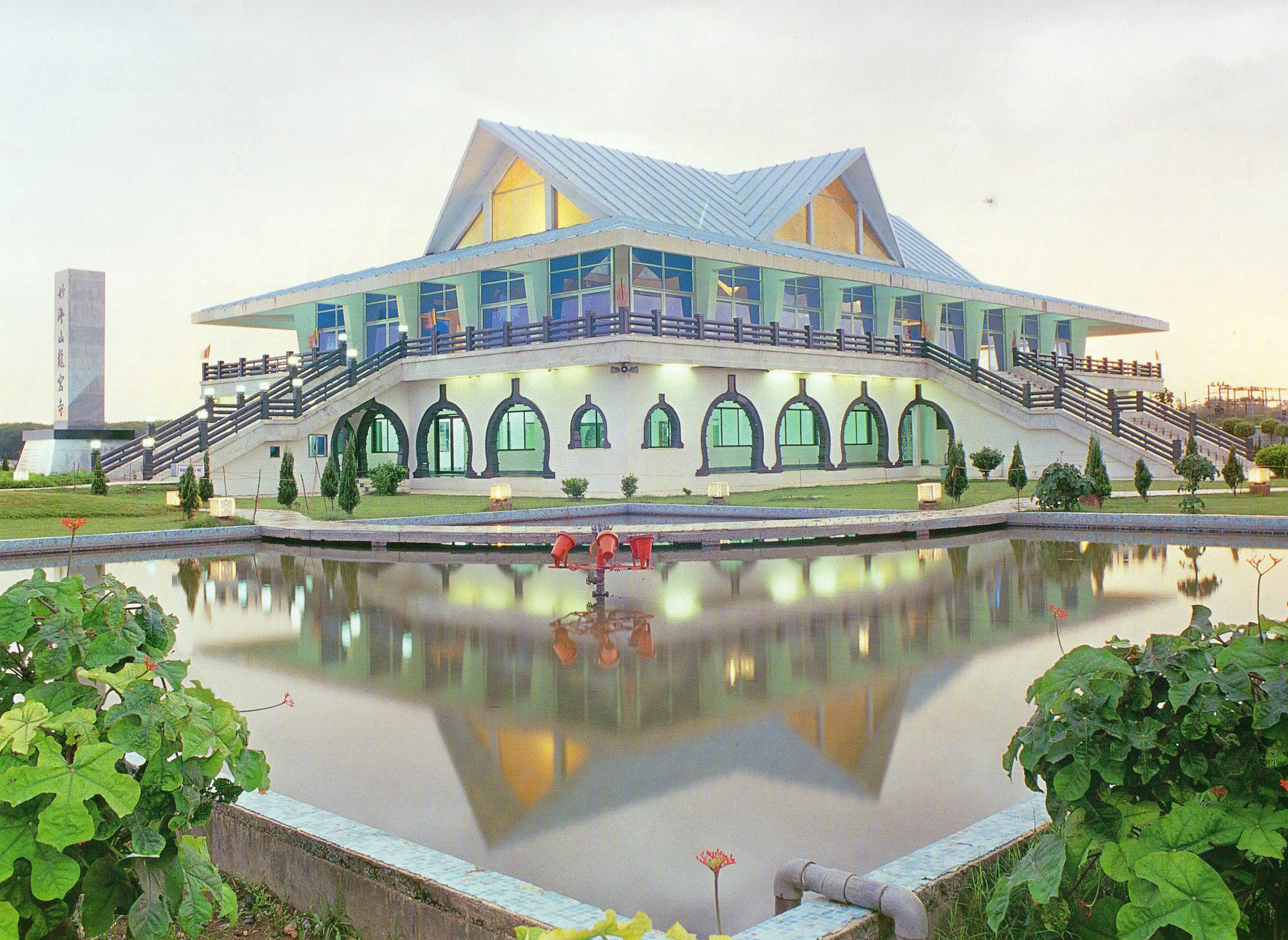
Another 10 km east brings you to Kamptee, a town just below the point where the Kanhan river meets the Pench and the Kolar. The Dragon Palace Temple, often called the Lotus Temple of Nagpur, was founded in 1999 on land bought by Sulekha Kumbhare, then mayor of Kamptee, and Noriko Ogawa of Japan. Funds came from the Japan-based Ogawa Society, which saw the temple as a place for Buddhist education and meditation and a symbol of Indo-Japanese friendship. The first 10 acres were extended by another 40 in 2003.
The temple houses a carved sandalwood image associated with the Buddha, and its quiet meditation hall is open to visitors. The temple's website listed visiting hours of 10 am to 7 pm when a local guide checked in August 2026. You leave your shoes at the stand before going in. The grounds are lovely in the evening light, so if you're not in a hurry, wait until the lamps come on. Sunset in Nagpur is at about 5:58 pm on 6 October, 5:46 pm on 20 October and 5:39 pm on 31 October.
From Kamptee it is about 18 km, or 20 to 25 minutes, back to Nagpur Junction, depending on traffic on Kamptee Road.
A one-day plan for a normal weekday
- 6:45 am: collect your car. Walk round it with the host, photograph any existing marks, and check the tyres, AC and fuel level.
- 7:30 am: Shantivan Chicholi museum.
- 9:00 am: Deekshabhoomi, while the forecourt is still cool. Breakfast nearby.
- 11:00 am: Nagaloka and the Walking Buddha.
- 12:30 pm: Dragon Palace Temple, Kamptee. Lunch in Kamptee or back in Nagpur.
- Afternoon: rest through the heat, or return to Dragon Palace for the evening light.
The OSRM routing engine puts the full loop at about 77 km: 17.5 km from Nagpur Junction to Shantivan, 17.8 km to Deekshabhoomi, 14.4 km to Nagaloka, 9.8 km to Dragon Palace and 17.8 km back. In practice the day is mostly walking and quiet time, not driving. If you're short of time, drop Shantivan. The three city stops make an easy half-day.
Driving tips for Nagpur in October
- Heat: October afternoons in Vidarbha can still be hot. Plan outdoor stops for the morning and late afternoon.
- Kamptee Road is a busy highway corridor. Keep a steady gap and avoid the evening rush.
- Festival closures: from about 14 to 21 October, check the traffic police notification before setting out, and never park on closed or diverted roads.
- Documents: carry your driving licence and keep the car's RC, insurance and PUC papers in the glovebox, with digital copies on your phone.
- Metro option: on crowded days you can leave the car and take the Nagpur Metro to Automotive Square, about 4 km from Nagaloka.
Choosing your self-drive car rental in Nagpur
For a city day like this, a compact hatchback or sedan with strong air-conditioning is all you need, and it is easier to park at each stop. A family or a group of pilgrims will be more comfortable in an SUV or a seven-seater, subject to live inventory. Hire N Ride asks for a valid Indian driving licence covering the vehicle type, a government-issued photo ID such as Aadhaar or a passport, and your booking confirmation. The Nagpur page also lists doorstep delivery. Compare options on the Nagpur car rental page.
If you have more days in Nagpur, the same car can take you further. Our Pench safari guide covers the Turia gate, and our Chikhaldara weekend plan heads for Vidarbha's only hill station.
Why the host matters
Hire N Ride works like Airbnb for vehicles. You rent from a local host rather than from an anonymous counter, and every host has a profile with reviews from earlier renters. In a festival month that local knowledge counts. A good host can tell you which roads close first, where visitors usually park and when the city traffic eases. Look for reviews that describe the car as clean and as described, the host as quick to reply and the handover as smooth.
Own a car in Nagpur? Put it to work this season
Nagpur sits at the centre of India's road and rail map, and October brings pilgrims, families and wildlife travellers all at once. Many of them look for self-drive car rental in Nagpur because they want their own wheels from someone local they can trust. If you own a car here, listing it on Hire N Ride gives you a professional host profile, and every good trip adds to your reputation. More reviews bring more bookings, and one car can become a small business.
Hire N Ride also helps you run that business properly:
- Vehicle surveys to record condition before and after each trip
- GPS management, so you know where your car is
- Insurance renewal reminders
- PUC certificate tracking
- RC record keeping
- Permit expiry reminders
- Servicing schedules, so your car is ready for long, hot drives
Get started on the List Your Vehicle page.
Conclusion: seventy years, four stops, one day
Few anniversaries are as closely tied to a single patch of ground as this one. In a day you can see Ambedkar's own belongings at Shantivan, stand inside the hollow stupa built where he took his vows, walk beneath the Walking Buddha at Nagaloka and sit in the meditation hall at Kamptee. Go on a normal weekday, start early and dress for a place of worship. Around 20 October, let the special buses and your own feet handle the last mile. With self-drive car rental in Nagpur from a reviewed Hire N Ride host, you set the pace, this week or any week of the cool season.
Next steps, whichever side you're on:
- Book a ride: choose a car from a reviewed local host on the Nagpur car rental page.
- Become a host: list your car on the List Your Vehicle page and start building your reviews.
About the author: Hire N Ride Team. We are the editorial team at Hire N Ride, a marketplace where local hosts rent out self-drive cars and bikes across India. We write practical, fact-checked travel guides for riders and drivers, and we help hosts run their listings as a proper business.
Images: Prakash Lokhande and Dragonpalacetemple (both CC BY-SA 4.0) via Wikimedia Commons, credited in captions. Facts checked on 6 October 2026. Opening hours, road closures and event arrangements can change, so check official announcements before you go.