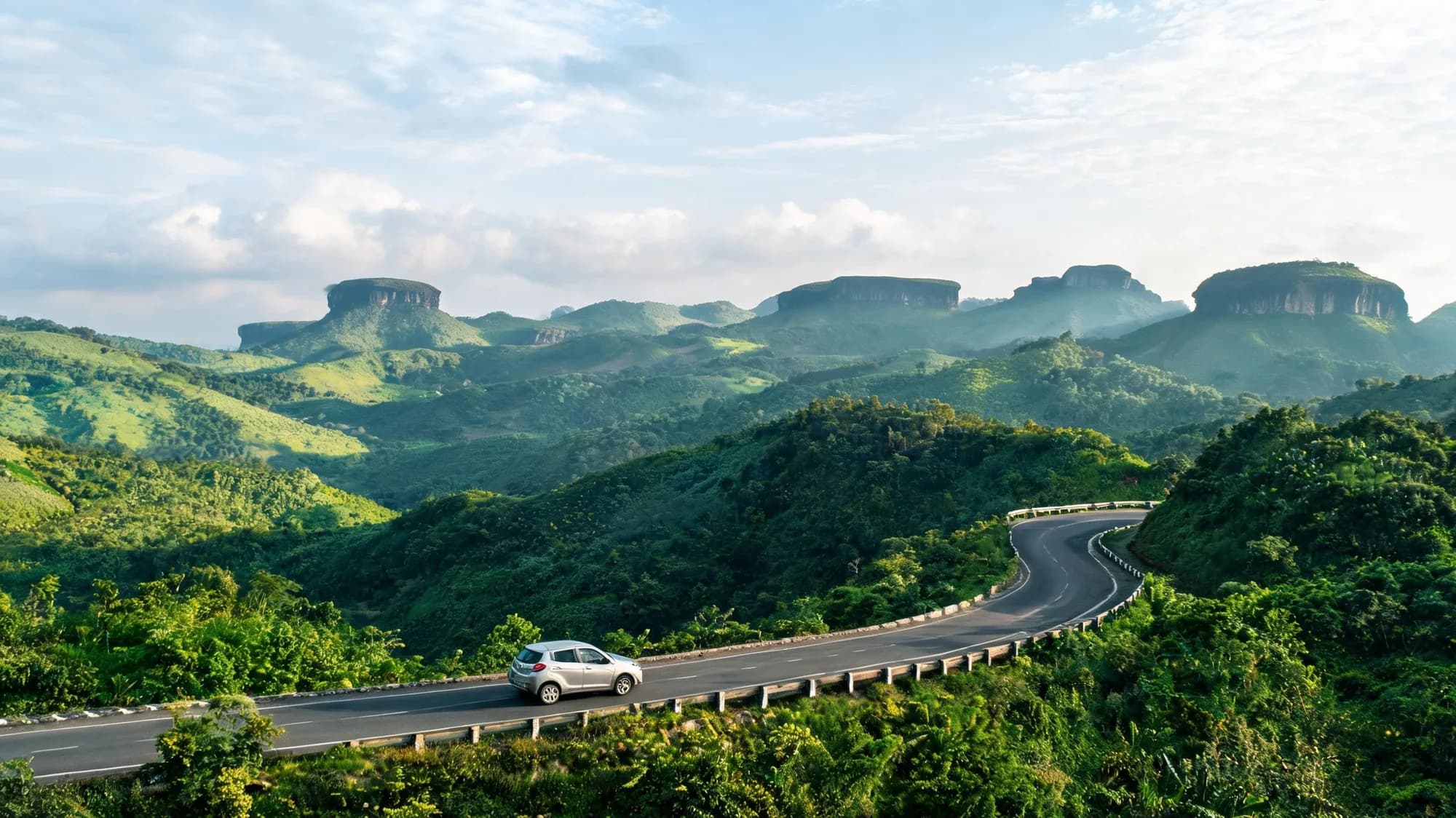
By Nitin Kanish · 10 October 2026
Most Mumbai weekends that head up the ghats end in Lonavala with chikki, a viewpoint and a traffic jam on the way home. Yet just past the town, on hillsides either side of the old Mumbai-Pune road, are two of the oldest Buddhist rock-cut sites in western India: the Karla Caves and the Bhaja Caves. Monks and merchants were cutting these halls into the basalt about 2,000 years ago, when this was already a trade route from the Arabian Sea to the Deccan. With a car rental in Mumbai, you can leave before the city wakes, see both sites in the cool of the morning and be back before the evening rush.
October is a good month for it. The monsoon has eased, the hills are still green and, as Wikipedia's entry on Lonavala notes, the dry season there runs from mid-October to May. This guide is for travellers planning that day, and for Mumbai car owners who want to know what self-drive guests are looking for.
Key Takeaways
- Distance: open-source routing (OSRM) puts south Mumbai to Karla at about 102 km and roughly an hour and a half of driving in clear traffic. Allow two to three hours on a normal morning.
- Two sites, one day: Karla and Bhaja are only about 8 km apart by road, on opposite sides of the valley near Malavli.
- What to see: Karla's Grand Chaitya is the largest rock-cut chaitya hall in India, about 45 m long and up to 14 m high, according to Wikipedia. Bhaja has 22 caves and a group of 14 stupas.
- Both involve a climb: wear good shoes and carry water.
- Book: choose a car on the Mumbai car rental page.
Why these two caves are worth the drive
Lonavala's name is usually traced to leni, meaning caves, and avali, meaning a series, a reference to the caves around it. Karla and Bhaja are the best known of that series. Both were cut on an important ancient trade route that ran east from the coast into the Deccan. Buddhist monasteries were often placed near such routes, where they could offer shelter to travelling traders, and many donors recorded their gifts in inscriptions you can still see on the walls.
The two sites are also a useful contrast. Karla is grand and sculptural, with a vast prayer hall. Bhaja is older and simpler, and shows how early builders copied wooden architecture in stone. Seeing them on the same morning makes the story easy to follow, even if you are not a history buff.
If you have already driven our Mumbai to Matheran route, this is a very different day: an expressway run instead of a narrow ghat, and ancient stone instead of a car-free hill town.
The drive: Mumbai to Lonavala and Karla
From Mumbai, the usual route is the Mumbai-Pune Expressway, which, like the older national highway, passes through Lonavala. OSRM routing from south Mumbai to Karla comes to about 102 km. From the western suburbs or Navi Mumbai it is shorter. The climb up the Sahyadri escarpment comes after Khalapur, and the views open up as you gain height towards Khandala and Lonavala, which sit at about 622 m.
Leave early. On weekends and holidays the ghat section and the Lonavala exits can slow to a crawl by late morning. An early start also means you reach the caves before the sun is high, which matters because both sites involve a walk uphill on stone steps with little shade.
Karla lies a few kilometres east of Lonavala, off the old highway. Wikipedia puts it about 10.9 km from Lonavala and about 60 km from Pune. Follow the signs for Karla or the Ekvira temple, park in the designated area below the hill and walk up.
Karla Caves: the Grand Chaitya
There are 16 caves in the Karla group, but most visitors come for one: Cave 8, the Grand Chaitya. Wikipedia dates it to about 50 to 70 CE, based on the style of the donors' inscriptions, and describes it as the largest and most completely preserved chaitya hall of its period. The hall runs about 45 m into the rock and rises up to 14 m, with a vaulted ceiling, rows of pillars and a stupa at the far end.
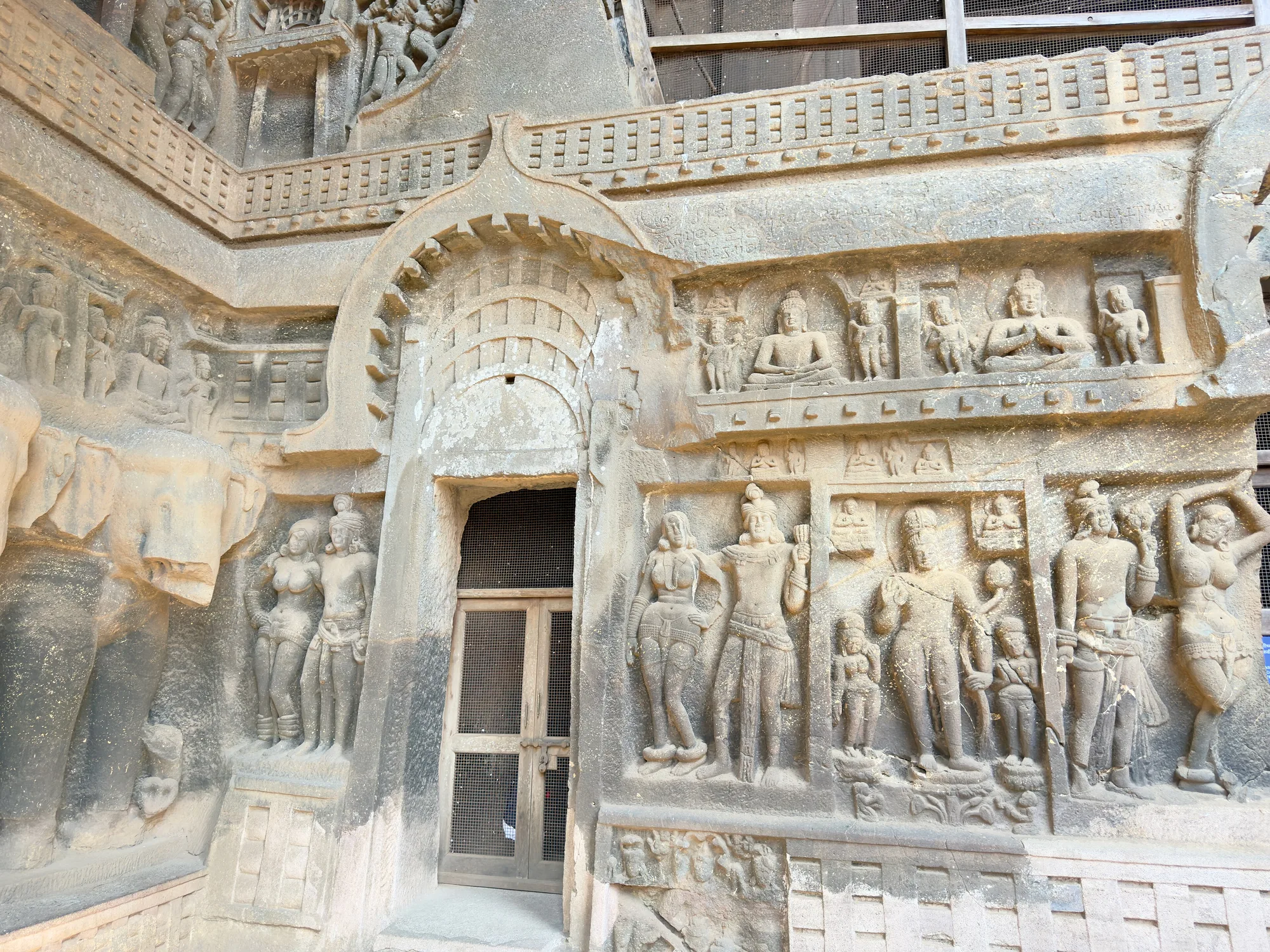
Look closely at the entrance. Couples, elephants and lions are carved on the facade and on the pillar capitals inside. The inscriptions record many donors, mainly local merchants, as well as monks and nuns. Some were Yavanas, a term used for Greeks and other foreigners, which shows how international this trade route once was. One inscription credits a merchant named Bhutapala with completing "this stone mansion".
Outside the hall stands a tall pillar. There were once two, but only one remains. The space of the other is now taken by a temple of the goddess Ekveera, worshipped especially by the Aagri and Koli communities of Mumbai. On festival days and weekends the steps can be busy with pilgrims, so expect a lively, crowded climb rather than a quiet ruin. Dress modestly, remove footwear where asked and respect worshippers.
The caves are a protected monument under the Archaeological Survey of India (ASI). Check the ASI's current timings and entry rules before you go. We have not listed prices because they change.
From Karla to Bhaja
Bhaja is on the other side of the valley, near Malavli. OSRM puts the drive from Karla at about 8 km, around a quarter of an hour. The lanes here are narrower, with villages, fields and the odd tractor, so slow down and give way where the road narrows.
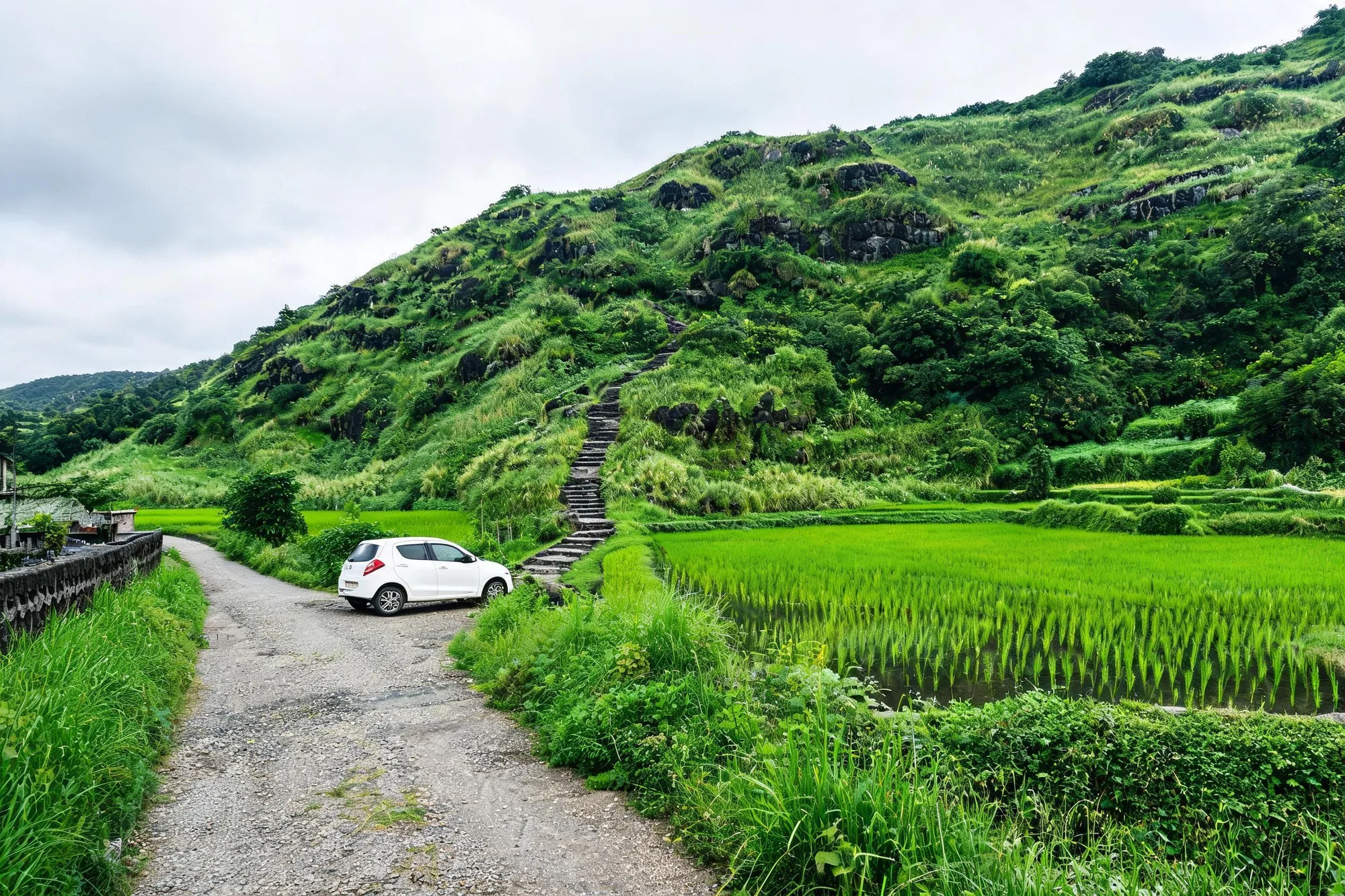
Park at the foot of the hill below Bhaja village. Wikipedia places the caves about 400 feet, roughly 120 m, above the village, reached by a flight of steps. Take it slowly in the heat and stop to look back over the valley as you climb.
Bhaja Caves: older, quieter and full of detail
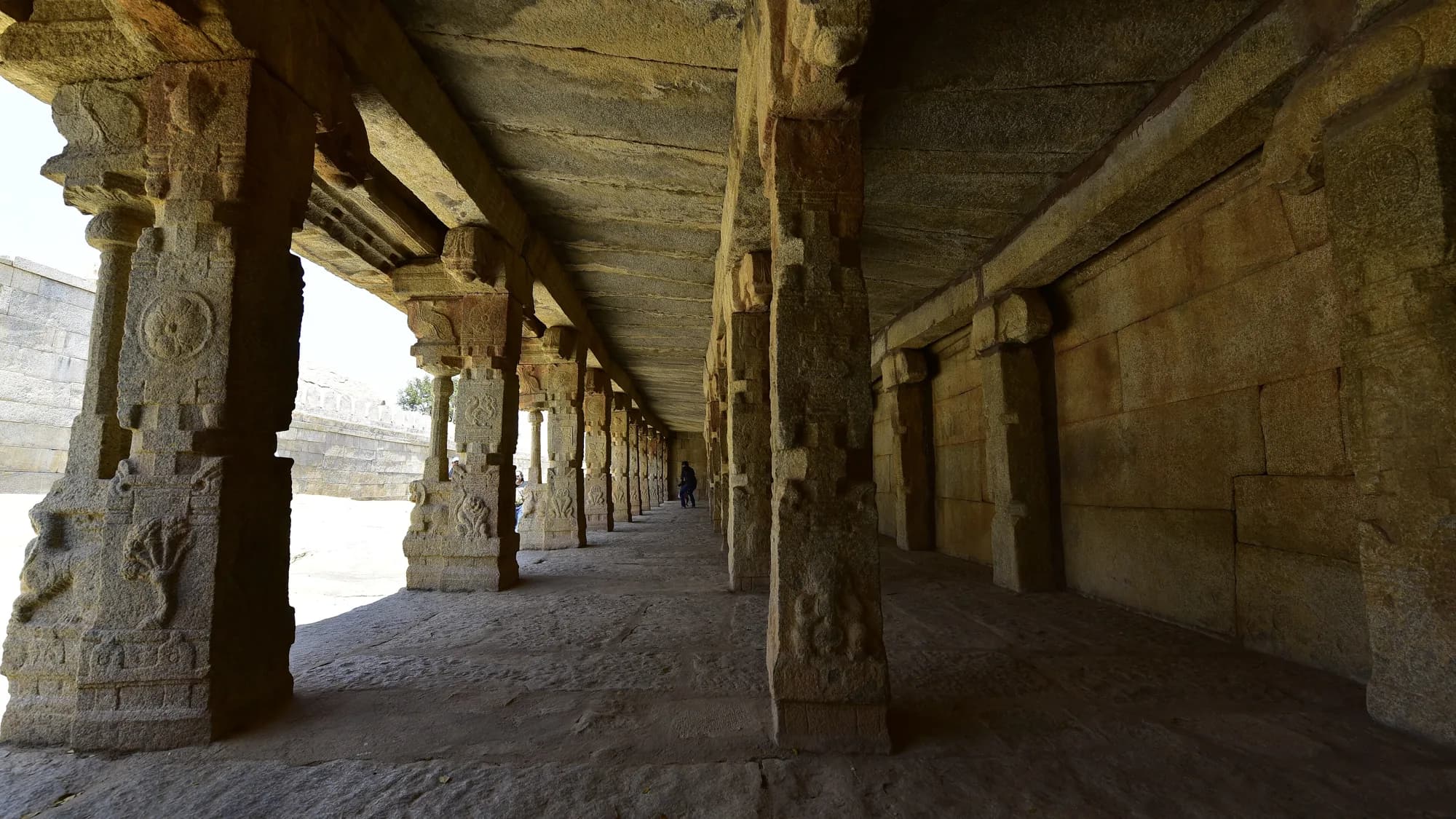
Bhaja is a group of 22 rock-cut caves dating to the 2nd century BCE, and a Monument of National Importance protected by the ASI. Its main chaitya, Cave 12, has an open horseshoe-arched entrance and a vaulted ceiling that imitates timber construction. The ASI describes it as one of the earliest of its type. Wooden beams still survive in parts of the hall, and one of them carries inscriptions from the 2nd century BCE.
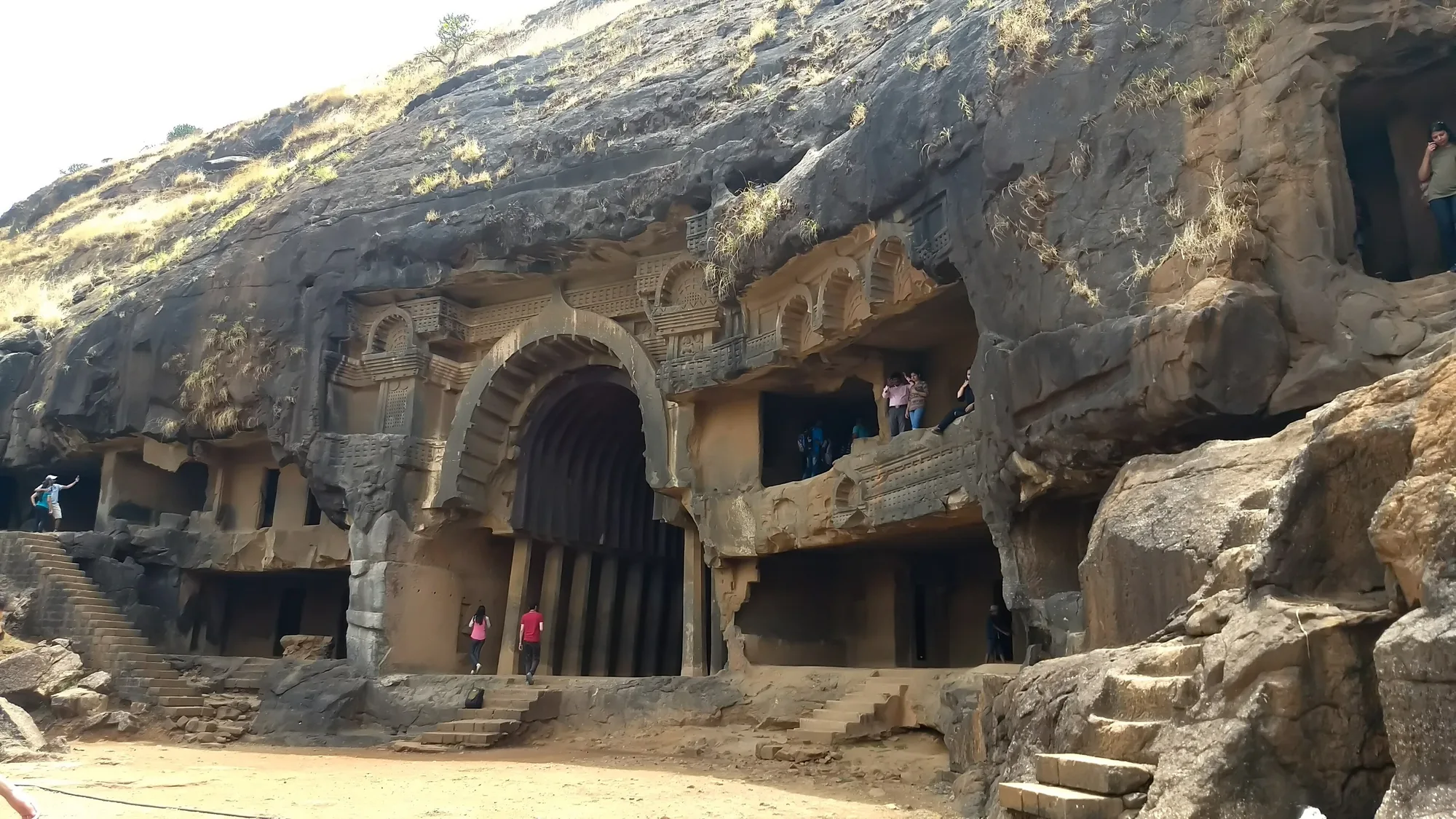
Two things make Bhaja special. The first is a group of 14 stupas, five inside and nine outside a rough excavation. They are memorials to monks who lived and died here, and some carry their names. The second is a carving that shows a woman playing a tabla-like drum while another dances. Wikipedia notes that it is often cited as evidence that the instrument has been played in India for more than 2,000 years. Look out too for the reliefs on the vihara, Cave 18, with its pillared verandah.
Near the last cave is a seasonal waterfall that fills a small pool in the monsoon. In October it may be down to a trickle, but the rock and greenery are still lovely in the morning light.
A simple plan for the day
- Early morning: pick up your car in Mumbai, check fuel and tyres, and join the expressway before the traffic builds.
- Mid-morning: reach Karla, park below the hill and climb to the Grand Chaitya.
- Late morning: drive about 8 km to Bhaja and climb to the caves while it is still cool.
- Lunch: eat in Lonavala and pick up chikki, the hard candy the town is known for.
- Afternoon: head back down the ghat, ideally before the evening rush into Mumbai.
If you have more time, the area also has the Bedse Caves and the forts of Lohagad and Visapur, which Wikipedia lists among the sights that can be combined with a Lonavala trip. They are best saved for another day rather than squeezed into this one. For another heritage drive with ancient inscriptions, see our guide to Ashoka's rock edict at Kalsi near Dehradun.
What to carry
- Good shoes: both sites involve stone steps that can be uneven or slippery after rain.
- Water, a cap and sunscreen: the climbs have little shade once the sun is up.
- Cash and ID: useful for parking, entry and small stalls. Carry your driving licence and the car's papers.
- A torch or phone light: handy for seeing carvings in the darker corners of the halls.
- Respect for the site: do not touch or lean on carvings, and take your litter back with you.
Driving tips for the Mumbai to Lonavala run
- Start early and avoid returning in the late Sunday afternoon rush if you can.
- Keep to lane discipline on the expressway, obey speed limits and watch for slow trucks on the ghat climb.
- Use engine braking on the descent and do not ride the brakes.
- Have tolls covered with a working FASTag on the car, and check it when you collect the vehicle.
- Drive slowly on village lanes near Karla and Bhaja, where people and animals share the road.
- Park only in marked areas below each site and follow local instructions.
Why a self-drive car works for this trip
You can reach Lonavala by train, but Karla and Bhaja are spread out and connected by village roads, so a car saves a lot of waiting and haggling. With a self-drive car you set off when you want, spend as long as you like at each site and stop for lunch wherever you choose. On Hire N Ride, you book directly from local hosts with public profiles and reviews, so you can see how other renters rated the car and the handover. Hire N Ride works like Airbnb for vehicles, with options from compact hatchbacks to SUVs. You may also compare platforms such as Zoomcar. Whichever you pick, read the reviews, check the fuel and deposit policy and inspect the car before you leave.
Ready to go? Choose your car on the Mumbai car rental page.
For Mumbai car owners: earn from weekend demand
Lonavala and the ghats are among the most popular short trips out of Mumbai, and many travellers want a clean, reliable car with good brakes, a working FASTag and a clear handover. If you own a car in Mumbai, you can list it on Hire N Ride and build a host profile. Each good trip earns reviews, and more reviews help you win more bookings.
Hire N Ride also helps manage the business side for you. We support vehicle surveys and GPS management, and send reminders for insurance renewal, PUC certificates, RC, permit expiry and servicing, so your car stays compliant and ready for the next guest. When you are ready, list your vehicle on Hire N Ride.
Conclusion
Karla and Bhaja show a side of the Lonavala trip that many Mumbai drivers miss. In one morning you can stand inside India's largest rock-cut chaitya hall, then climb to a quieter cliff of caves where monks carved stupas and musicians more than 2,000 years ago. Leave early, wear good shoes, take your time on the steps and head home before the evening rush. With a car rental in Mumbai, the whole day runs on your schedule.
About the author
Nitin Kanish writes road-trip and travel guides for Hire N Ride, with a focus on practical day drives from the cities where Hire N Ride hosts operate and on helping vehicle owners grow their rental business.
Banner image: AI-generated with Imagine.art. In-article photos are credited in the captions. Site details are from Wikipedia; distances are from OSRM routing. Check ASI timings, entry rules, weather and road conditions before you travel.