By Manjot Kaur · 9 October 2026
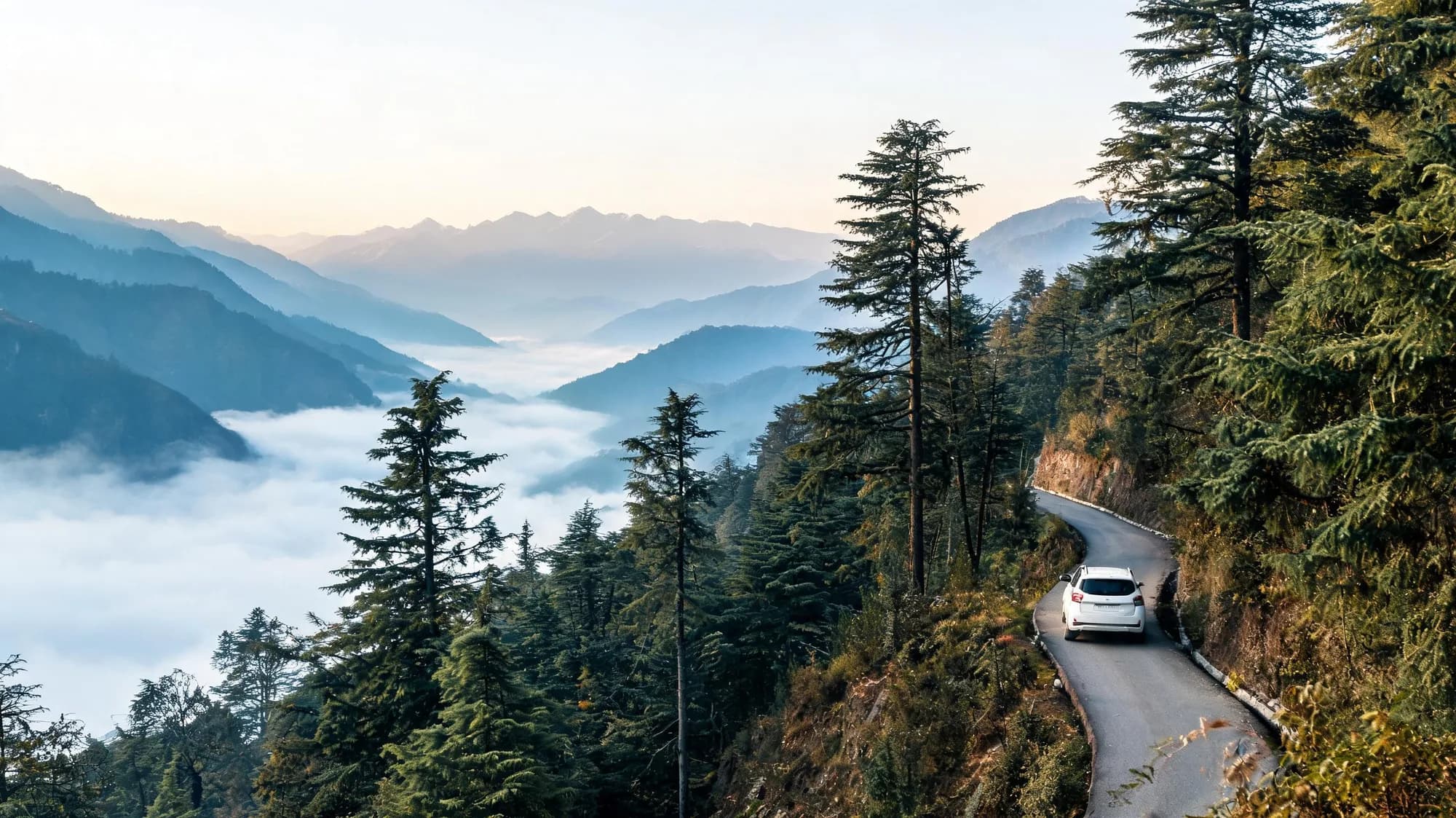
Most drives out of Dehradun go east to Mussoorie or south to Haridwar and Rishikesh. Turn west instead, towards Vikasnagar, and the day changes character. The road crosses flat farmland, passes a boulder carved with the words of the emperor Ashoka more than two thousand years ago, then climbs hard through pine and deodar to Chakrata, a small army town at 2,118 metres. With a self-drive car rental in Dehradun, it is one of the most rewarding hill days in the region, and one of the least crowded.
This guide is for riders who want something quieter than the Mussoorie Mall Road, and for Dehradun car owners who wonder whether their car could be earning while they are at work.
Key Takeaways
- Distance: Wikipedia gives Chakrata as 98 km from Dehradun. Open-source routing (OSRM) from the city centre comes out nearer 82 km. Plan on roughly three hours each way with stops.
- Route: west through Vikasnagar to Kalsi, then the hill road up to Chakrata. Chakrata can also be reached via Mussoorie.
- On the way: the Kalsi rock edict, a boulder carrying a complete set of Ashoka's fourteen Major Rock Edicts.
- At the top: deodar forest, long views and Tiger Falls, about 20 km from Chakrata.
- Rules: Chakrata is a military cantonment. Foreign nationals face strict restrictions, and photography near army areas should be avoided.
- Car choice: the Dehradun car rental page recommends an SUV or higher-ground-clearance car for the Chakrata route.
Why Chakrata, and why now
Chakrata sits between the Tons and Yamuna rivers in the Jaunsar-Bawar region of Dehradun district. It began as a British Indian Army cantonment in 1869, and it is still an army town today. That history is the reason it never grew into a big resort. There is no long line of hotels and cafes, no Mall Road and very little traffic. What you get instead is forest, cold clean air and the feeling of a hill station that has stayed small.
Early October is a good window. The monsoon has usually eased, the hills are still green, and the days are clear more often than not. Mornings are cool and evenings turn cold quickly at this height, so pack a warm layer even if Dehradun feels warm when you leave. Hill roads after the rains can still carry loose stones and patched sections, so check local news and road updates the evening before you go.
Leg one: Dehradun to Kalsi
The first part of the drive is easy. Leave the city on the road to Vikasnagar, which runs west through suburbs, farmland and small market towns. OSRM puts Kalsi about 46 km from the centre of Dehradun, a little under an hour in clear traffic. Leave by 7:00 AM and you miss most of the school and office rush on the way out of town.
Vikasnagar is the last large town before the climb, so it is a sensible place for breakfast, a bathroom break and a full tank. Fuel and food options thin out once you start up the hill, and you will want a relaxed mind for the bends rather than an eye on the fuel gauge.
The Ashoka rock edict at Kalsi
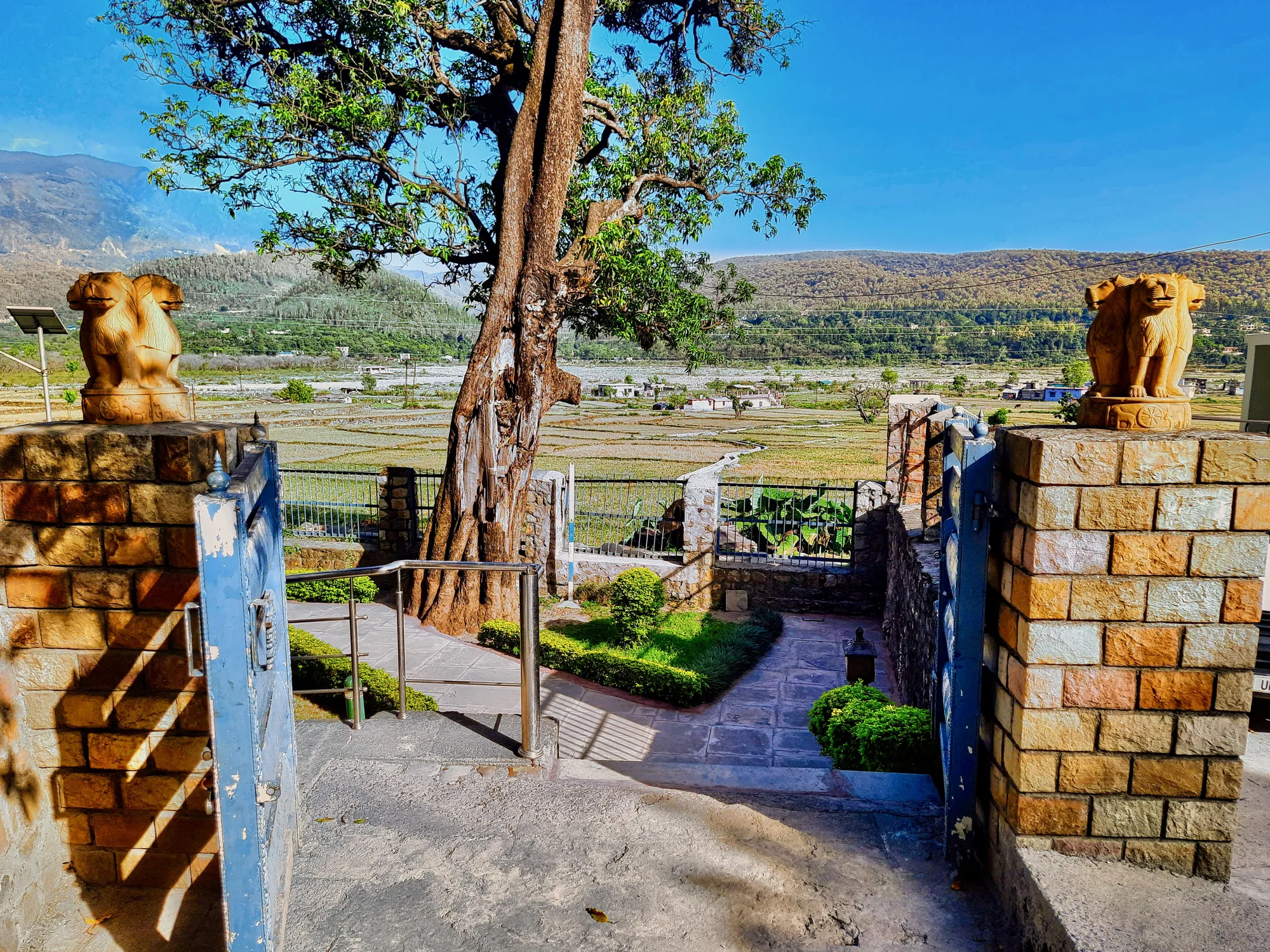
Kalsi is a small town near the meeting of the Yamuna and Tons rivers, and it holds one of the most important stones in Indian history. According to Wikipedia, the Kalsi rock carries Ashoka's Major Rock Edicts 1 to 14. Because the set is complete, it is sometimes called the standard version. The rock also has outlines of animals, including an elephant. Edict 13 is especially striking: it names Greek kings, including Antiochus and Ptolemy, as people who received Ashoka's message.
The edict is protected inside a small shelter in a walled garden. A short stop of 20 to 30 minutes is enough to read the signboards, look at the carved surface and enjoy the view of the valley. Park only where it is clearly allowed, keep the road clear for buses and trucks, and do not touch the inscription.
Leg two: the climb to Chakrata
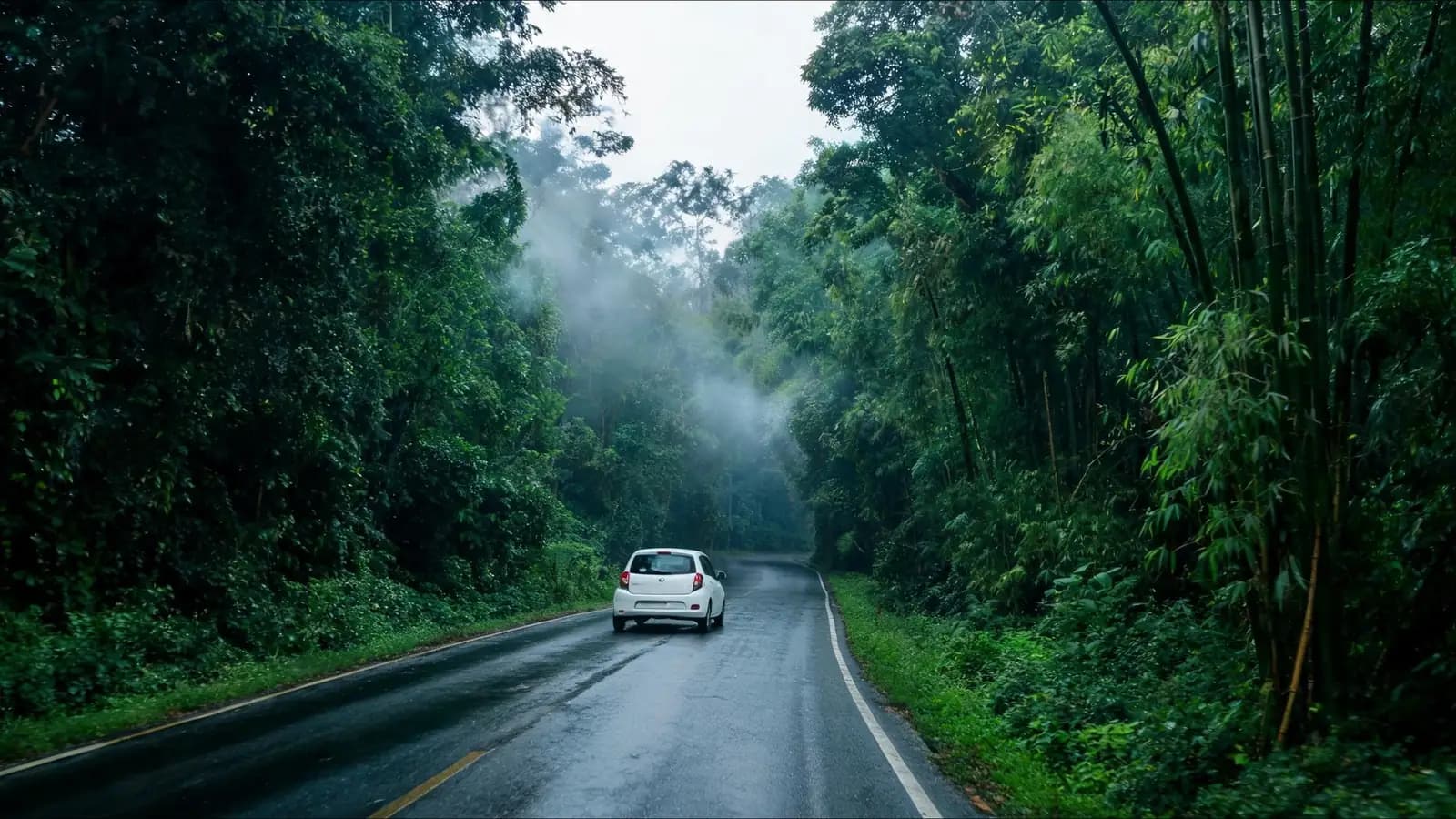
After Kalsi the road changes. It narrows, starts to switchback and climbs steadily for the rest of the way. This is real hill driving: blind corners, single-lane sections, buses and local jeeps coming the other way, and drops on the valley side. None of it is extreme if you take it slowly, but it rewards patience.
Hill-road habits that keep the day calm
- Use the horn on blind bends. A short tap tells oncoming drivers you are there.
- Give way to vehicles coming uphill where the road is too narrow for two, and pull in to let faster local drivers pass.
- Use a lower gear going down. Engine braking keeps the brakes cool on the long descent back to Kalsi.
- Do not stop on a bend for photos. Wait for a wide shoulder or a proper viewpoint.
- Watch the light. Plan to be back below Kalsi before dark. Hill roads are much harder at night.
- Expect weak mobile signal in places. Download offline maps before you leave Dehradun.
The Dehradun car page suggests an SUV or a car with higher ground clearance for this route, and that is good advice. A compact SUV is easier on broken patches and gives a better view over the bonnet on tight turns. If you are new to hill roads, tell your host where you are going; Hire N Ride hosts know these routes and can point you to a suitable car.
What to do in Chakrata
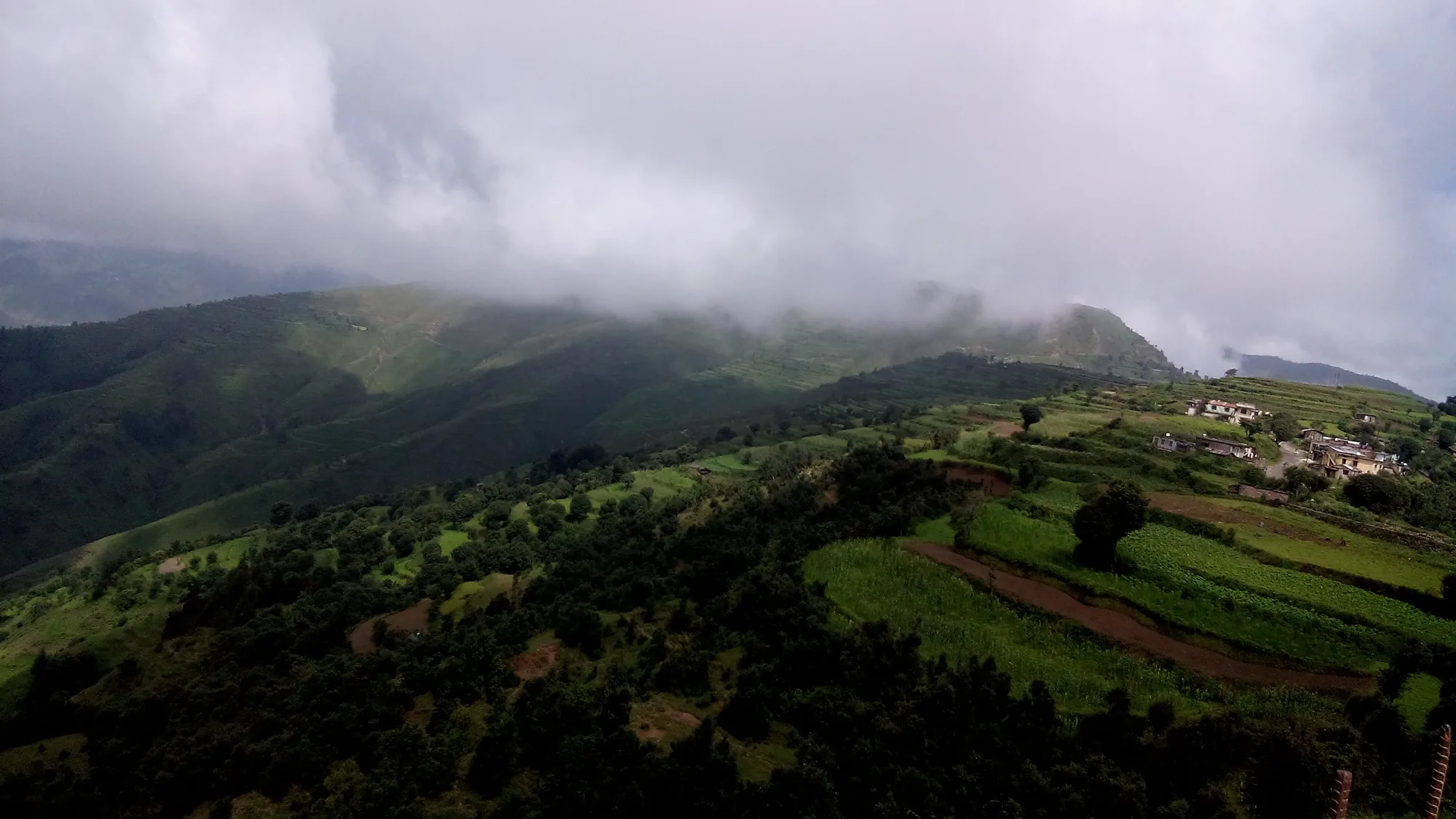
Chakrata itself is small. Its pleasure is in slowing down: a cup of tea in the market, a short walk under the deodars, and long views over the folded hills of Jaunsar-Bawar. Because it is a cantonment, large parts of the town are army land. Follow signboards, stay out of restricted areas and keep your camera away from military buildings and vehicles.
One rule matters before you plan: Wikipedia notes that Chakrata is an access-restricted cantonment and that foreigners face severe restrictions in visiting. If anyone in your group is not an Indian citizen, check the current rules with local authorities well before the trip.
Tiger Falls
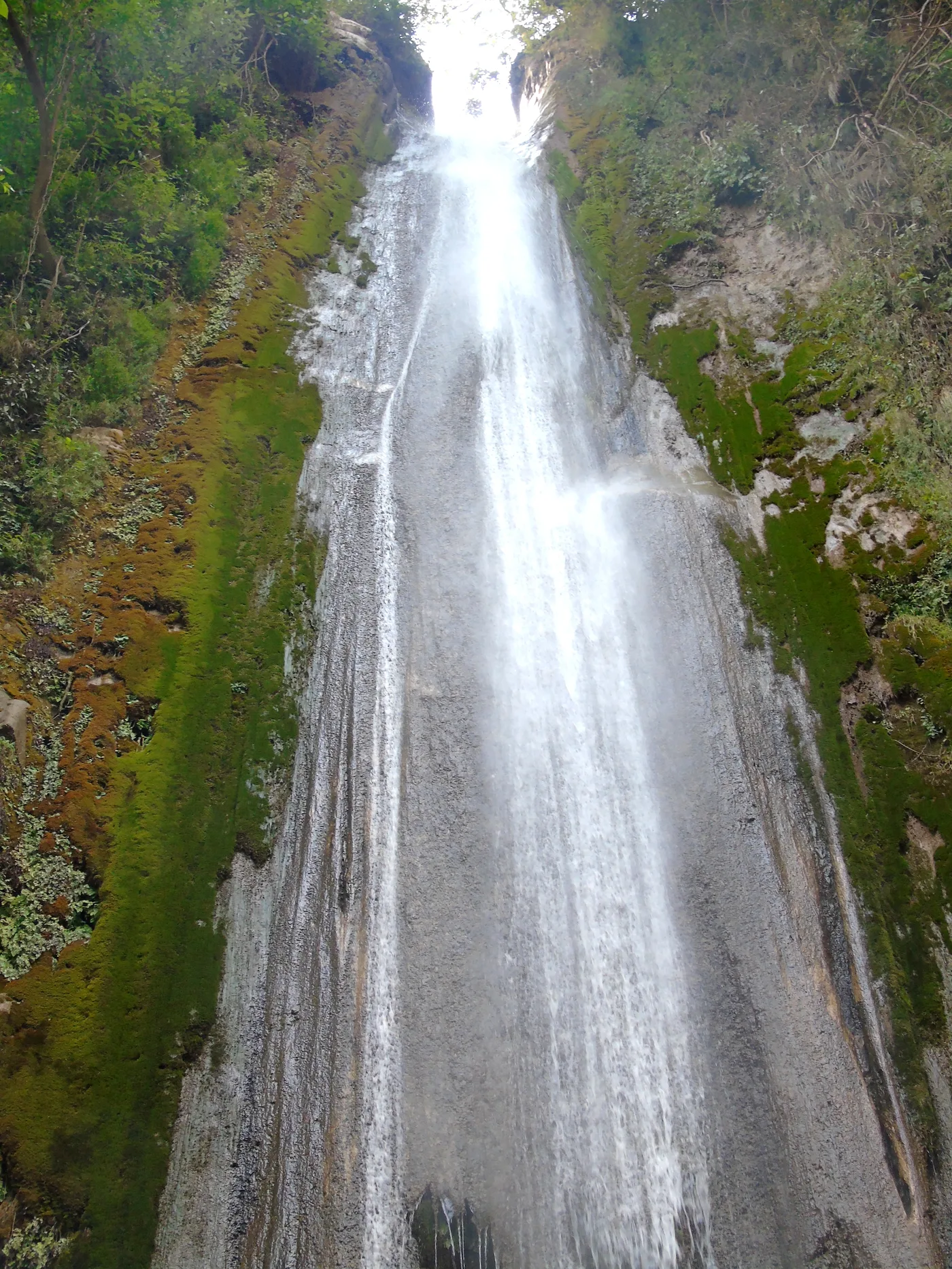
Tiger Falls is the classic add-on. Wikipedia describes it as one of the highest direct waterfalls in Uttarakhand, about 20 km from Chakrata, with a drop of 312 feet. The last stretch is a narrow rural road followed by a walk down to the pool, so wear shoes with grip and keep children close on wet rocks. After the monsoon the flow is usually strong, which is a large part of the reason to come in October.
If you have more time: Lakhamandal
If you stay the night, consider Lakhamandal, an ancient Shiva temple complex in the same Jaunsar-Bawar region. Wikipedia places it about 35 km from Chakrata on the Mussoorie–Yamunotri road, and notes that it is protected by the Archaeological Survey of India. It suits an overnight trip better than a rushed same-day loop.
A simple day plan
- 7:00 AM: leave Dehradun towards Vikasnagar.
- 8:00 AM: breakfast and fuel in Vikasnagar.
- 8:45 AM: Kalsi rock edict (about 30 minutes).
- 9:30 AM–11:30 AM: the climb to Chakrata, with a stop or two at safe viewpoints.
- Late morning: tea in Chakrata, then on to Tiger Falls.
- Lunch: back in Chakrata.
- By 2:30 PM: start down, so you are below Kalsi in daylight and in Dehradun by early evening.
Same-day returns work, but they are long. Many people prefer to stay a night near Chakrata and turn the trip into a slow two-day loop. If you do, tell your host the dates and route when you book.
What to sort out with your host before you go
The Dehradun car rental page lists a valid Indian driving licence at least one year old and a government photo ID among the documents you need. Before you set off, check these with your host:
- The kilometre allowance for your booking, since a Chakrata round trip runs to around 200 km.
- That they are happy with a hill route, and which car suits it best.
- Tyre condition, spare wheel and jack, and a working FASTag if your route uses tolls.
- Who to call if anything goes wrong on the road.
Booking through Hire N Ride means you see a host's profile and reviews before you choose. That is useful on a mountain trip, when you want a car that has been looked after. You can also compare with other platforms such as Zoomcar, but read reviews of the specific car and host wherever you book.
Planning more Doon trips? Read our guide on how far Mussoorie is from Dehradun by car, our Haridwar evening aarti drive, or the Virasat heritage fortnight guide.
Book a self-drive car in Dehradun on Hire N Ride
For Dehradun car owners: why routes like this matter
Chakrata, Mussoorie and the Yamunotri road all start from Dehradun, and many visitors arrive by train or flight with no car of their own. That is steady demand for well-kept cars, especially SUVs that handle hill roads comfortably.
Hire N Ride works like Airbnb for vehicles. You list your car, set your availability and build a professional host profile. Every good trip adds a review, and more reviews bring more bookings. Hire N Ride also helps you run the business side: vehicle surveys, GPS management and reminders for insurance renewal, PUC certificates, RC, permit expiry and servicing, so the paperwork does not slip while your car is out on a hill road.
Become a host: list your car on Hire N Ride
Conclusion
The Chakrata drive packs a lot into one road: a Mauryan inscription by the Yamuna, a steady climb through deodar forest, a quiet army town in the clouds and a tall waterfall at the end. It asks for an early start, patient hill driving and respect for cantonment rules. Give it that, and a self-drive car rental in Dehradun turns into a day that feels far from the crowds of Mussoorie, even though it starts from the same city.
About the author
Manjot Kaur writes travel and road-trip guides for Hire N Ride, with a focus on practical, unhurried day trips from the cities where Hire N Ride hosts operate.
Banner image: AI-generated illustration created with Imagine.art for Hire N Ride. In-article photos: Wikimedia Commons, credited in each caption.