By Manjot Kaur · 10 October 2026
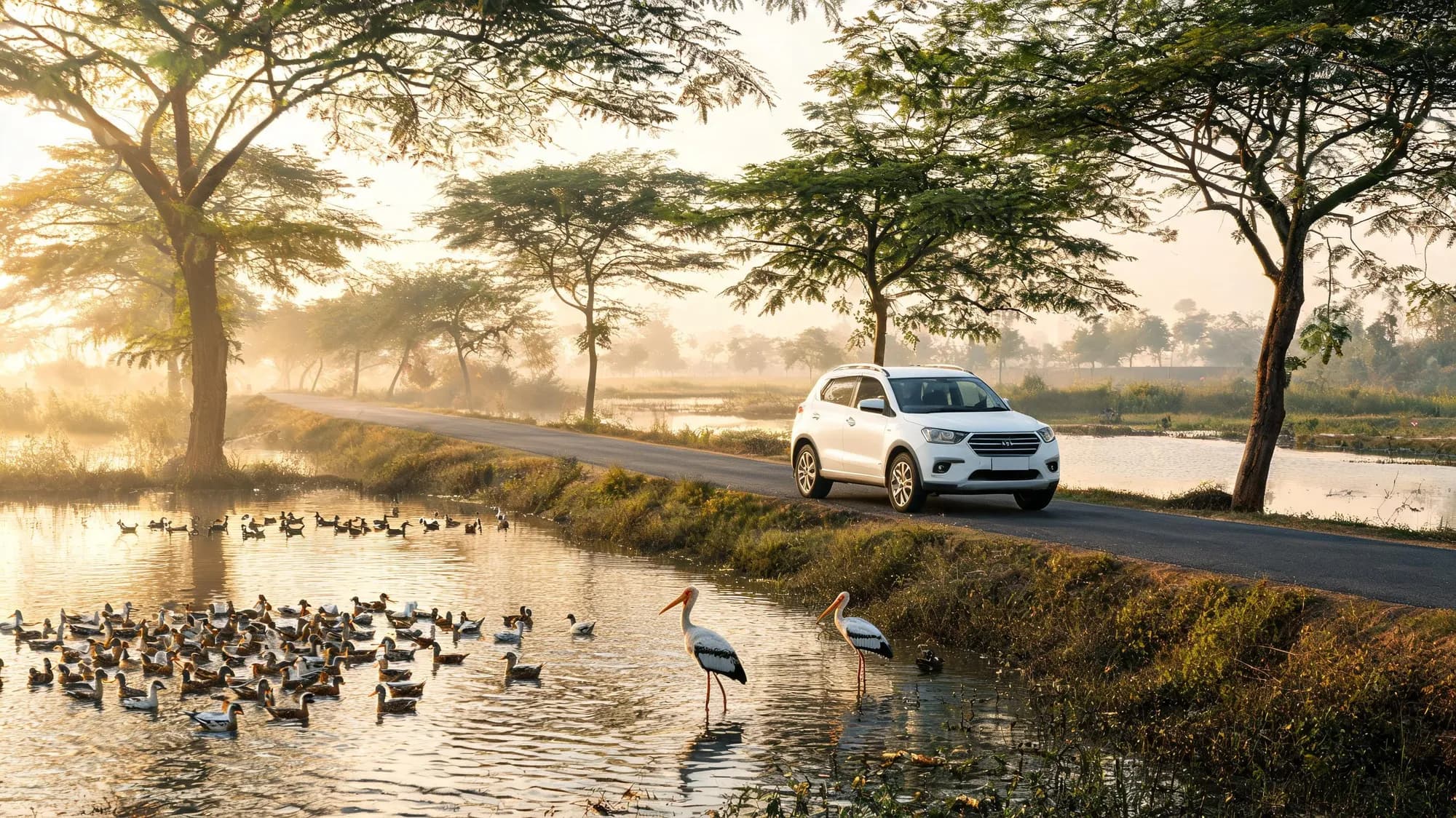
Every October, a small wetland on the Gurugram-Farrukhnagar road starts to fill with visitors who have flown thousands of kilometres to get there. Sultanpur National Park reopened on 1 October after its annual summer and monsoon closure, and the first winter ducks and geese from Central Asia are already settling on the water. For anyone in Gurugram, it is one of the easiest nature mornings in the whole National Capital Region: about 17 km away, under half an hour by road at dawn, and back home before most offices open. With a car rental in Gurugram, you can be at the gate when it opens and finish with a short heritage stop at Farrukhnagar.
This guide is for travellers and families planning that morning, and for Gurugram car owners who want to understand what weekend renters are looking for.
Key Takeaways
- Season has started: Sultanpur reopened on 1 October 2026 after its June to September closure, according to the Times of India. The migratory season runs roughly from October to March.
- Distance: open-source routing (OSRM) puts central Gurugram to Sultanpur at about 16.5 km, around 20 minutes in light traffic.
- Go early: birds are most active in the first hours after sunrise, and the city traffic is lighter.
- Add-on stop: Farrukhnagar's 18th-century stepwell is about 7 km further along the same road.
- Book: pick a car on the Gurugram car rental page.
Why Sultanpur is worth an early alarm this month
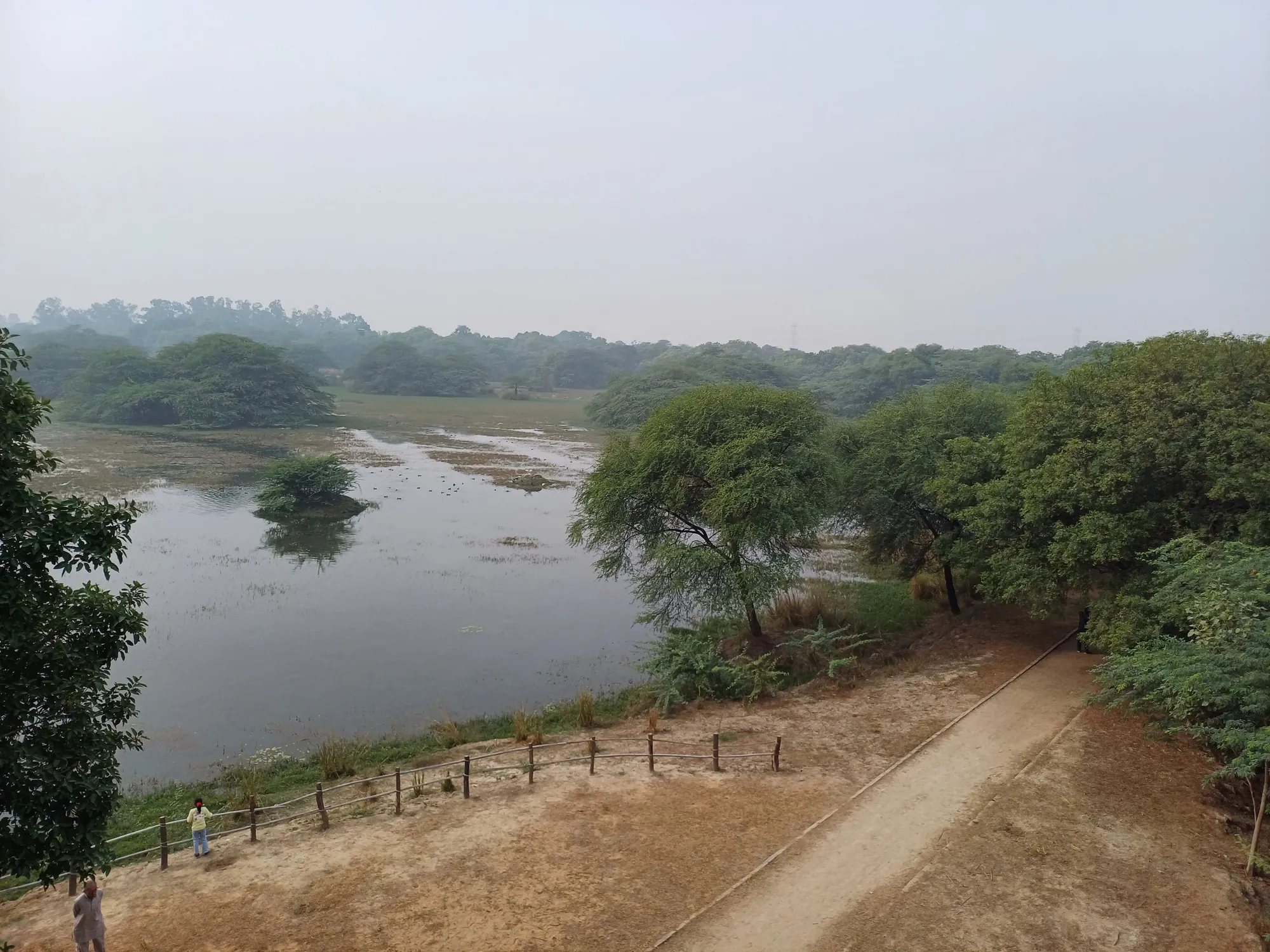
Sultanpur is small. The whole park covers about 142 hectares, with a central lake, a ring path and several watchtowers. What makes it special is its position on the Central Asian flyway, the long route that waterbirds follow from Siberia and Central Asia to the Indian plains each winter. Sultanpur is also a Ramsar site, a wetland of international importance.
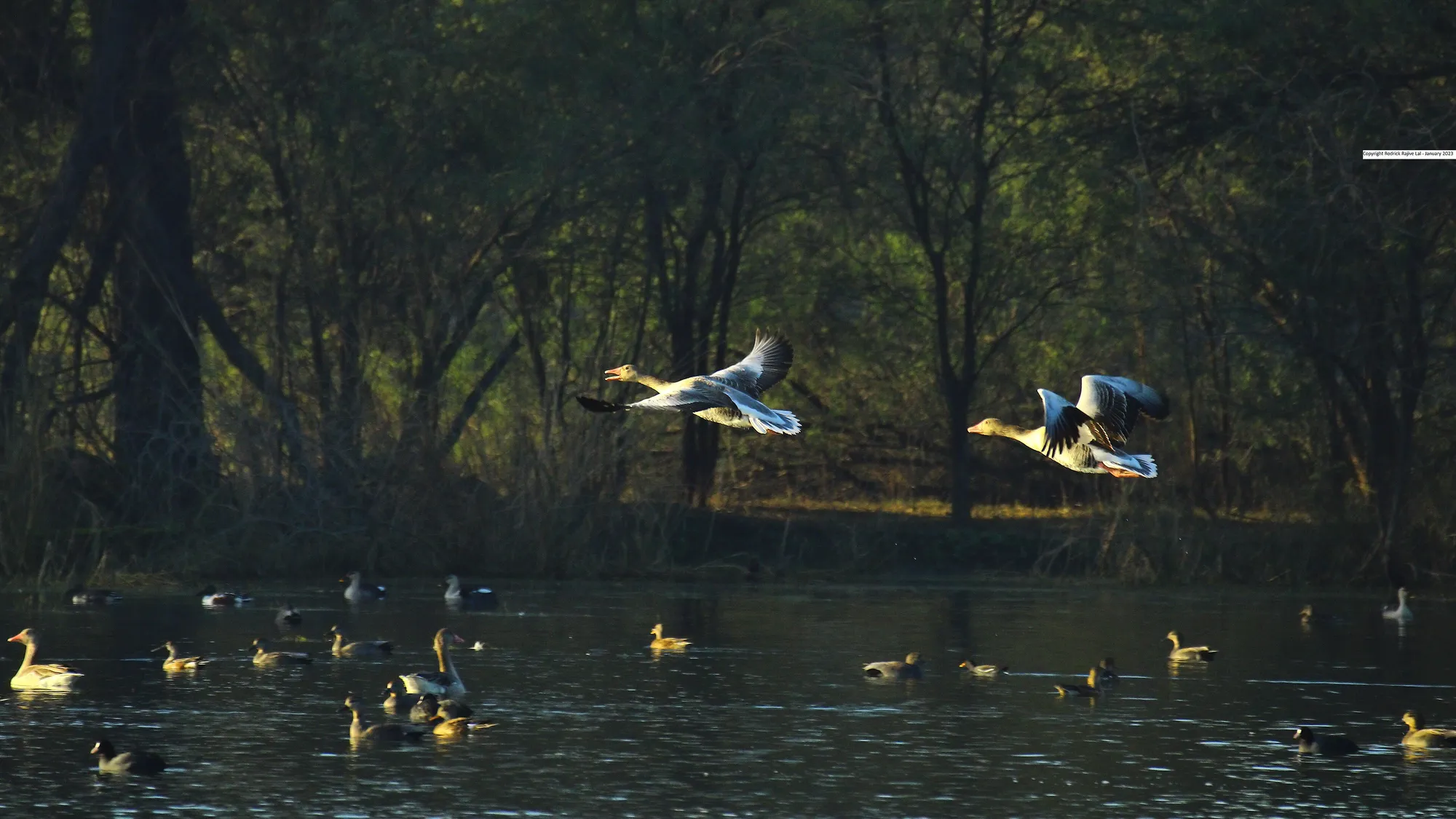
The Times of India reported that the park stays shut every year from 1 June to 30 September so the ecosystem can recover, and that maintenance work including desilting of water bodies and new signage was carried out during this year's closure. Park staff told the paper that visitors would be greeted by common coot, northern pintail, tufted pochard, northern shoveler, glossy ibis, demoiselle crane, woolly-necked stork and spoonbill, among others, and that bar-headed geese and Eurasian wigeons arrive between October and March.
There is a new twist this season. The Hindustan Times reported that three watchtowers now have AI-enabled cameras that can identify bird species from 200 to 300 metres, to help the wildlife department track arrivals and migration trends. The divisional forest officer told the paper that October to December is the peak migration season. In other words, the next few weeks are a good time to see the wetland change almost from one weekend to the next.
The drive from Gurugram
The route is simple. From central Gurugram, head west towards the Gurugram-Farrukhnagar road and follow the signs for Sultanpur. OSRM routing gives about 16.5 km and roughly 20 minutes in clear traffic. From the Golf Course Road or Sohna Road side, add some time for the city section.
The first part runs through busy urban roads and new developments, so leave before the morning rush builds. Once you are past the city edge, the road becomes more rural, with fields, small villages, trucks and the occasional tractor. Drive patiently, watch for two-wheelers and animals, and avoid overtaking on narrow stretches. Use the parking area near the park entrance rather than stopping on the roadside.
If you are coming from Delhi or Noida, the trip is longer but still easy as a half day. For a longer NCR drive with an overnight stay, see our guide to the Taj Mahal's moonlit nights from Noida.
What you can see at Sultanpur
Walk the ring path slowly and stop at each watchtower. Resident birds are easy to spot almost anywhere: egrets in the shallows, painted storks and spoonbills on the islands, red-wattled lapwings calling from the banks and white-throated kingfishers on low branches. Look for the bright Indian roller on wires and posts near the entrance.
The winter visitors are what most people come for. In October, the early arrivals are usually ducks: northern pintails with their long tails, northern shovelers with their broad bills and common teals in small, busy groups. Greylag and bar-headed geese tend to build up later in the season. Numbers are usually higher from November to February, so an October visit is about the first wave rather than the biggest crowds of birds.
It is worth setting expectations. The Hindustan Times noted that the Asian Waterbird Census counted 2,593 migratory birds of 48 species at the park in 2025, far fewer than the 9,026 recorded in 2023. Bird numbers rise and fall with water levels, weather and conditions along the flyway. A quiet morning is still a lovely walk, and the birds you do see will be close.
Mammals are part of the picture too. Nilgai often graze near the path, and you may see a golden jackal or a mongoose early in the day. Keep your distance and never feed any wildlife.
Tips for a good birding morning
- Arrive at opening time. The first two hours after sunrise are best for activity and light.
- Check timings and fees first. The park is run by the Haryana wildlife department. Confirm current hours and entry charges before you go, as we have not listed prices because they change.
- Bring binoculars. Even a basic pair makes a big difference. A camera with a zoom lens helps too.
- Wear muted colours and walk quietly. Birds settle quickly if you stay still at the watchtowers.
- Carry water and a light layer. October mornings can be cool, and there is little shade on parts of the path later in the day.
- Stay on the path and take your litter home. This is a protected national park.
- Keep noise low. No music, drones or playback calls to attract birds.
Add a heritage stop: Farrukhnagar's stepwell
Once the birds go quiet in the late morning, continue about 7 km west to Farrukhnagar, around ten minutes by car according to OSRM. This small town was founded in 1732 by Faujdar Khan, a governor under the Mughal emperor Farrukhsiyar, and grew rich on the salt trade before declining in the late 19th century.
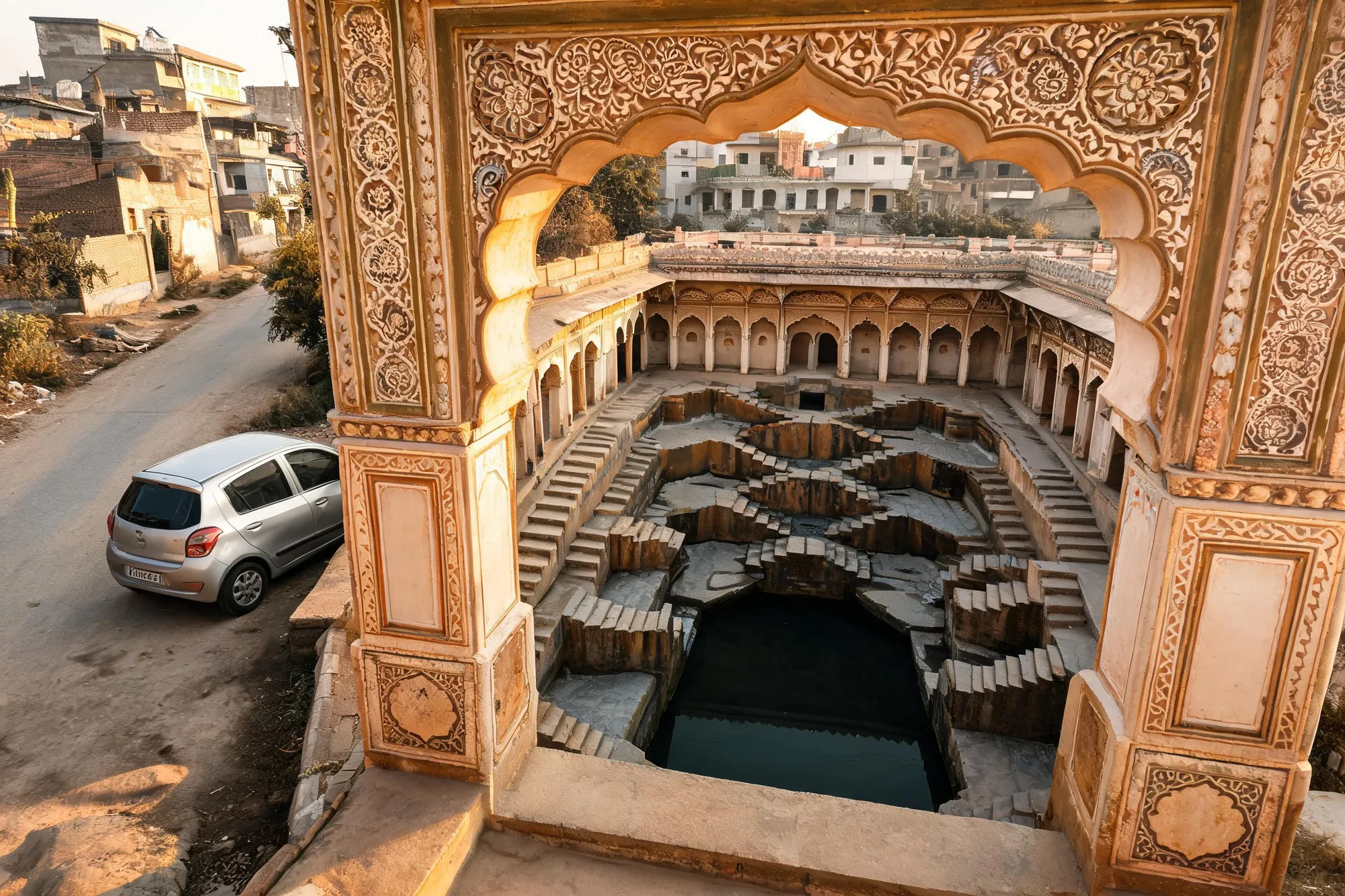
The highlight is the Baoli Ghaus Ali Shah, an 18th-century stepwell also known as Ghaus Khan ki Baoli. Wikipedia describes a central water tank about 6.5 m deep, an arched verandah overlooking the inner core and upper chambers built for rest and recreation. It was used as a water tank for the town's Sheesh Mahal palace. The town also has the remains of its old fort, the Sheesh Mahal and the Jama Masjid, all within a short walk of each other.
The lanes in the old town are narrow, so park on the edge and walk in. Be respectful, as these are old structures in a lived-in town, and some parts may be fenced or under repair. If stepwells fascinate you, our guide to Chand Baori at Abhaneri near Jaipur covers one of the most dramatic in India.
A simple plan for the morning
- Before sunrise: pick up your car in Gurugram, check fuel, tyres and the FASTag, and set off.
- Sunrise to mid-morning: walk the ring path at Sultanpur and spend time at the watchtowers.
- Late morning: drive about 7 km to Farrukhnagar for the baoli and the old town.
- Lunch: head back towards Gurugram, which takes about 25 minutes from Farrukhnagar by OSRM routing, and eat in the city.
Families with young children can keep it shorter: an hour on the path, a stop at the small interpretation area near the entrance, and home by mid-morning.
Why a self-drive car suits this trip
Public transport does not reach Sultanpur at dawn, and waiting for a cab on a rural road can eat into the best birding hours. A self-drive car lets you leave in the dark, keep binoculars and snacks in the boot, stay as long as the birds are active and add Farrukhnagar without extra fares.
On Hire N Ride, you book directly from local hosts with public profiles and reviews, so you can see how other renters rated the car and the handover. Think of it as Airbnb for vehicles, with options from compact hatchbacks to SUVs. You may also compare platforms such as Zoomcar. Whichever you choose, read the reviews, check the fuel and deposit policy and inspect the car before you drive away.
Ready for an early start? Choose your car on the Gurugram car rental page.
For Gurugram car owners: earn from weekend getaways
Gurugram renters often want a car for short escapes like Sultanpur, Farrukhnagar or the Aravalli hills, and they look for clean cars, clear handovers and good reviews. If you own a car in Gurugram, you can list it on Hire N Ride and build a host profile. Each good trip adds reviews, and more reviews help you win more bookings.
Hire N Ride also helps you run the business side. We support vehicle surveys and GPS management, and send reminders for insurance renewal, PUC certificates, RC, permit expiry and servicing, so your car stays compliant and ready for the next guest. When you are ready, list your vehicle on Hire N Ride.
Conclusion
Sultanpur is proof that you do not need a long holiday to see something wild. In October, the first winter ducks and geese are settling onto a wetland only about 17 km from Gurugram, and the season will build through the winter. Leave before sunrise, walk slowly, bring binoculars and finish with Farrukhnagar's quiet stepwell. With a car rental in Gurugram, the whole morning runs on your schedule.
About the author
Manjot Kaur writes travel guides for Hire N Ride, focusing on easy, practical trips from the cities where Hire N Ride hosts operate and on helping vehicle owners grow their rental business.
Banner and stepwell images: AI-generated with Imagine.art. Photos are credited in the captions. Park news is from the Times of India and Hindustan Times; distances are from OSRM routing. Check park timings, entry rules and road conditions before you travel.