By Nitin Kanish · 20 October 2026
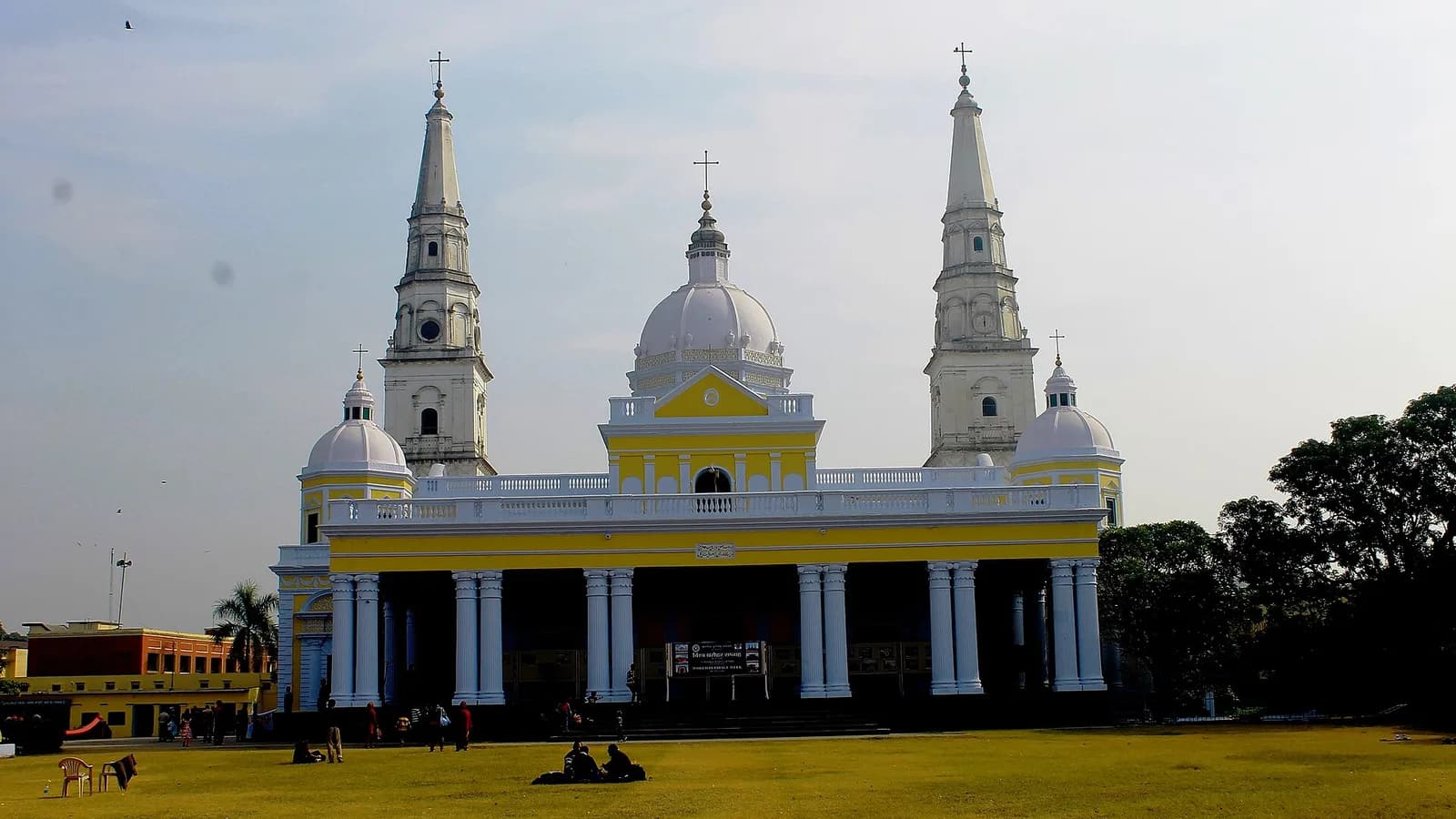
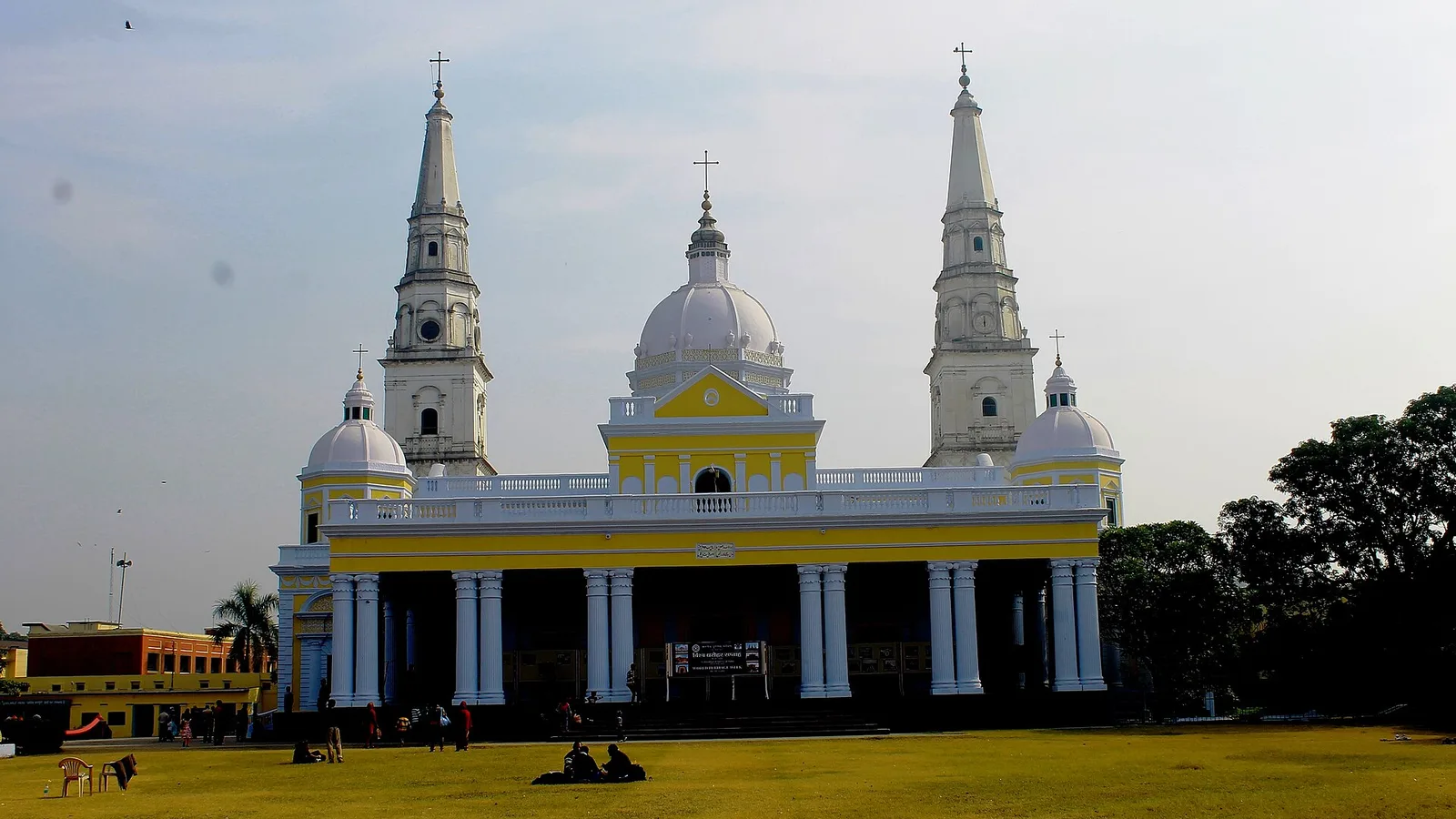
Twenty-two kilometres from Meerut, past sugarcane fields and across the broad Ganga canal, two white spires rise over the small town of Sardhana. The church below them was built by a woman who started life as a dancer in Delhi, ruled this territory for more than half a century, led her own troops into battle and became a Catholic in 1781. She is buried inside, under an 18-foot marble monument carved in Italy. With a self-drive car rental in Meerut, you can be standing in front of it about forty minutes after you leave the city.
This guide covers the drive, what to look for in the Basilica of Our Lady of Graces, how to fit your visit around Mass, why the second week of November is different, and a stop at Shahpeer's unfinished Mughal tomb on the way home. Book a self-drive car in Meerut, then use the plan below.
Key Takeaways
- Distance: the basilica's own website puts Sardhana 22 km from Meerut, off the road to Muzaffarnagar. OSRM map routing agrees: about 22.5 km from Begum Pul. Allow 35 to 45 minutes in normal traffic.
- Half a day is enough: the full loop, Meerut to Sardhana, then back to Shahpeer's tomb in the old city, is about 50 km.
- Time it around Mass: in winter, the daily Mass is at 6:30 am, and on Saturdays and Sundays there is a rosary and benediction at 5 pm. Late morning is the quietest time to look around.
- The big day: the shrine's annual pilgrimage is held on the second Sunday of November, which is 8 November 2026, the same day as Diwali. Go before then for a calm visit, or plan carefully if you want to see the pilgrimage.
- Car: on 20 October 2026, the Hire N Ride Meerut page listed self-drive cars from ₹2,880 for one day, with 150 km a day included.
Who was Begum Samru?
Her story is so unlikely that it is worth knowing before you go. According to the Wikipedia article on Begum Samru, she was born Farzana around 1753 and, in her early teens, joined the household of Walter Reinhardt Sombre, a European mercenary who commanded his own force of trained soldiers. "Samru" is the local version of his name. When he died in 1778, she took over his estate at Sardhana and his army, which included both European and Indian soldiers.
She was baptised a Roman Catholic on 7 May 1781, taking the name Joanna Nobilis, and is often described as the only Catholic ruler in northern India. She was under five feet tall, wore a turban and rode at the head of her troops. Her army fought on the Maratha side at the battle of Assaye in 1803, before she came to terms with the British. She also held lands much further away: the pargana of Badshahpur-Jharsa near present-day Gurugram was hers, and she built palaces at Sardhana, at Jharsa and in Chandni Chowk, Delhi.
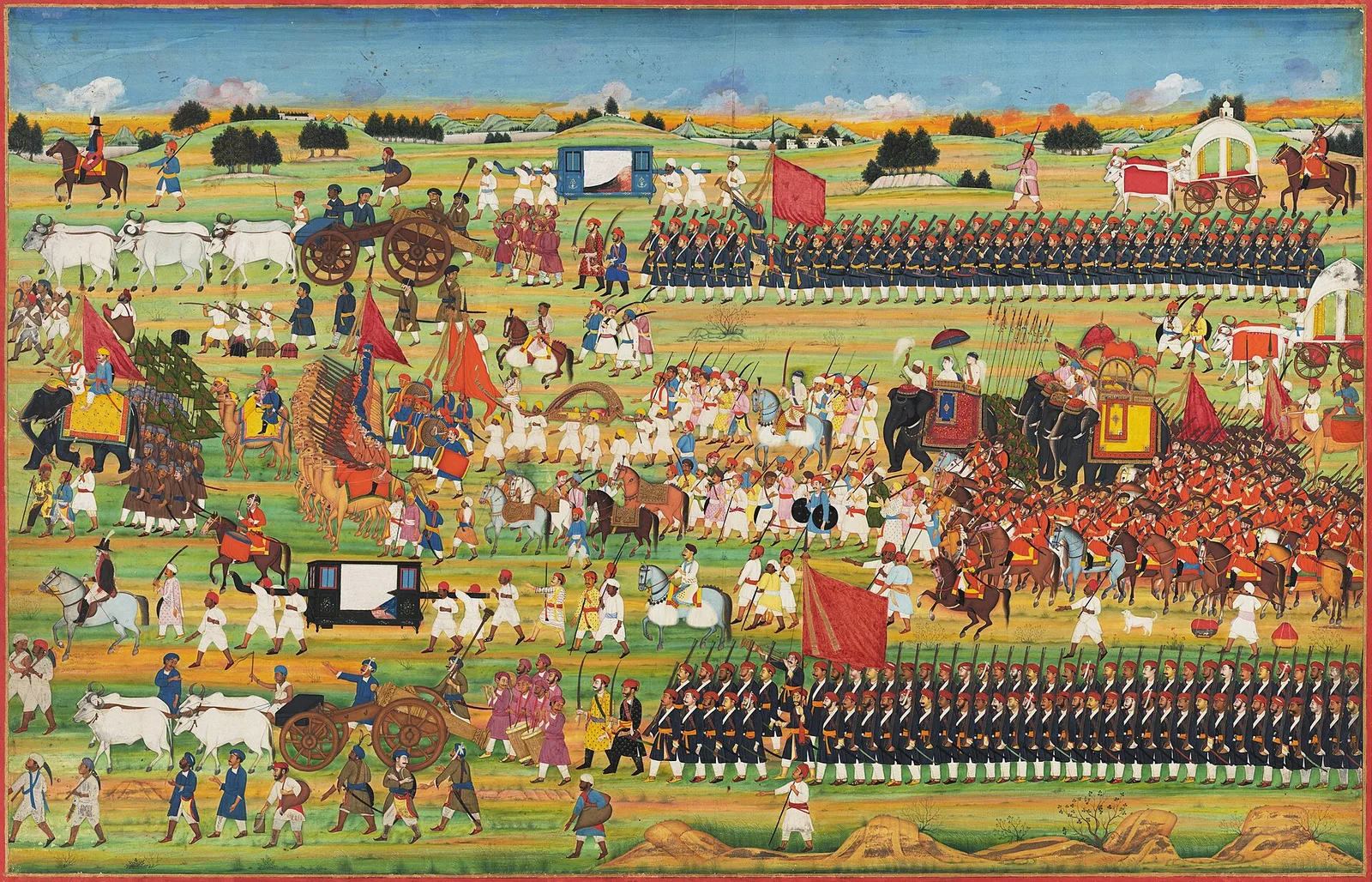
The painting above, now in the Chester Beatty Library in Dublin, shows the court she kept. The church she built is the part of that world you can still walk into.
The drive from Meerut
The route is simple. The basilica's website describes it like this: leave Meerut on the road towards Muzaffarnagar, Roorkee and Dehradun, and turn left at the sign board for Sardhana. The road is tarred and mostly shaded by trees. After about 16 km you cross the broad Ganga canal, then the road turns right and the church comes into view in the distance. Nearer the town, look out for a small canal on the right that the Begum had dug to drain the floodwater that once covered the lower part of Sardhana in the monsoon.
OSRM routing gives these road distances. Its times assume empty roads, so allow more for town traffic and the busy stretch out of Meerut.
- Begum Pul, Meerut, to the basilica: about 22.5 km.
- Meerut City railway station to the basilica: about 26.5 km.
- Basilica to the Shahpeer Gate area, old Meerut: about 24.4 km.
- Shahpeer Gate area back to Begum Pul: about 3 km.
- Coming from Delhi: Connaught Place to Sardhana is about 97 km each way.
Use the basilica, not just "Sardhana", as your map destination.
What to see in the basilica
The Begum began building the church in the early nineteenth century. Historians give different start dates, 1809 or 1820, but a Latin inscription over the main door puts its dedication in 1822. Its architect was Antonio Reghellini, an Italian from Vicenza, and the design draws on St Peter's in Rome, with a touch of Palladio and some Indian details. Look for the two tall spires, the three domes, the Greek-style colonnaded veranda across the front, and the octagon in the main dome that lets the sun stream in. Inside, the altar and its surround are of marble set with coloured stones. The two lakes near the church are said to have been left behind when mud was dug out to make building material.
The church was made a cathedral for a short time when Pope Gregory XVI created the Apostolic Vicariate of Sardhana in 1834. On 19 December 1961, Pope John XXIII raised it to the rank of minor basilica, a title given only to churches of special history and beauty. Travel writers often describe it as the only basilica in Uttar Pradesh.
The Begum's tomb
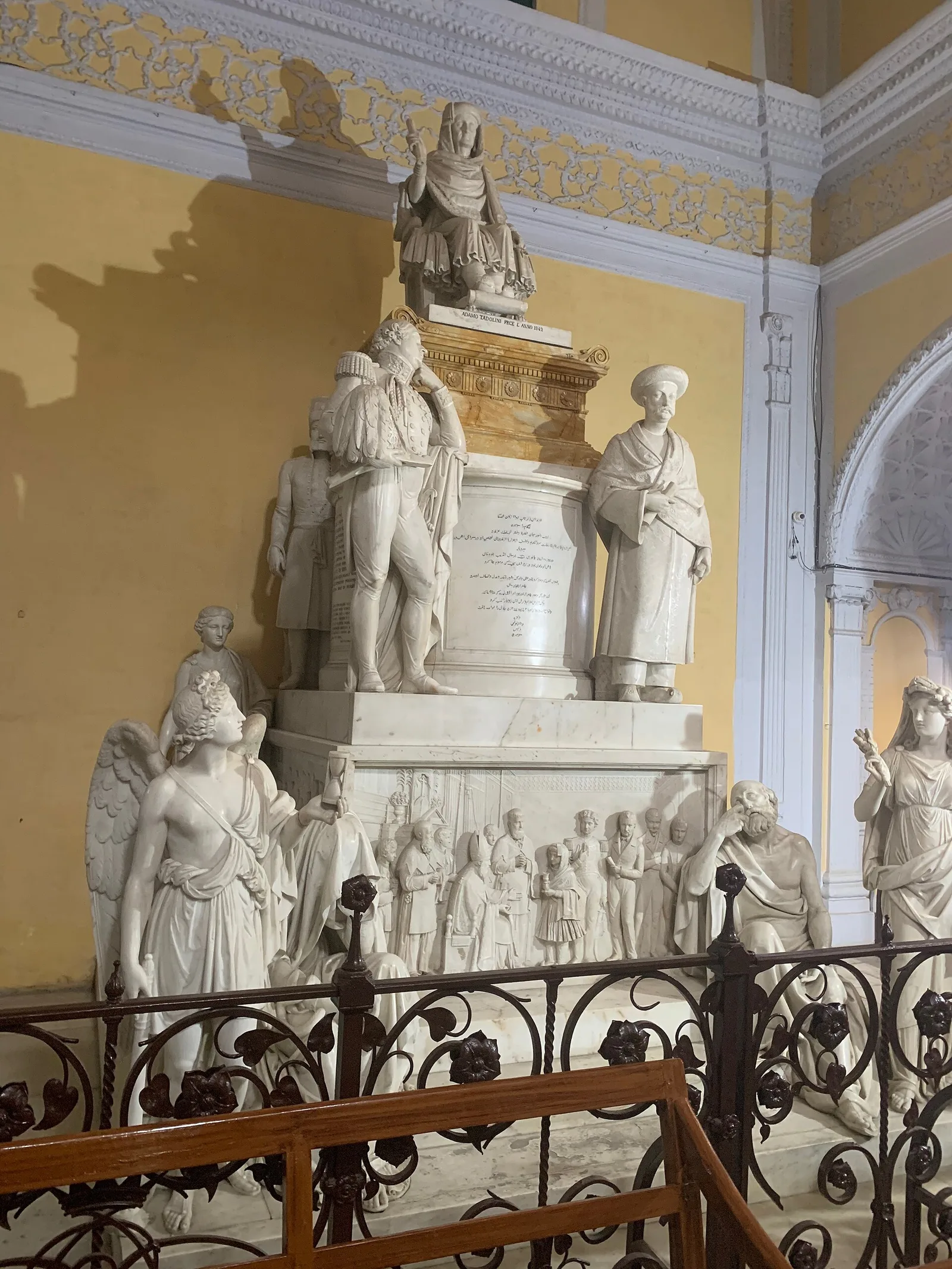
Near the sanctuary is the monument most visitors come to see. It stands about 18 feet high, was carved by the Italian sculptor Adamo Tadolini, and travelled by ship from Italy to Kolkata, then by river boat and bullock cart to Sardhana. At the top, the Begum sits on her throne holding the scroll from the Mughal emperor Shah Alam II that confirmed her right to Sardhana. Below are figures of the people around her, including her adopted heir, David Ochterlony Dyce Sombre, and her diwan, Rae Singh.
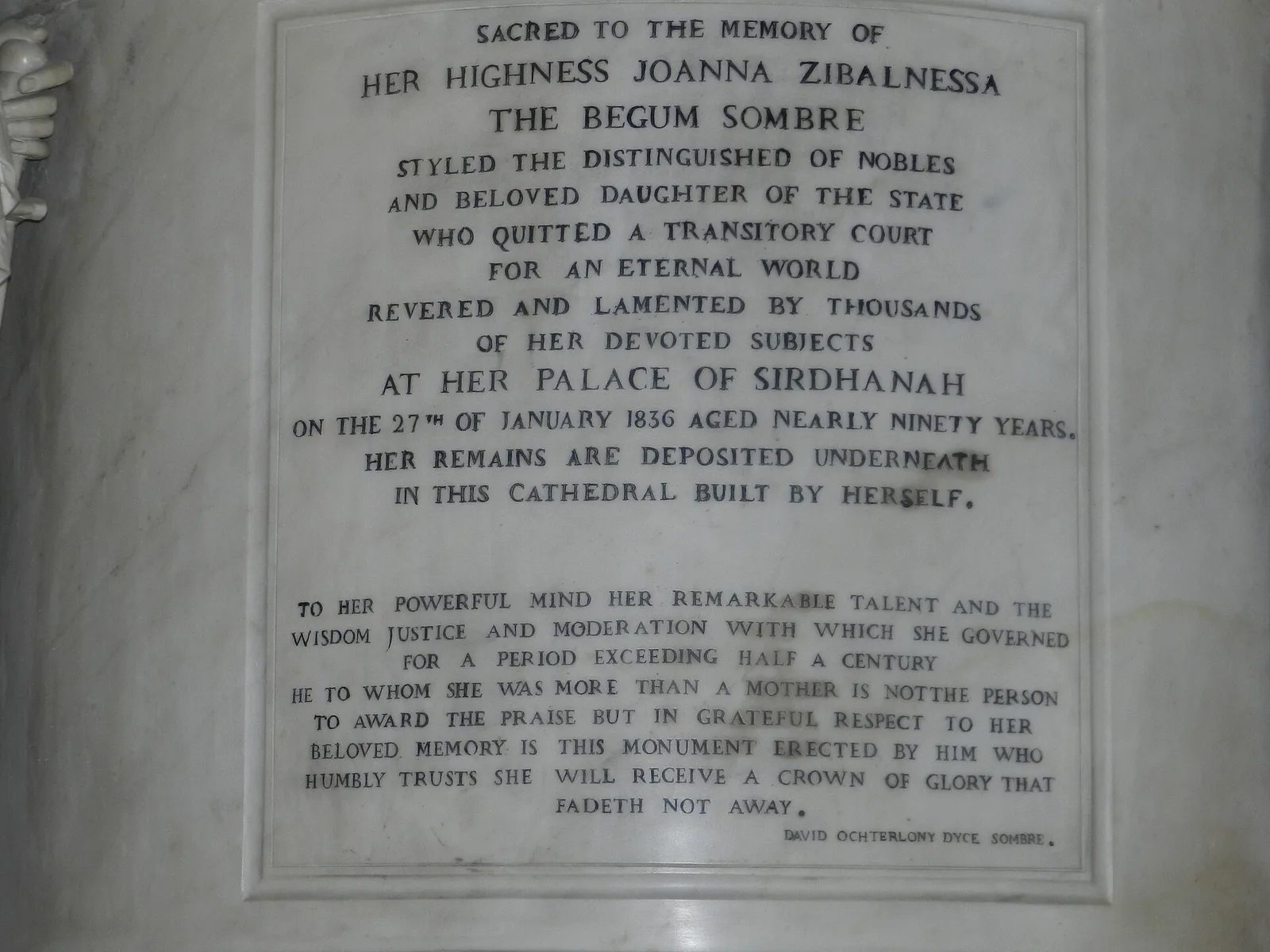
Do not miss the marble tablet on the monument. It calls her "Her Highness Joanna Zibalnessa, the Begum Sombre", says she died at her palace of Sirdhanah on 27 January 1836, "aged nearly ninety years", and records that her remains lie beneath the cathedral she built. The tablet was put up by Dyce Sombre, who calls himself the person "to whom she was more than a mother". Notice the age: if she was born around 1753, as most accounts say, she was in her early eighties.
The shrine of Our Lady of Graces
For most people who come today, the basilica matters for another reason. According to the basilica's page on the shrine, in 1955 the people of Livorno in Italy gave a painted copy of their famous image of Our Lady of Graces for Sardhana. Pope Pius XII blessed it, and the shrine was opened on 7 November 1957, when the image was carried in procession from Meerut. It sits in a niche in the side chapel on the left. A pilgrims' house with space for about 40 people was built in 1997.
Mass timings and the November pilgrimage
This is a working parish church, so plan your visit around its services. The basilica's website lists these winter timings:
- Every day: Holy Mass in Hindi at 6:30 am.
- Saturdays: rosary, novena and benediction at 5 pm.
- Sundays: Masses at 6:30 am, 8 am and 9:30 am, a further Mass at 11 am if pilgrims are present, and benediction and rosary at 5 pm.
Outlook Traveller gives general visiting hours of about 7 am to 5 pm. A weekday between about 10:30 am and 4 pm, outside service times, is the best time to look around slowly. If you arrive during Mass, sit quietly at the back or wait outside until it ends.
The annual pilgrimage is held on the second Sunday of November, and thousands of people attend. In 2026 that is Sunday 8 November, which is also Diwali. In 2025, the Hindustan newspaper reported a programme from 29 October to 8 November, with prayers and Mass every evening, a procession and blessings on the final day. The 2026 programme had not been published when we checked on 20 October 2026, so contact the basilica office through its website before planning a trip around it. Expect heavy crowds and long walks from parking on the main days, and busier Diwali roads around Meerut.
Around Sardhana
The Begum's other buildings are still in use. Her original palace is now a seminary, the New Palace is a boys' school and the old Bishop's Palace is a girls' school. These are working institutions, not museums, so view them from the road unless you have been invited in.
On the way home: Shahpeer's unfinished tomb
Back in Meerut, stop at one of the city's most unusual monuments. The Meerut district administration's places of interest page describes Shahpeer Sahab ki Dargah as a red stone Mughal tomb built in 1628 by the empress Nur Jahan in honour of Hazrat Shahpeer, a local Sufi saint who, people believe, taught the emperor Jahangir. Other accounts link it to Jahangir himself. Everyone agrees on one thing: it was never finished. The tomb has no roof, its walls carry fine carved work, and the district page says it is listed by the Archaeological Survey of India as a national heritage monument. The district page adds that a local jagirdar built the Shahpeer Gate for the tomb in 1829.
The tomb is tucked into the lanes of the old city, near Shahpeer Gate. Park on a main road and walk the last part, as the lanes are narrow. Dress modestly, cover your head if asked, and be respectful of anyone praying at the dargah.
If you have another day in the city, our guide to Meerut's 1857 sites and the temples of Hastinapur covers the cantonment, the Freedom Struggle Museum and the Jain temples to the north-east.
A sample half-day
- 9:00 am: pick up your car in Meerut and head out on the Muzaffarnagar road before the traffic thickens.
- 9:45 am: arrive in Sardhana. Walk around the outside of the basilica and the lawn while the light is soft.
- 10:30 am: go inside. Allow an hour for the nave, the Begum's tomb, the inscription and the shrine chapel.
- 12:00 pm: drive back towards Meerut, about 24 km to the old city.
- 12:45 pm: Shahpeer's tomb, then lunch in the city.
Coming from Delhi for the day? Start by 7:30 am, see Sardhana first and Shahpeer's tomb after lunch, and leave Meerut by about 3 pm. The calculated sunset at Sardhana is about 5:45 pm on 20 October, 5:40 pm on 25 October, 5:35 pm on 31 October and 5:29 pm on 8 November.
Driving tips for this route
- Watch the slow traffic: the Sardhana road carries tractors, sugarcane trolleys, buses, e-rickshaws and cyclists. Loaded trolleys are wide and slow, so overtake only with a clear view.
- Morning haze: from late October, mornings in western Uttar Pradesh can be hazy. Use dipped headlights and keep your distance if visibility drops.
- Parking: park in a marked spot near the church compound, and in Meerut's old city leave the car on a wider road.
- Dress and behaviour: modest clothing is right for both the basilica and the dargah. Photography rules can change, so ask before taking pictures inside.
- Fuel and cash: fill up in Meerut, and carry some cash for parking and food.
- Licence and papers: carry your original driving licence, and keep the rental documents in the glovebox.
Choosing your car
The roads are paved the whole way, so a hatchback or compact sedan is plenty for two to four people. For a family group, a six-seater makes the day easier.
On 20 October 2026, the Hire N Ride Meerut page listed self-drive cars from ₹2,880 for one day, the rate for a Maruti Suzuki Dzire. A Hyundai Aura was listed at ₹2,964, a Maruti Baleno at ₹3,000 and a six-seat Maruti Suzuki XL6 at ₹3,696 for one day. Each listing included 150 km a day, far more than this 50 km loop. Security deposits ranged from ₹1,000 to ₹5,000 depending on the car, and roadside assistance on these listings covers up to 20 km from the pickup point. Rates and availability change, so check the live page before you book.
Renting from elsewhere in the region? The Begum's story also reaches the capital and its suburbs. Her old palace between Badshahpur and Jharsa is now the official residence and camp office of the Gurugram district collector, so you can see it only from outside. Hire N Ride also offers self-drive car rental in Delhi and car rental in Gurugram, and Sardhana is an easy day out from either.
Conclusion: a short drive into an extraordinary life
Sardhana is not on most travellers' lists, and that is part of its charm. In one small town you can see a basilica that borrows from Rome, the marble tomb of a ruler who led her own army, and a shrine that still draws thousands of pilgrims every November. Add Shahpeer's roofless Mughal tomb on the way back, and a quiet half-day becomes one of the most surprising outings around Meerut. With a self-drive car rental in Meerut, you can go at your own pace, before the pilgrimage crowds arrive.
Ready to go? Book a self-drive car in Meerut, pick a weekday morning, and take the road towards Muzaffarnagar.
About the author: Nitin Kanish writes road-trip and self-drive guides for Hire N Ride. He looks for short drives that lead to big stories, and he focuses on the practical details that make a rental day work: distances, opening hours, service times and where to park.