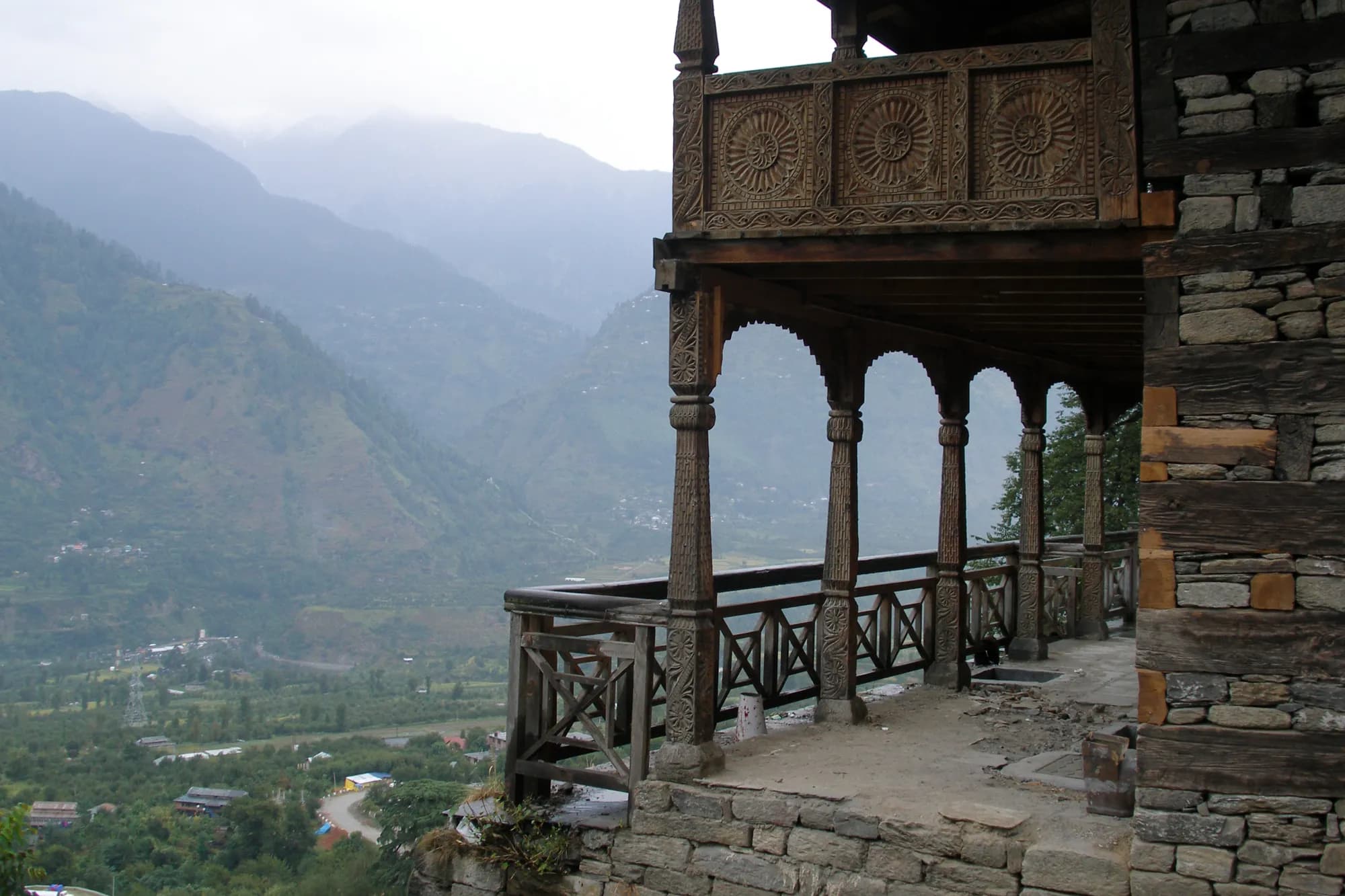
By Manjot Kaur · 11 October 2026
Most drivers leave Manali for Naggar on the main highway along the right bank of the Beas. There is a slower, prettier way. Cross the river at Manali and take the old left-bank road south through Jagatsukh, apple orchards and village temples, and you arrive at Naggar from above, close to the hillside house where the Russian painter Nicholas Roerich spent the last years of his life. With a car rental in Manali, this becomes an unhurried day built around art, wood-and-stone architecture and valley views, rather than snow points and queues.
We have already written a short half-day guide to Naggar Castle. This post is different: it is a full day centred on the Roerich Estate, driven by the left-bank route with stops on the way.
Key Takeaways
- Route: Manali to Jagatsukh is about 8 km, and Jagatsukh to Naggar about 13 km more on the left bank, so roughly 21 km in total by OSRM routing. Allow about an hour of driving, more with traffic.
- Main stop: the Roerich Estate above Naggar, with Nicholas Roerich's house, a gallery of his paintings and the memorial grounds.
- Also see: the ancient stone temples at Jagatsukh, Naggar Castle and the pagoda-roofed Tripura Sundari temple.
- Best time: October's clear, cool days are ideal. Start by mid-morning and be back before dark.
- Book: choose a car on the Manali car rental page.
Why the left bank is worth the extra time
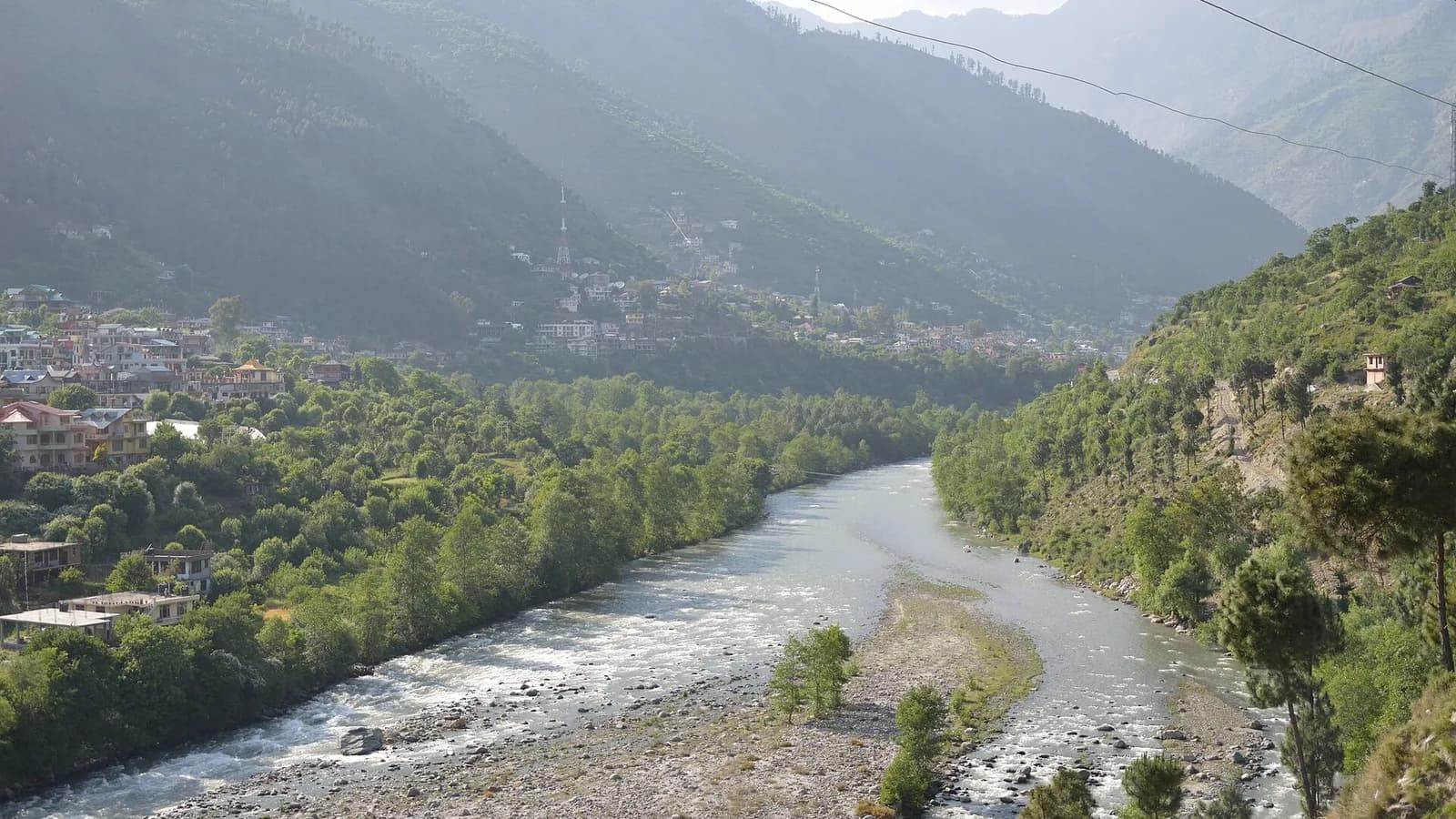
The right-bank highway is faster and busier, carrying buses, trucks and traffic heading to Kullu and beyond. The left-bank road is narrower and quieter. It climbs gently through villages, passes old shrines and opens up views across the river to the snow peaks above Solang and the Rohtang side. For many visitors, the drive itself becomes one of the best parts of the day.
It is a mountain road, though, so set expectations. Stretches are single-lane with tight bends, and you will meet local buses, school traffic and the occasional herd of animals. Drive slowly, use your horn before blind corners and give way to uphill vehicles where the road is narrow.
First stop: the stone temples of Jagatsukh
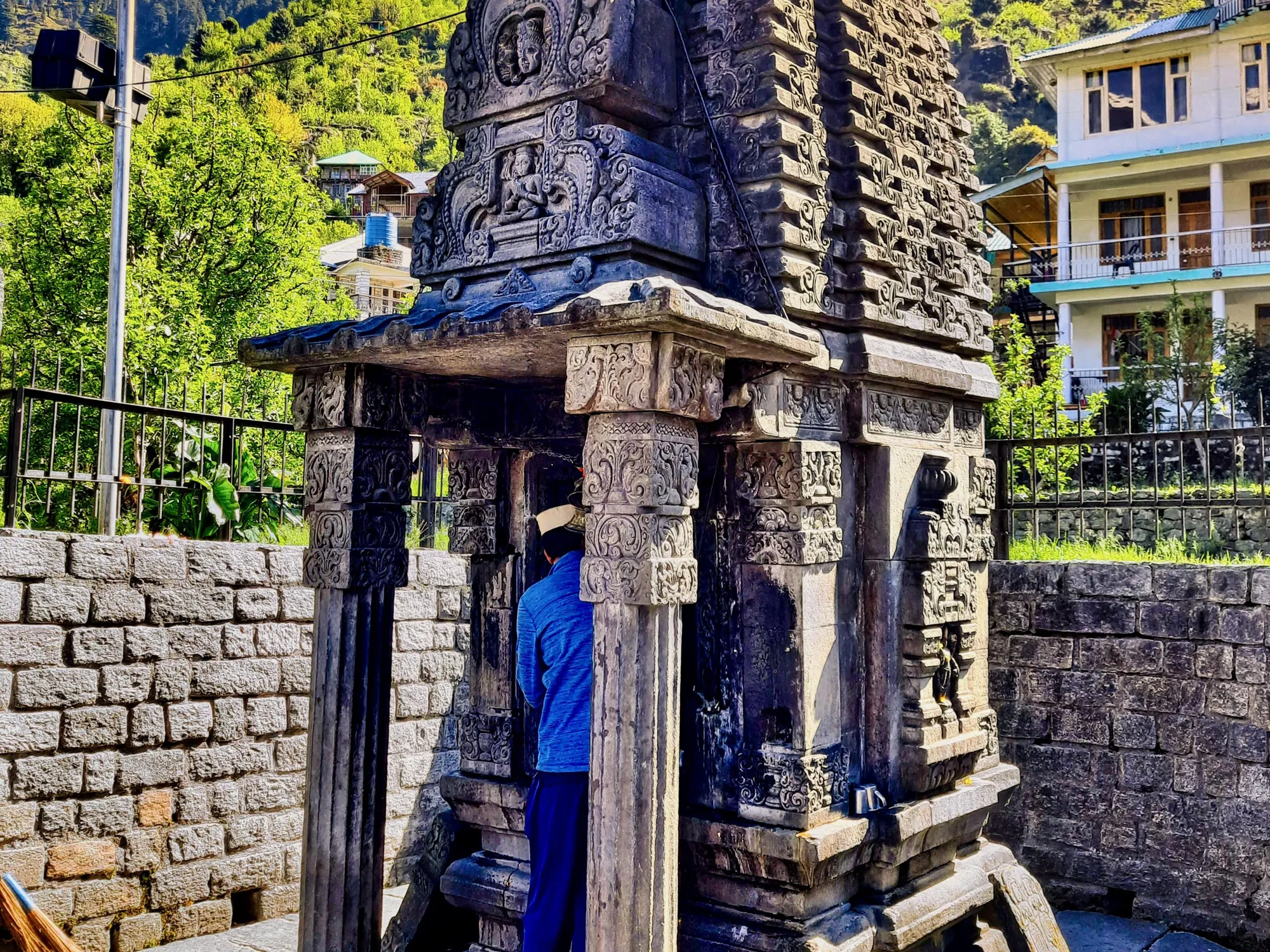
About 8 km from Manali, Jagatsukh is one of the oldest villages in the upper Kullu Valley and is often described as an early seat of the Kullu rulers before the capital moved to Naggar. Its best-known monument is the Gauri Shankar temple, a small Shiva shrine in carved grey stone in the nagara style, very different from the wooden temples you see elsewhere in the valley. Nearby is the larger Sandhya Gayatri temple.
Park where the road widens and walk the short distance into the village. Spend twenty minutes looking at the carvings, then carry on south.
The drive on to Naggar
From Jagatsukh, the road runs south through orchards and small hamlets for about 13 km. In October, many orchards are being picked or have just been harvested, and you may see crates of apples stacked by the road. Pull over only where it is safe and you are not blocking traffic.
As you near Naggar, follow the signs uphill for the Roerich Art Gallery. By OSRM routing, the estate is about 4.5 km of winding road above the castle. Going up first and visiting the castle on your way down usually makes parking easier.
The Roerich Estate
Nicholas Roerich was a Russian painter, writer and thinker who travelled widely across Central Asia and the Himalaya. In 1928 he settled in Naggar with his family, at a property known as the Hall Estate, and lived there until his death in 1947. His wife Helena Roerich was a writer and philosopher, and his son Svetoslav, also a painter, later married the film actress Devika Rani. The family also founded the Urusvati Himalayan Research Institute nearby.
Today the estate is looked after by the International Roerich Memorial Trust. The ground floor of Roerich's house is a gallery of his paintings, many showing the Himalaya in his famous bold blues and purples, while the upper rooms are kept much as the family left them and can be seen from the verandah. Walk the gardens under the deodars, find the simple memorial stone marking the place of his cremation, and look out over the valley he painted again and again. A short walk away is the Urusvati building, which has a small folk art collection.
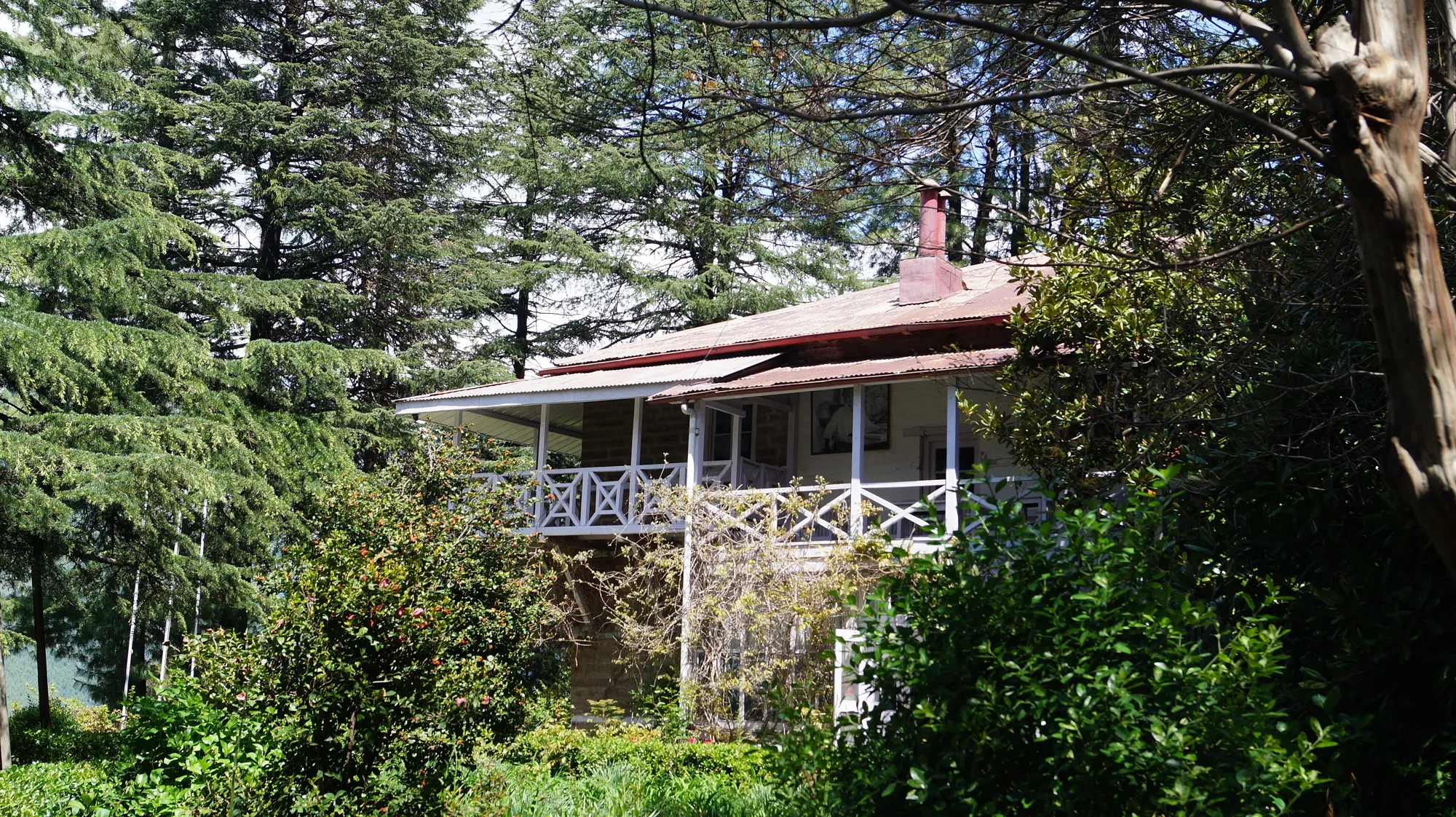
Plan at least an hour here. There is an entry ticket, photography inside the gallery may be restricted, and opening days and hours can change, so check locally or with your host before you set out. Keep voices low; it is a memorial as well as a museum.
Naggar Castle and the village temples
On the way back down, stop at Naggar Castle. According to Wikipedia, it was built around the 15th century by Raja Sidh Singh of Kullu, using the region's traditional kath-kuni style of alternating timber and stone, which has helped it survive earthquakes. Naggar served as the capital of the Kullu kingdom for centuries. The castle now runs as a heritage hotel, but visitors can usually see the courtyard, the small Jagti Patt shrine and the balcony views over the Beas for a small fee.
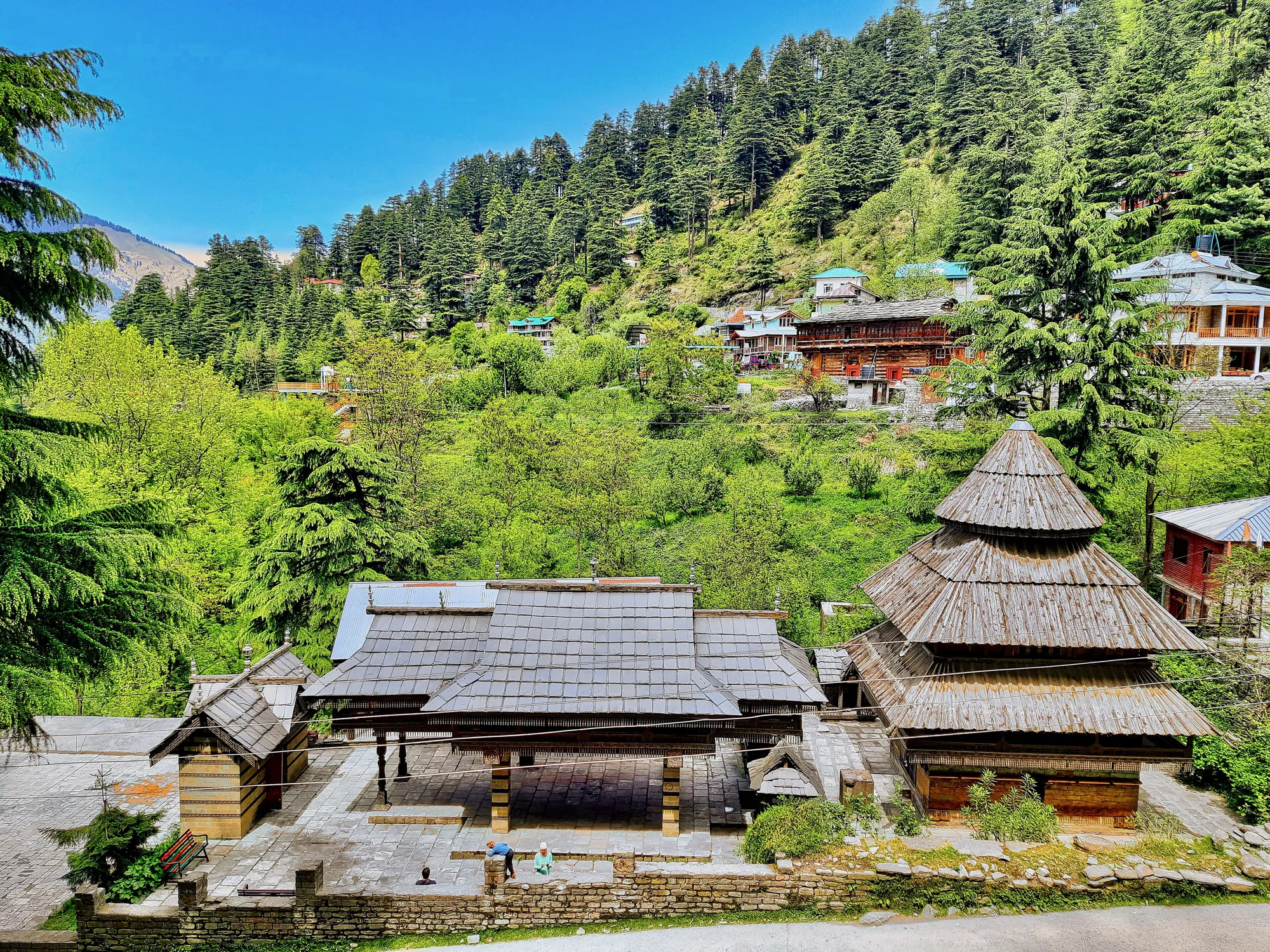
If you have time, walk through the lanes to the Tripura Sundari temple, a wooden shrine with a tiered pagoda roof. Roerich painted it more than once, and seeing it after the gallery gives the visit a nice sense of continuity. The Gauri Shankar stone temple in Naggar, below the castle, is another short detour.
A simple plan for the day
- 9:30 am: leave Manali, cross the Beas and head south on the left bank.
- 10:00 am: short stop at the Jagatsukh temples.
- 11:00 am: arrive at the Roerich Estate. Visit the gallery, gardens and Urusvati.
- 1:00 pm: lunch at a café or dhaba in Naggar.
- 2:00 pm: Naggar Castle and a walk to Tripura Sundari temple.
- 3:30 pm: drive back to Manali, either by the same road or via the right-bank highway for a loop, arriving before dark.
For a different kind of day in the same valley, our guide on how far Solang Valley is from Manali by car covers the drive north towards the Atal Tunnel.
Driving and parking tips
- Check the car first. Test brakes, tyres, lights and the horn, and note the fuel level. Fill up in Manali.
- Use low gears. On descents, use engine braking rather than riding the brakes.
- Park thoughtfully. Lanes near the castle and gallery are narrow. Use marked parking where available and never block a gate or road.
- Watch the weather. October is usually dry, but a sudden shower makes bends slippery. Slow down in shade where the road stays damp.
- Carry layers. Mornings and evenings are cold, even on sunny days.
- Respect the places you visit. Remove shoes where asked at temples, dress modestly and take your litter back with you.
Why a self-drive car suits this day
Taxis do the Naggar run, but usually on the main highway and on a fixed schedule. A self-drive car lets you take the left bank, stop at Jagatsukh, linger in the gallery and decide on the spot whether to loop back by the other bank.
You may also look at other platforms such as Zoomcar. Whichever you use, read the reviews, check the fuel and deposit terms, and inspect the car before you drive off.
Ready to plan your day? Choose a car on the Manali car rental page.
Every route we have published nearby is collected in our Himachal bike and car rental guide. Our guide Self-Drive Car Rental in Manali: Documents, Security & Everything You Need covers another easy outing from Manali.
Conclusion
The left-bank drive turns Naggar from a quick castle stop into a full day: carved stone at Jagatsukh, Roerich's paintings and home among the deodars, the old capital's castle and a pagoda temple he once painted. It is only about 21 km each way, but it rewards a slow pace. Start mid-morning, drive carefully on the narrow stretches and be back in Manali before dark. With a car rental in Manali, the whole day runs on your schedule.
About the author
Banner photo: Vyacheslav Argenberg, Wikimedia Commons, CC BY 4.0. Other photos are credited in the captions. History is from Wikipedia; distances are from OSRM routing. Check road conditions, gallery and temple timings and local rules before you travel.