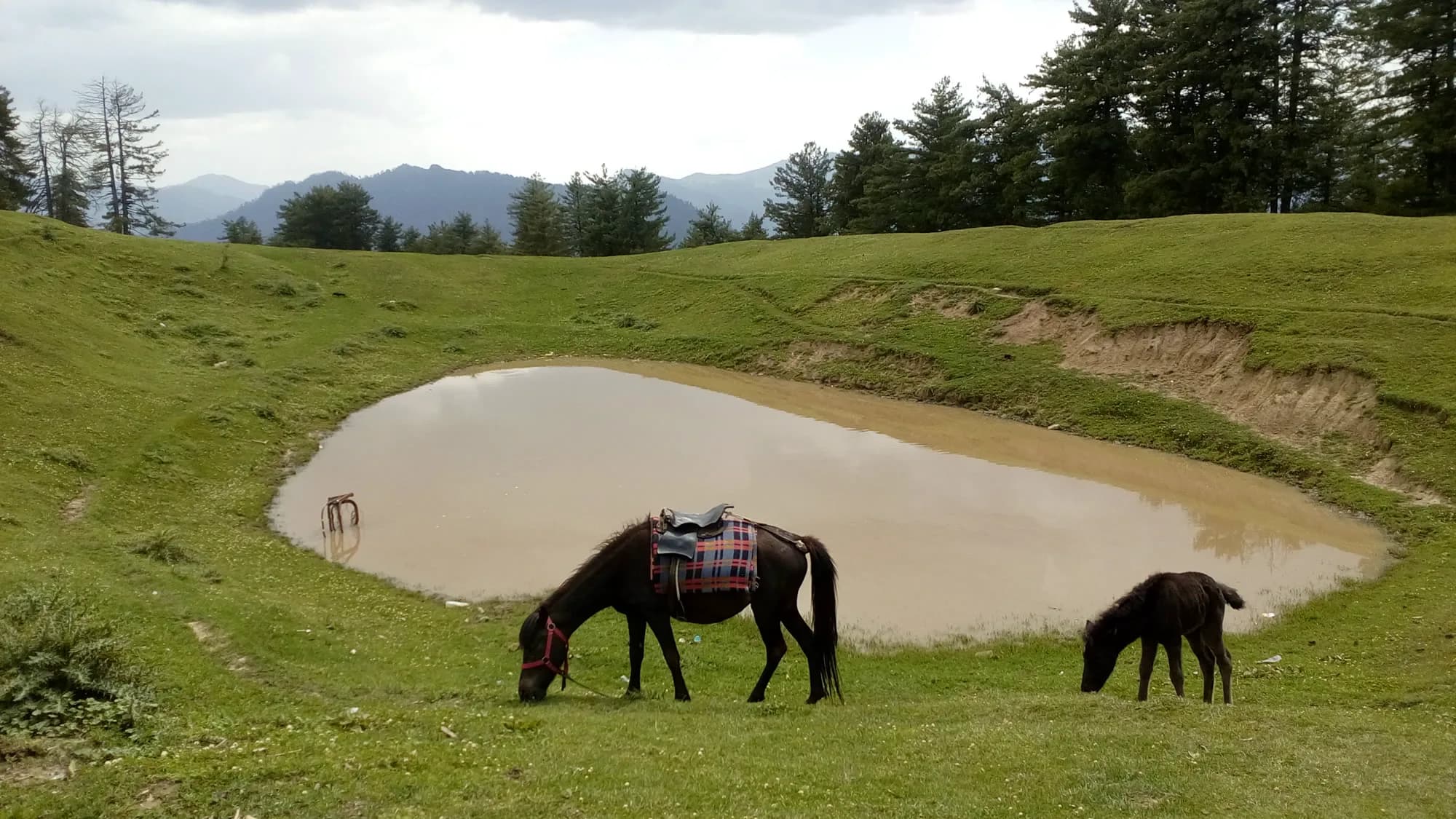
Bijli Mahadev sits on a ridge high above Kullu. The Kullu Valley lies on one side and the Parvati Valley on the other. For years there has been talk of a ropeway that would lift visitors from the Beas riverbank near Bhuntar to the temple in a few minutes. That ropeway is not running, and it won't be for some time. In August 2026 the Himachal government said the project had been put "in abeyance" after local protests. A Times of India report on 1 October 2026 said the National Green Tribunal will hear the case again on 17 December.
For now, the way up is the same as always: ride a winding hill road to the road head, park, and climb the last stretch on foot. That makes Bijli Mahadev one of the best half-day or full-day trips for anyone who arranges bike rental in Bhuntar. The airport town is the closest base, the ride is short, and October is one of the best months for the view. This guide covers the route, where the bike stops, how long the walk really takes, and how to time the day so you're back on the valley floor before dark.
Key Takeaways
- No ropeway yet. The planned 2.4 km Bijli Mahadev ropeway from Mohal near Bhuntar is on hold, and the NGT has listed the case for 17 December 2026. The temple is still reached by road plus a walk.
- Ride: Bhuntar to Kullu is about 10 km. Guides put the Chansari road head about 20 to 24 km beyond Kullu on a steep, winding road. Plan for 1 to 1.5 hours each way.
- Walk: from Chansari it is roughly 2.5 to 3 km of steep climbing to the temple at about 2,460 m. Allow 1.5 to 3 hours up, depending on your fitness.
- Fuel up in Kullu. It is the last reliable place to fill the tank before the climb.
- Start early. On busy days traffic builds on the Kullu–Dhath road from mid-morning. Sunset is around 6 pm in early October and closer to 5:35 pm by the end of the month.
- Book a well-kept bike from a reviewed local host on the Bhuntar bike rental page.
Why the ropeway isn't the answer this season
The ropeway is meant to run from Pirdi/Mohal, near the Beas just north of Bhuntar, to the temple on Kharal hill. The Times of India reported on 1 October 2026 that the planned ride would take about seven minutes. The executing agency is National Highways Logistics Management Ltd. The same report says the National Green Tribunal has asked the Himachal government for a further response on earthquake risk, because the state now places the area in Seismic Zone VI. The tribunal will hear the matter again on 17 December.
The project has also run into local opposition. The Tribune reported in August 2026 that viral photographs of felled deodar trees near the temple had angered residents. Villagers in Kharal and the petitioners before the tribunal have raised concerns about forest rights, slope stability and the wishes of the deity. A senior official of the state ropeway corporation told the paper that the project had been "kept in abeyance" because of the protests.
This guide doesn't take sides in that debate. For anyone visiting this autumn, though, the practical point is simple. There is no shortcut to the top. You will ride up a narrow mountain road and then walk. That is also why the trip feels the way it does: slow, steep, and quiet once you are above the last houses.
What waits at the top
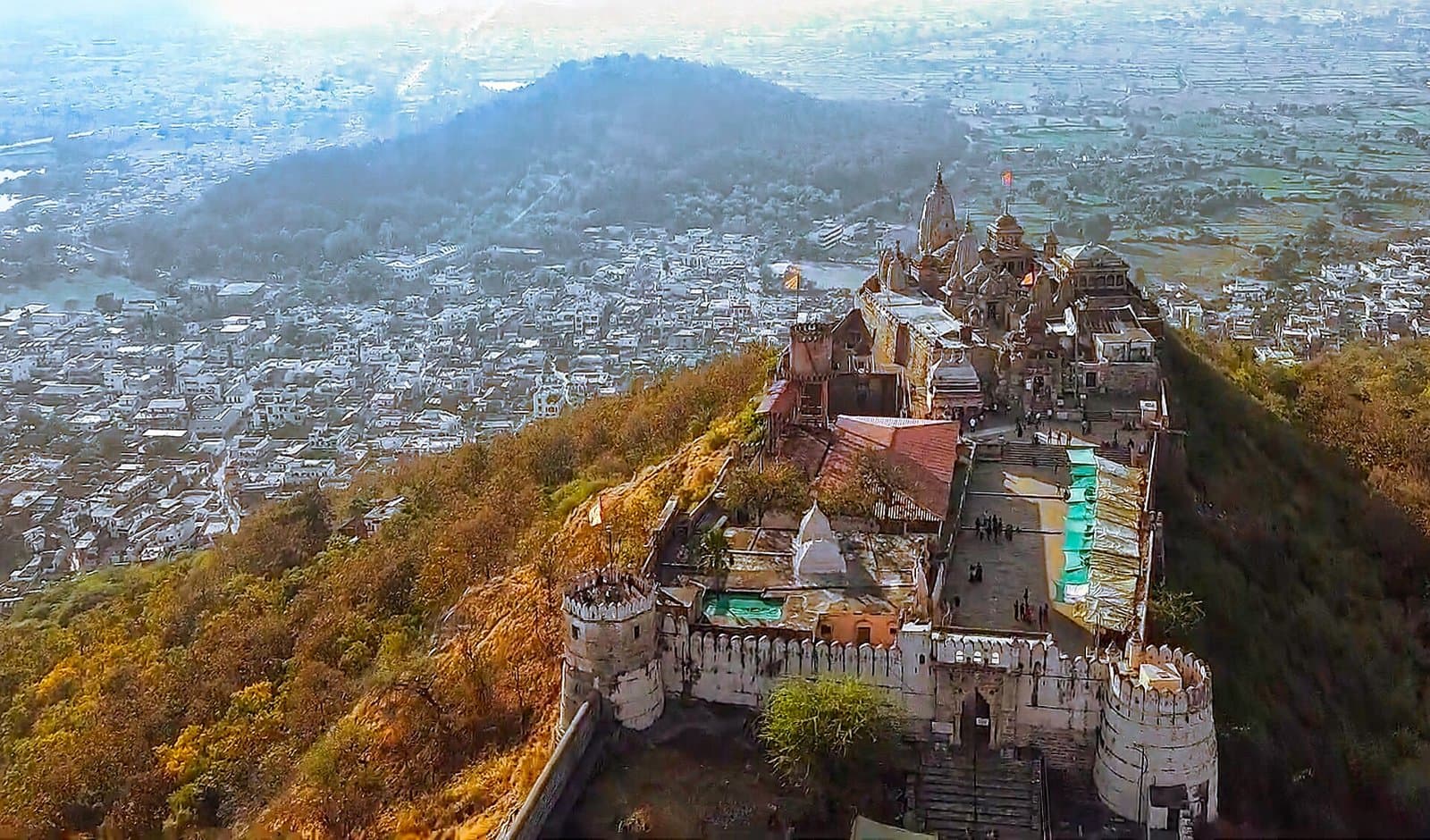
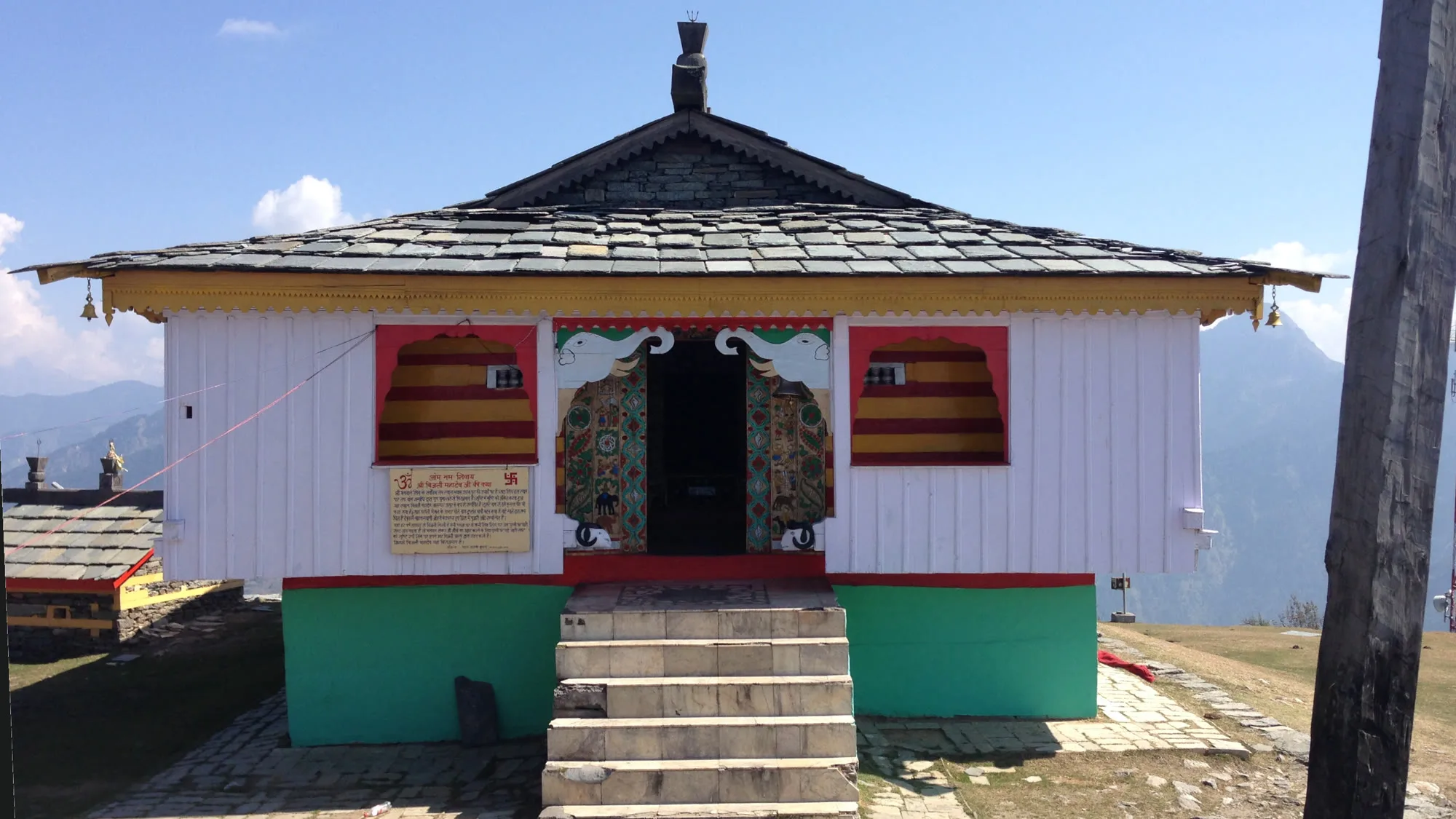
Bijli Mahadev is a Shiva temple at about 2,460 metres. Its name comes from bijli, lightning. Local belief says lightning strikes the temple's lingam from time to time and breaks it, and the priest then joins the pieces again with a paste of homemade butter, pulse flour and grain. The temple is built in the Kath-Kuni style, the traditional Himachali way of building with layered timber and stone. In front of it stands a tall wooden staff, about 60 feet high, made from deodar.
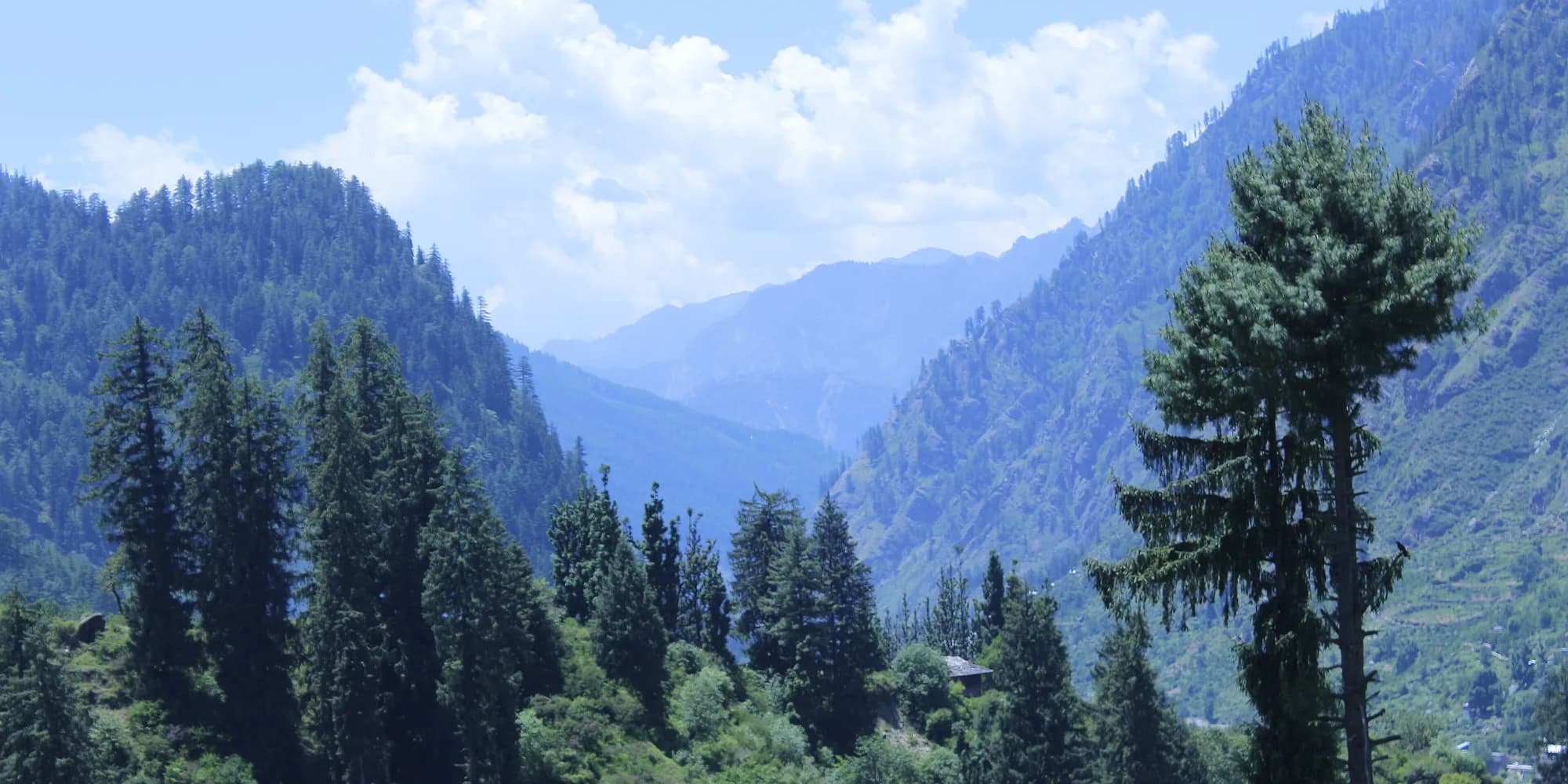
Most people remember the view as much as the temple. From the ridge you can look down into the Kullu Valley on one side and the Parvati Valley on the other. On a clear day you can follow the Beas as it winds past Bhuntar and the airport. The best months for the view are April to June and September to November. In winter the whole mountain is usually under snow.
This is a working place of worship, not just a viewpoint. Dress modestly, remove your shoes where you are asked to, follow the priests' instructions, and carry your rubbish back down with you.
The ride: Bhuntar to Kullu, then up to Chansari
The first part is easy. From Bhuntar, follow the valley north for about 10 km to Kullu, roughly 20 to 25 minutes in normal traffic. Fill the tank in Kullu. Riders' guides describe it as the last reliable fuel stop before the climb, and the hill road will use more fuel than you expect, especially in low gears.
From Kullu, the Bijli Mahadev road heads up into the Kharal (Kharahal) Valley towards Chansari and Dhath. Amar Ujala describes the Kullu–Dhath road as about 25 km long. Most trek guides put Chansari, where the main footpath starts, at roughly 20 to 24 km from Kullu, or about an hour's drive. The road is paved but steep, with tight hairpins, narrow sections and long drops. Some visitors report broken patches in the upper part. Expect:
- Local buses and taxis that use the whole road on bends. Slow down, use the horn on blind corners, and pull in where the road is wide.
- Steep gradients in both directions. Go up in a low gear, and come down using engine braking rather than holding the brakes all the way.
- Gravel and damp shade. Loose stones and wet patches linger on north-facing bends, especially early in the morning.
Allow 1 to 1.5 hours of riding each way from Bhuntar, more if you stop for photos. Download an offline map before you set off, because mobile signal on the upper road can be patchy.
Chansari or Dhath: where the bike stops
The road continues past Chansari for a few kilometres towards Dhath. Which point you end up walking from depends on the day. Amar Ujala's report from a busy Sunday in August 2026 is a useful warning. Vehicles that left Kullu early in the morning got through to Dhath. From about 9:30 am the road jammed, and bus passengers had to get off at Chansari and walk the rest. From there it is about 2.5 km of steep, direct climbing.
October weekdays are usually much quieter than the monsoon pilgrimage season, but weekends and festival days still get busy. Practical rules for the road head:
- Park where local drivers and shopkeepers tell you to, well clear of bends and turning points used by buses.
- Don't squeeze past a jam on the outside edge. If traffic stops, park safely and walk from where you are.
- Lock the steering and take the key, plus your documents and anything valuable. Hang your helmet on the bike only if you are comfortable leaving it there.
- Check the fuel gauge before you walk, so you know you have enough for the ride down.
The walk: short on the map, steep in the legs
The footpath from Chansari is only about 3 km long, but it climbs steadily the whole way. It starts steeply through village fields and deodar forest, then eases a little as it reaches the open grassy ridge below the temple. Trek guides give anything from 1.5 to 3 hours for the climb, and that range is realistic. Fit walkers who keep moving will be at the lower end. Families, first-timers and anyone not used to altitude should plan for the higher end. Coming down is quicker but hard on the knees.
Carry:
- Water and a snack, rather than counting on finding a stall open
- A warm layer and a windproof jacket for the exposed ridge
- Shoes with good grip; riding boots work, but light trekking shoes are better
- A small torch or phone light in case the descent runs late
Watch the sky. The temple's name is a reminder that this ridge attracts thunderstorms. Autumn is usually settled, but if dark clouds build in the afternoon, turn back rather than waiting on an exposed ridge.
A simple October day from Bhuntar
Days get shorter quickly in October, and the road down is not one you want to ride tired in the dark. Here is a plan that leaves a margin:
- 7:00 am: collect the bike in Bhuntar. Check the brakes, tyres, horn and lights, and photograph any existing scratches with the host.
- 7:30 am: ride to Kullu and fill the tank.
- 8:00 to 9:00 am: climb to Chansari, ahead of the mid-morning traffic.
- 9:00 am to noon: walk up, spend time at the temple and on the ridge, and eat something.
- Noon to 1:30 pm: walk back down to the bike.
- 1:30 to 3:00 pm: ride down to Kullu and on to Bhuntar, with plenty of daylight to spare.
Sunset in the Bhuntar area is around 6 pm in early October and nearer 5:35 pm by 31 October, and the sun leaves the deep valleys earlier than that. If you start late, cut the plan short rather than racing the light. If you are flying in, collect the bike the day you land, take an easy shakedown ride to Kullu, and save Bijli Mahadev for the next morning.
Scooter or motorcycle? Choosing your bike rental in Bhuntar for this road
Confident riders take both up this road. A scooter is light and easy to park at a crowded road head. A motorcycle with more power and better brakes is more comfortable on long, steep climbs and descents, especially with a pillion. If you are new to hill riding, choose the bike you feel most in control of at low speed, not the most powerful one. Whatever you ride, check at handover:
- Brakes that bite firmly, front and rear
- Tyres with real tread, not worn smooth
- A working horn and headlight
- A helmet that fits, plus a second one if you are carrying a pillion
On Hire N Ride you need a valid driving licence, and the minimum age for bikes is 18. Fuel is not included, so the Kullu stop is on you. The security deposit is refunded within 24 hours of the ride being completed. Our Bhuntar first-timer's guide covers documents and deposits in more detail. Compare scooters and motorcycles from local hosts on the Bhuntar bike rental page.
Why the host matters on a short, steep ride
Hire N Ride works like Airbnb for vehicles. You rent from a local host rather than an anonymous counter, and every host has a profile with reviews from earlier riders. On a road like this, those reviews matter more than usual. Look for hosts that riders describe as quick to reply, honest about the bike's condition, and helpful with local advice. A host in Bhuntar can often tell you whether the Bijli Mahadev road was busy the day before, or whether it's better to go on a weekday. If you want a longer day afterwards, our guide to riding from Bhuntar to Kasol and Jalori Pass covers the other classic routes from the airport town.
Own a bike in Bhuntar or Kullu? This is steady demand
Bijli Mahadev draws visitors for most of the year, from pilgrims in the monsoon months to families and trekkers in spring and autumn. With the ropeway on hold, all of them still need a way to reach the road head. Many prefer to ride themselves. Riders searching for bike rental in Bhuntar want well-kept bikes and hosts who know these roads. If you own a scooter or motorcycle in Bhuntar or Kullu, listing it on Hire N Ride gives you a professional host profile where every good ride adds to your reputation. More reviews bring more bookings, and one bike can grow into a small rental business.
Hire N Ride also helps you run that business properly, so you can concentrate on your riders:
- Vehicle surveys to record the bike's condition before and after rides
- GPS management, so you know where your bike is on hill roads
- Insurance renewal reminders
- PUC certificate tracking
- RC record keeping
- Permit expiry reminders
- Servicing schedules, which matter after long climbs and steep descents
Start on the List Your Vehicle page.
Conclusion: ride up, walk up, take it slowly
One day a cable car may carry visitors from the Beas to Bijli Mahadev in a few minutes. This autumn it won't. The temple is still a short, steep ride from Bhuntar through Kullu, followed by a climb of about 3 km to a ridge with views over two valleys. Start early, fuel up in Kullu, park sensibly at Chansari or Dhath, and leave the top with enough daylight for the ride down. With bike rental in Bhuntar from a reviewed Hire N Ride host, it makes one of the most rewarding half-days in the Kullu Valley.
Next steps, whichever side you're on:
- Book a ride: pick a scooter or motorcycle from a reviewed local host on the Bhuntar bike rental page.
- Become a host: list your bike on the List Your Vehicle page and get it ready for the autumn season.
About the author: Hire N Ride Team. We are the editorial team at Hire N Ride, a marketplace where local hosts rent out self-drive cars and bikes across India. We write practical, fact-checked road-trip guides for riders, and we help hosts run their listings as a proper business.
Images: Akshat Sharma and Ray Saudip via Wikimedia Commons (CC BY-SA 4.0), credited in captions. Facts checked on 5 October 2026. Hill roads around Kullu can change after rain or landslides, so always check locally before you ride.