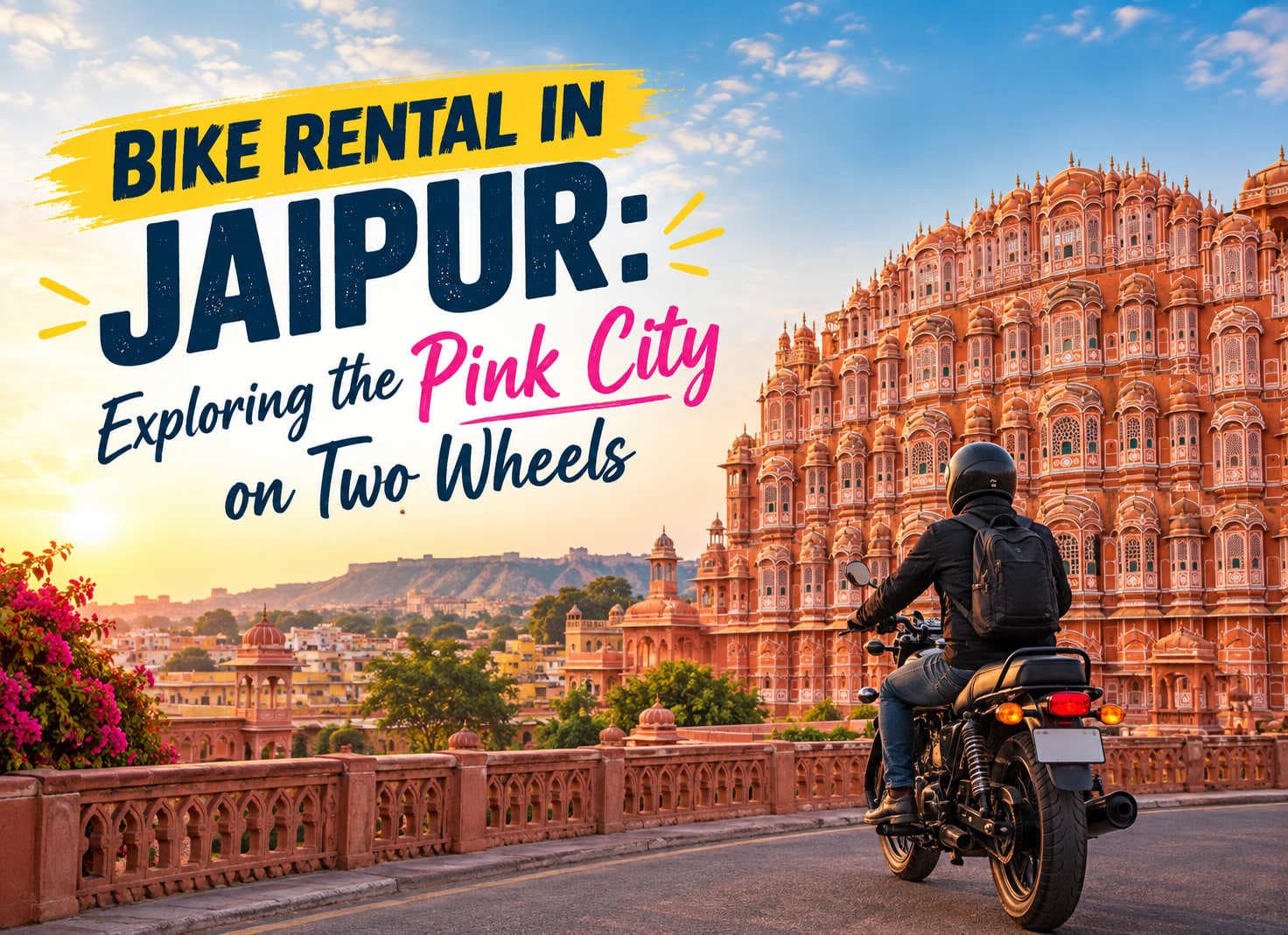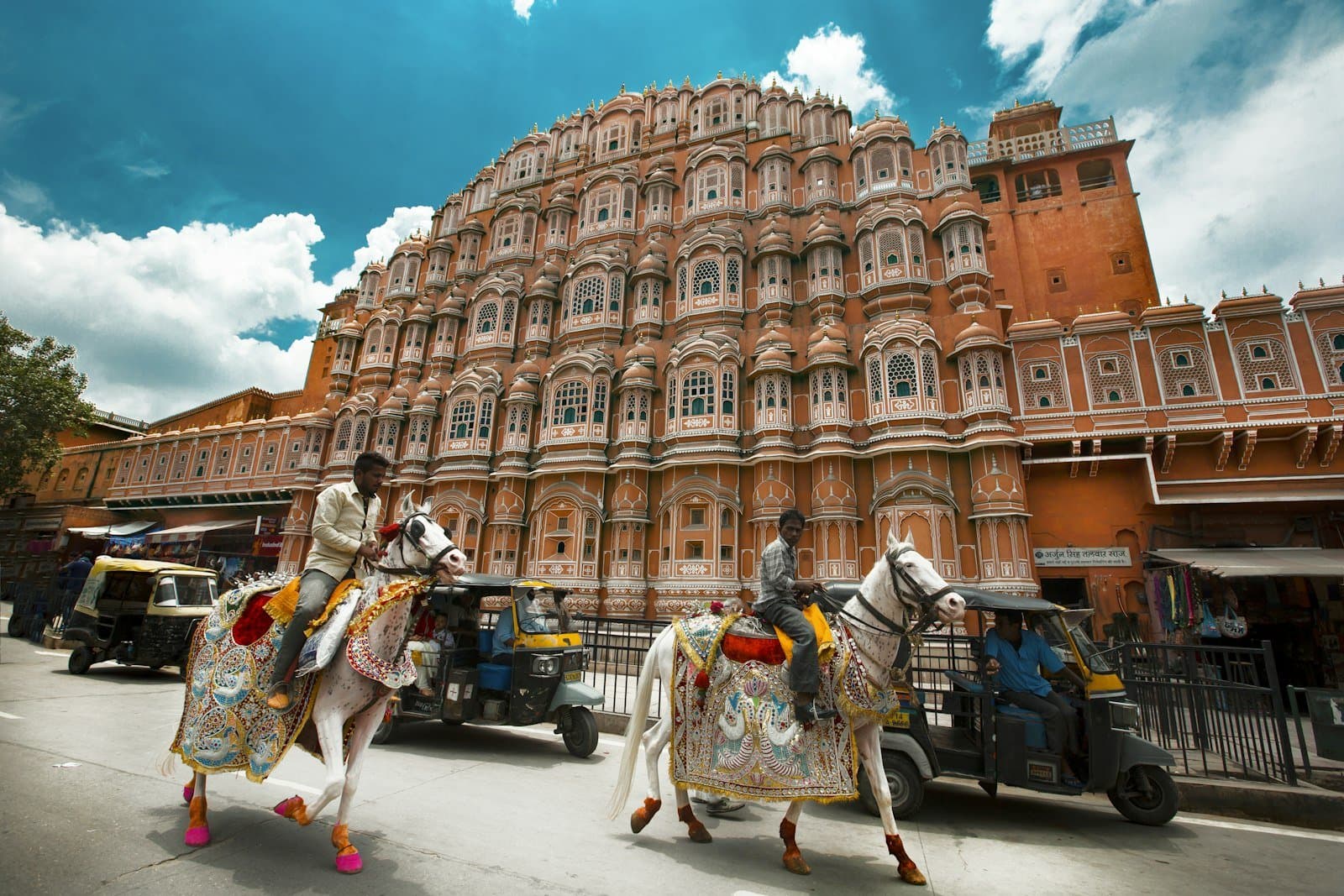
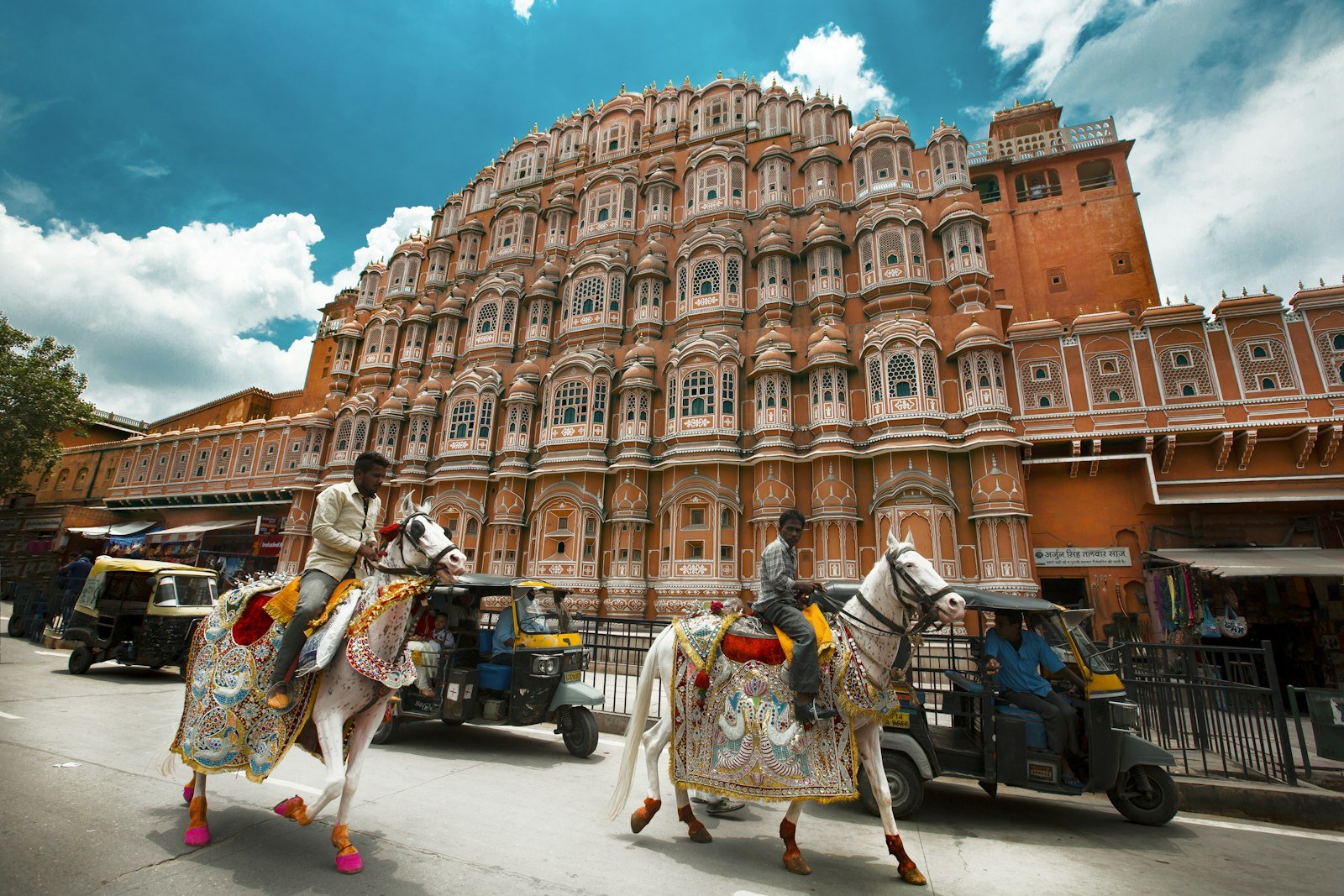
Sharad Navratri in 2026 starts on Sunday, 11 October and runs through to Dussehra on Tuesday, 20 October. That is the stretch most calendars and travel desks are working with this year, and it is when Jaipur gets busy again after the monsoon. Hotels fill, garba nights run late, and the Old City lanes around Badi Chaupar and Hawa Mahal get slower for cars than for a scooty or a light bike.
If you are planning a festive trip to the Pink City, a two-wheeler is often the practical choice for day rides to Amber, evening temple visits and late returns from garba. This guide covers the dates, a few useful bike routes, parking and safety notes, and what to arrange before you rent a bike or scooty in Jaipur.
Why Navratri week in Jaipur suits a rental bike
Jaipur's core sights sit close together by Indian city standards. Hawa Mahal, City Palace, Jantar Mantar and the bazaars around Johari and Bapu Bazaar are all walkable from each other, but the rides that make a festive trip feel complete — Amber Fort in the morning, Galta Ji or Nahargarh for sunset, a detour to Jal Mahal — sit outside the Old City ring. Autos surge during festival evenings. App cabs get stuck in the same queues as everyone else. A scooty or a 100–150 cc bike lets you leave when the aarti finishes, skip a long wait for a ride, and park in spots that would never fit a car.
October weather helps. Late September in Jaipur has already turned warm and mostly dry after the monsoon, with daytime highs in the low-to-mid 30s°C and little rain in the forecast toward the end of the month. By mid-October evenings are pleasant for outdoor garba without the peak-summer heat that makes afternoon riding miserable.
Know the 2026 dates before you book
- Ghatasthapana / Day 1: Sunday, 11 October 2026
- Sharad Navratri: 11–19 October (nine nights of worship and garba in most cities)
- Durga Ashtami: around 18 October
- Dussehra / Vijayadashami: Tuesday, 20 October 2026
- Diwali: Sunday, 8 November 2026 (plan a separate trip if that is your target)
Travel demand usually rises from the weekend of 10–11 October and peaks again around Dussehra. If you can arrive on a weekday before the 11th, bike availability and hotel rates are easier. Taking Monday, 19 October off work turns the Dussehra period into a longer break with the preceding weekend.
Route 1: Old City morning loop on a scooty
Start early — 7 to 8 am — before the bazaars fully open and before tourist coaches clog the approaches to Hawa Mahal. A typical loop:
- Hawa Mahal Road for the classic facade (you do not need to enter to enjoy the exterior)
- City Palace and Jantar Mantar complex if you want a ticketed stop
- Johari Bazaar and Bapu Bazaar for a short shopping break once shops open
- Back via MI Road or toward C-Scheme depending on where you are staying
On a scooty this loop is comfortable. Wear a helmet, keep speeds low in the lanes, and do not fight buses at Badi Chaupar. During Navratri, expect temporary pandals and extra foot traffic near popular temples — give yourself time and do not leave the bike unlocked even for a two-minute photo stop.
Route 2: Amber Fort day ride
Amber (Amer) Fort is about 11–13 km north of the Old City, depending on your start point. The climb on Amber Road is steady rather than steep. A 125–150 cc bike or a well-maintained Activa-class scooty handles it fine with one pillion; a underpowered scooty with two adults and shopping bags will struggle on the last rise in midday heat.
Practical notes for Amber
- Leave by 8 am if you want cooler air and shorter queues at the fort entrance.
- Park at the designated lots below the fort. Do not leave helmets or bags on the bike.
- The walk or shuttle up to the main courtyard is part of the visit; you will not ride inside the fort.
- On the way back, Jal Mahal viewpoint on the Amber Road is a short stop if the light is good.
Festival weeks bring more tour groups. A bike still beats a car for getting in and out of the parking zone, but it does not skip the ticket queue — buy tickets as directed on site and keep cash or UPI ready.
Route 3: Nahargarh or Galta for sunset
Nahargarh Fort sits on the Aravalli ridge west of the city and gives a wide evening view over Jaipur. Galta Ji (the monkey temple) is east of the Old City in a gorge with temple tanks. Both work as sunset rides if you leave mid-afternoon and avoid returning in full dark on unfamiliar stretches.
- Nahargarh: follow signs from the city toward the ridge road. The last section has curves; ride in daylight the first time.
- Galta Ji: approach from the east side of the Old City. Watch for monkeys near parked vehicles — do not leave food or loose bags on the seat.
These are evening rides, not late-night ones. After dark, stick to lit main roads back to your hotel, especially if it is your first time in Jaipur.
Garba nights: how a bike actually helps
Jaipur's Navratri calendar usually mixes temple aartis, community garba in neighbourhood grounds, and larger ticketed events in stadiums or open grounds (Chitrakoot and similar venues have hosted Garba Dandia Utsavs in past years). Exact 2026 venue lists firm up closer to the festival, so check local listings the week you travel rather than relying on last year's poster.
What does not change: evenings run late, autos become scarce when everyone leaves at once, and car parking near popular grounds fills early. A scooty parked a short walk away is often the difference between a calm exit and a 40-minute wait. Ride with a full helmet, keep volumes reasonable near residential lanes, and do not drink and ride — Rajasthan traffic police take festival-week checks seriously.
What to rent: scooty vs bike
- Scooty / Activa-class: best for Old City loops, couples, and anyone new to Jaipur traffic. Easy to park.
- 100–150 cc commuter bike: better for Amber and Nahargarh with a pillion, or if you want a bit more power on gradients.
- Royal Enfield or similar: fine if you already ride one, but heavier in bazaar lanes and less ideal for first-timers.
For a family that also wants day trips to places like Samode or further out toward Ajmer, consider mixing modes: bike for city days, and a self-drive car in Jaipur for the longer highway runs. Do not try to put four people and luggage on two scooties for a highway-day plan.
Documents, deposits and pickup
- Carry your original driving licence (two-wheeler class where required) and a government photo ID.
- International visitors typically need an International Driving Permit along with passport and visa — confirm with the rental desk before you fly.
- Photograph the bike at pickup: scratches, mirrors, tyre condition, and odometer.
- Ask what fuel policy applies (return at same level is common) and whether a helmet is included for the pillion as well as the rider.
- Book a few days ahead for the 11–20 October window. Festival weeks are when fleets run thin.
Safety and traffic tips for festive Jaipur
- Old City roads are narrow. Expect processions, temporary stalls and sudden pedestrian crossings during Navratri.
- Use dipped lights in the evening bazaars; full beam blinds oncoming riders.
- Keep your phone mounted or in a pocket — do not ride while checking maps in the middle of a chaupar.
- Download offline maps for Amber Road and your hotel area in case data drops.
- Carry a light scarf or jacket for evening ridge rides; October nights cool faster than the daytime high suggests.
Where this sits in the wider festive calendar
Navratri and Dussehra in Jaipur are the opening act of the Rajasthan festive travel season. Diwali on 8 November brings another wave of visitors, and wedding-season traffic follows after that. If Pink City weekends are already booked out, you can still plan other Hire N Ride cities for the same season — for example a cooler hill break with a bike rental in Mussoorie once the monsoon has fully cleared the Doon hills.
For Jaipur itself, the simple plan works best: lock your bike dates around 11–20 October, pick scooty for the Old City and a slightly stronger bike for Amber, leave early for forts, and treat garba nights as short hops rather than long highway rides. That is how you actually enjoy the festival instead of spending it in a traffic queue.